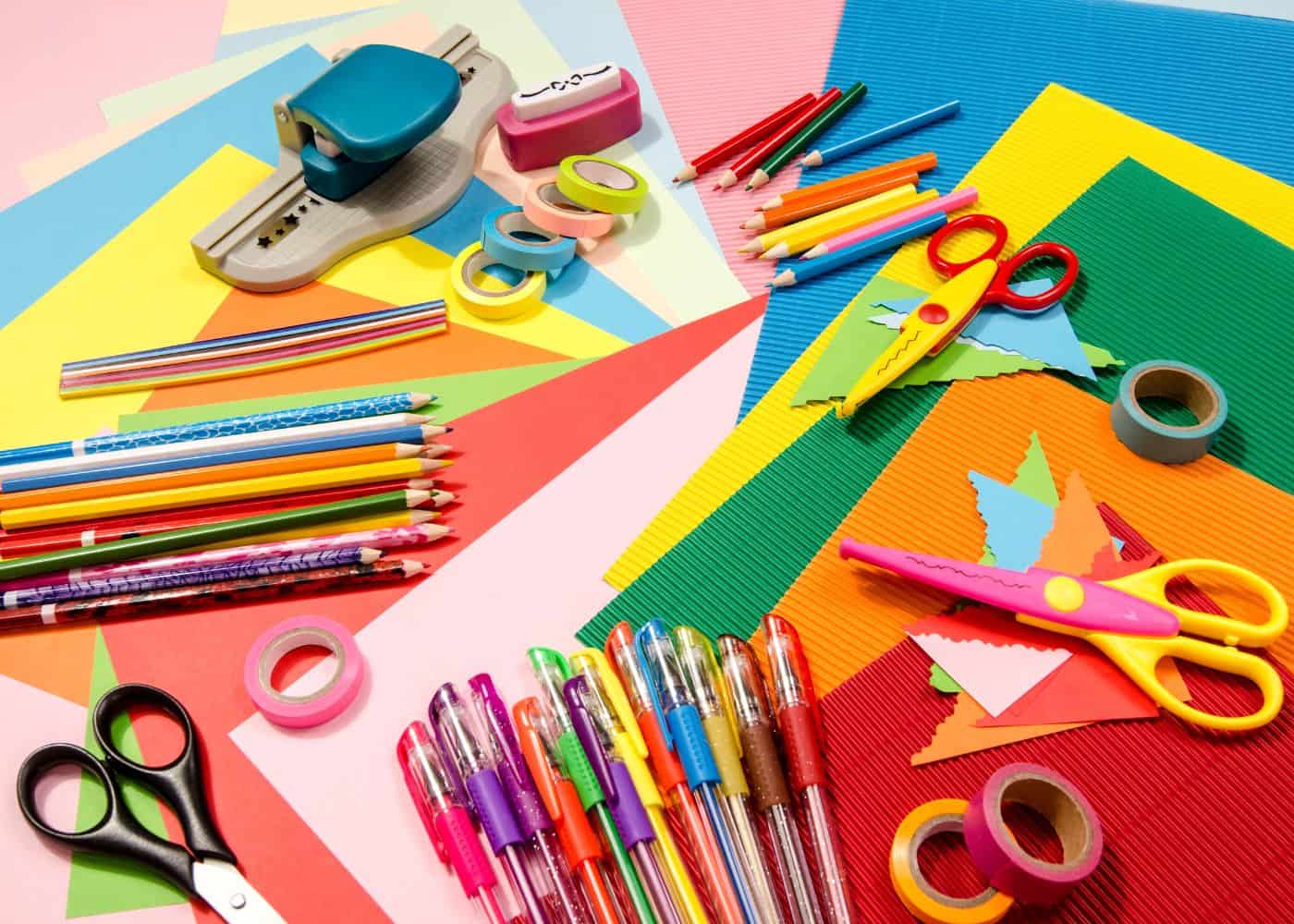
Arts and crafts are one of the most reliable ways to keep kids engaged, learning, and genuinely happy. Whether your child is two or ten, making things with their hands builds skills that go far beyond the craft table. This guide covers what to know about starting arts and crafts with your kids, how to set them up for success, and why it matters more than you might think.
Why arts and crafts matter for kids
Making things is good for children in concrete, measurable ways. It builds fine motor skills, supports language development, and gives kids a healthy outlet for their emotions. When a child finishes a project they made themselves, they feel capable. That feeling is worth a lot.
Arts and crafts also support learning in ways that feel invisible. Counting beads, mixing colors, cutting shapes, and following simple instructions all reinforce early math and literacy skills. You can read more about how creative play connects to academic growth in our kids activities section.
Beyond the academic side, crafting together creates real connection. Sitting down with your child to make something, without screens and without a schedule to rush through, is genuinely good family time. The projects do not need to be complicated or Pinterest-perfect. The point is the doing, not the result.
Getting started with arts and crafts at home
You do not need a dedicated craft room or an expensive supply haul to get started. A small bin with basic supplies is enough. Start with washable paint, a few brushes, safety scissors, glue sticks, and a stack of plain paper. Add cardboard tubes, old magazines, and scraps of fabric as you have them. Most good craft projects come from simple materials.
Keep supplies somewhere your child can access them independently. When they can grab what they need without asking, they are more likely to create on their own. This kind of independent access is a key idea in Montessori-style playrooms, and it works well for craft supplies too.
Set up a space where mess is manageable. A plastic tablecloth, a smock, and a nearby sink go a long way. Once you stop worrying about the mess, craft time becomes a lot more enjoyable for everyone.
Arts and crafts by age
Babies and young toddlers
Even very young children can participate in simple art experiences. Finger painting, stamping with sponges, and handprint art are all appropriate for babies and young toddlers. Baby handprint art is especially popular because it doubles as a keepsake. You press a small hand into non-toxic paint, press it onto paper or fabric, and you have something worth saving.
At this age, the experience is what matters. Your child is not making a product. They are feeling textures, exploring cause and effect, and using their hands in new ways. Keep it short, keep it safe, and let them lead.
Preschoolers
Preschool is a sweet spot for arts and crafts. Children this age are curious, willing to try things, and not yet concerned with whether their work looks “right.” They will cut, glue, paint, and stamp with total confidence. Encourage that.
Good projects for preschoolers include collages made from torn paper, simple painting with a variety of tools, clay and playdough sculptures, and nature crafts using leaves, sticks, and pinecones. Holiday crafts are also a big hit at this age. There are plenty of ideas in our Christmas ornament crafts for kids post if you want a seasonal project to try together.
At this stage, crafting also supports early cognitive development. Choosing colors, deciding what shape to cut, and figuring out how to attach two pieces together all involve real thinking. Our post on cognitive development activities for preschoolers goes deeper into how these kinds of activities support growing minds.
School-age kids
Older kids can handle more complex projects and often want to make things that have a real function. Jewelry making, sewing, weaving, model building, and custom posters are all good options. At this age, kids start to develop preferences. One child might love watercolor painting while another wants to build things from cardboard. Follow their lead and stock supplies that match their interests.
School-age kids also benefit from open-ended projects where there is no single right answer. Ask your child to build something that can hold water, or to make a gift for a family member using only recycled materials. These kinds of prompts build problem-solving skills alongside creative confidence.
Building fine motor skills through crafting
Fine motor skills are the small, precise movements that hands and fingers make. These skills matter for writing, self-care tasks, and countless everyday actions. Arts and crafts are one of the best ways to build them in a way that feels fun rather than like practice.
Cutting with scissors is one of the most effective fine motor activities. It requires coordination, focus, and steady hand control. Even cutting along simple straight lines is a meaningful challenge for young children. Painting with small brushes, threading beads, rolling clay, and tearing paper all work the same muscle groups in different ways.
Polymer clay is worth mentioning here specifically. It requires real hand strength to soften and shape, and it holds detail well, which encourages children to slow down and work carefully. It comes in bright colors, which keeps kids interested, and the finished pieces can be baked and kept.
Using arts and crafts to support learning
You do not have to turn craft time into a lesson to make it educational. Most of the learning happens naturally. But if you want to lean into the educational side, there are easy ways to do it.
Count beads before stringing them. Ask your child to cut out a specific number of shapes. Use craft projects to talk about colors, patterns, and symmetry. These conversations happen organically when you are working alongside your child, and they reinforce early math concepts without any worksheets required.
Art also supports language development. Describing what you are making, explaining your choices, and telling a story about the finished piece all build vocabulary and communication skills. Ask open questions: what made you choose that color, what does this part of your picture show, what would you add if you had more time. These conversations matter.
For families interested in a more structured approach to learning through play, our Montessori section has a lot of practical ideas that pair well with creative activities.
Encouraging self-expression through art
One of the most valuable things art gives children is a way to say things they do not yet have words for. Young children especially use drawing, painting, and building to process their experiences and emotions. A child who draws the same thing over and over is often working something out. That is healthy, and it deserves to be taken seriously.
The most important thing you can do as a parent is respond to your child’s art with curiosity rather than evaluation. Instead of saying “that’s so beautiful,” try asking what is happening in the picture, or what they were thinking about when they made it. This shifts the focus from the product to the process, which is where the real value lives.
Display their work. Hang it on the wall, put it on the fridge, or frame a piece they are especially proud of. When children see their work treated as something worth keeping, it builds confidence and encourages them to keep creating.
Simple craft ideas to try this week
If you are looking for a place to start, keep it simple. Handprint art requires almost no setup and works for every age. Collage making uses whatever paper scraps you have on hand. Shadow drawing takes a sunny day, some paper, and a few objects placed outside. Nature crafts can be as simple as gluing leaves onto paper.
For seasonal ideas, our easy crafts for kids post has plenty of options organized by type. The arts and crafts section of the blog is also a good place to browse when you want something specific.
The best craft project is the one your child actually wants to do. Ask them what they want to make, then help them figure out how. That collaborative process, where your child leads and you support, is where the real magic happens.
A few practical tips before you begin
Start with projects that match your child’s attention span. A two-year-old will lose interest after ten minutes, and that is completely normal. A six-year-old might work for an hour without stopping. Match the project length to the child, not to your expectations.
Resist the urge to fix or improve their work. It is genuinely hard to watch a child glue something on sideways when you know it would look better straight. Let it be sideways. The project belongs to them, not to you.
Stock up on supplies gradually rather than all at once. A few good basics, used regularly, will take you further than a giant haul that sits untouched. Rotate what is available to keep things feeling fresh without overwhelming your child with too many choices.
Most importantly, make time for it. Arts and crafts do not need to be a special occasion. A short session at the kitchen table on a regular afternoon is more valuable than one elaborate project every few months. Build it into your routine, and you will start to see the real benefits over time.