
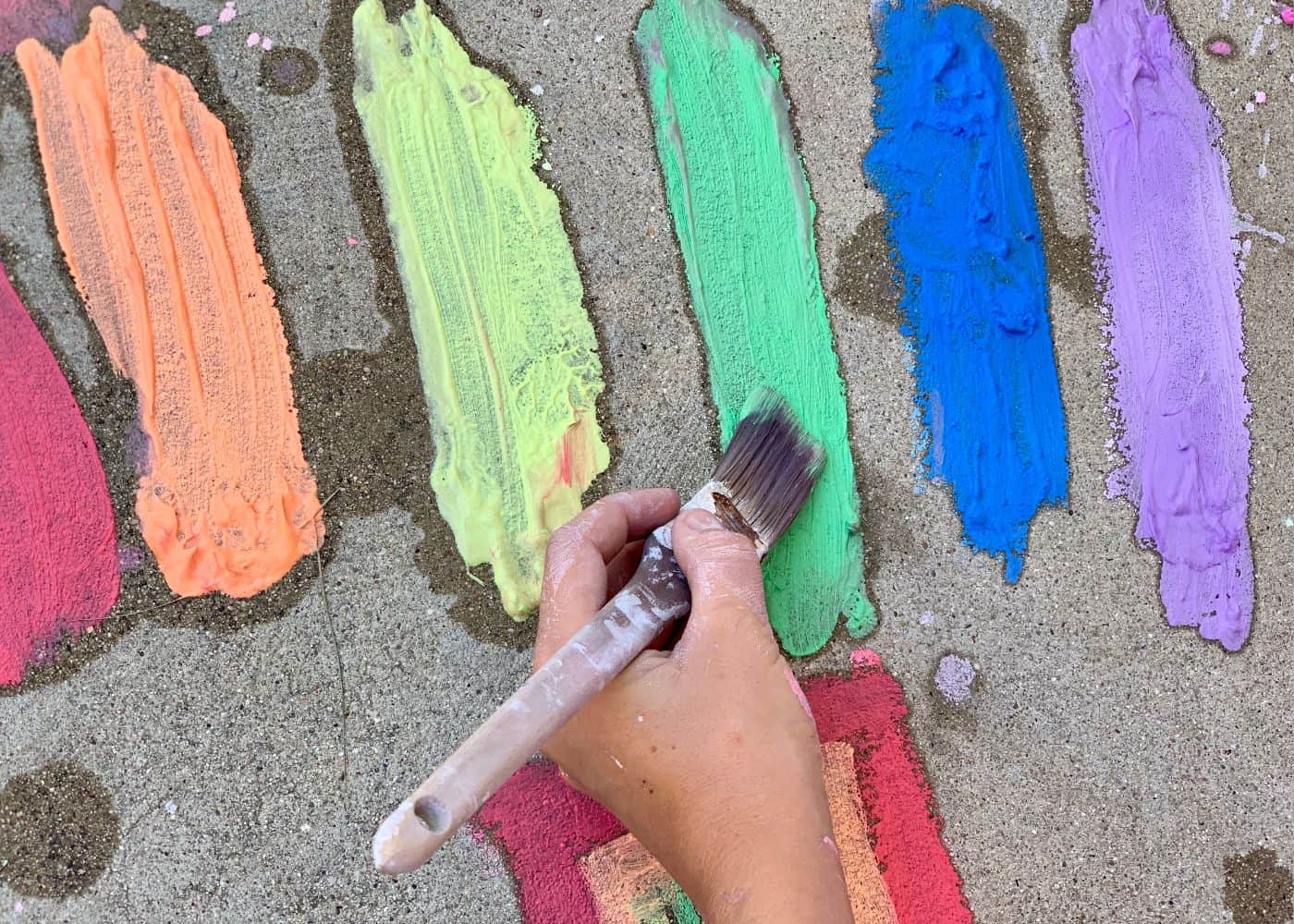
Sidewalk chalk paint is one of those activities that looks impressive but takes almost no effort to set up. It uses a handful of pantry ingredients, keeps kids busy for a good stretch of time, and washes away with a hose. If you have leftover bits of chalk rolling around in a bag somewhere, this is a great way to use them up.
The paint is made with cornstarch, water, and crushed chalk. That’s it. The liquid form gives you more color coverage than a regular chalk stick, and kids find it easier to fill in large spaces with a brush than to color with their hands. It works on sidewalks, driveways, and any smooth concrete surface.
Why liquid chalk paint works well for outdoor play
Regular chalk sticks are fine, but the paint version opens up a different kind of creative play. Because it’s liquid, kids can use brushes to make wider strokes, fill in shapes, and blend colors in a way that’s hard to do with a stick.
The colors also come out brighter. Chalk dissolved in water and cornstarch spreads more evenly across concrete, so the finished artwork looks bold and vivid rather than faint and streaky.
Clean-up is easy. A garden hose rinses it away, and there’s no scrubbing needed most of the time. That makes it a practical choice even on a busy day. If you’re looking for more ideas to keep kids active and creative outside, the outdoor activities section of the blog has plenty of options worth bookmarking.
What you need
Before you start mixing, pull together your supplies. You’ll need cornstarch, water, sidewalk chalk, a grater or a zip-lock bag with a rolling pin, a spoon or small whisk, a mixing bowl or large measuring cup, a muffin tin or small containers for each color, paintbrushes, and clothing you don’t mind getting messy.
For brushes, I recommend picking up a cheap set from a dollar store or thrift shop. These will get dragged across concrete and left in water. There’s no reason to use anything you’d want to keep in good condition.
How to make sidewalk chalk paint
Step 1: Mix the base
Start with equal parts cornstarch and water. Two tablespoons of each is a good starting amount. Stir them together until the cornstarch is fully dissolved and the mixture is smooth. Make only as much as you plan to use in one sitting, since it doesn’t store well.
Step 2: Crush the chalk
You need powdered chalk to mix into the base. There are two easy ways to do this. You can grate the chalk using a grater set aside for non-food use, or you can put a piece of chalk inside a zip-lock bag and crush it with a rolling pin. Either method works. The finer the powder, the smoother the finished paint will be.
Step 3: Add the chalk powder
Stir the chalk powder into your cornstarch mixture a little at a time. Start with about half a piece of chalk per color. Keep adding until the color looks rich and saturated to your liking. Mix thoroughly so there are no dry lumps at the bottom.
Step 4: Separate into containers
Pour each color into its own section of a muffin tin or into small cups. This keeps the colors separate and makes it easy for kids to dip their brushes without making a muddy mess. If you’re making several colors, prepare each one in a separate batch using different chalk pieces.
Step 5: Start painting
Hand the kids their brushes and let them go. Large flat areas like driveways and sidewalks give them plenty of room to spread out. Younger children often enjoy painting big shapes and filling them in, while older kids might want to draw scenes or write words and numbers.
How to clean up sidewalk chalk paint
In most cases, a garden hose does the job. Wet the painted area first, then spray it down. The cornstarch mixture loosens quickly with water and lifts off the concrete without much effort.
If there’s any residue left after hosing down, use a scrub brush with a small amount of dish soap. Scrub with a back-and-forth motion, then rinse again. For anything stubborn, a pressure washer on a low setting will take care of it without damaging the surface.
One thing worth knowing: the paint is easier to remove when it’s still wet. If it dries fully in the sun, it takes a bit more effort to wash off. Rinsing while the paint is still fresh saves you time.
If you’re ever painting on a new driveway or a surface you’re not sure about, test a small patch first. Some porous concrete can hold color longer than smooth concrete does.
A few safety notes
The ingredients in this recipe are non-toxic, but younger children should still have an adult nearby. Kids who are still at the stage of putting things in their mouths will need supervision.
Wet concrete can get slippery, so make sure kids are wearing shoes and staying aware of where they’re stepping. Dress them in clothes you don’t mind staining, and if you’re painting near a patio or any surface you care about, lay down a drop cloth or cardboard border around the work area.
Variations to try
The cornstarch and chalk version is the easiest and washes off the most cleanly. That said, you can also make sidewalk paint using washable tempera paint mixed with water, or by adding food coloring to the cornstarch and water base. Both work well, but they tend to leave a bit more residue on the concrete and may require a little more scrubbing at clean-up time.
If you want to try mixing colors, start with the primary colors and let kids experiment. Combining red and yellow chalk paint, blue and yellow, or red and blue gives them a hands-on way to see how new colors form. It’s a simple introduction to color theory that doesn’t require any special materials.
Using sidewalk chalk paint as a learning activity
This activity pairs well with early learning in a way that doesn’t feel forced. Kids practice writing letters and numbers in a low-pressure setting. There’s no paper to tear, no pencil grip to correct, and the scale of working on a driveway makes the whole thing feel more like play than practice. If you’re working on early literacy skills at home, having kids write their sight words or trace letters in chalk paint is a solid way to get repetition without sitting at a table.
Fine motor skills also get a real workout. Holding a brush, controlling the amount of paint, and staying within the lines of a shape all require the same hand control that kids need for writing. For younger children especially, this kind of outdoor learning can be more effective than worksheet practice because the experience is physical and engaging.
You can also use the driveway as a math space. Draw shapes and ask kids to count the sides. Paint number lines and practice counting forward and back. Write simple addition problems and let them paint the answers. The preschool math concepts page has ideas that translate well to outdoor chalk play if you want some structured inspiration.
Tips for getting the best results
Work in the shade if you can. Direct sun dries the paint quickly in the container, which makes it harder to apply smoothly. If the paint thickens up while you’re working, add a small splash of water and stir it back to the right consistency.
Foam brushes give the smoothest coverage on rough concrete. Wide flat paintbrushes are good for filling in large areas. Small detail brushes let older kids add fine lines or lettering. Having a few sizes on hand gives kids more options without overcomplicating the setup.
Make small batches rather than one large one. The paint doesn’t improve with time, and leftover paint in containers will dry out or separate. Mixing fresh batches as you go takes only a minute and keeps the colors bright and workable.
Sidewalk chalk paint is one of those activities that earns its place in the regular rotation. It’s inexpensive, creative, educational, and genuinely fun for a wide age range. If you’re looking for more kids activities that work well outside without a lot of prep, there’s plenty more to browse on the blog.




Comments
2 responses to “How to make sidewalk chalk paint”
love this idea of making sidewalk chalk paint! Always looking for safe ways to have fun with the kids outside. Gonna try this weekend. Thanks for the idea!
Made some with my little ones yesterday. Pro tip: add a bit more cornstarch for a thicker paint. They loved it!