
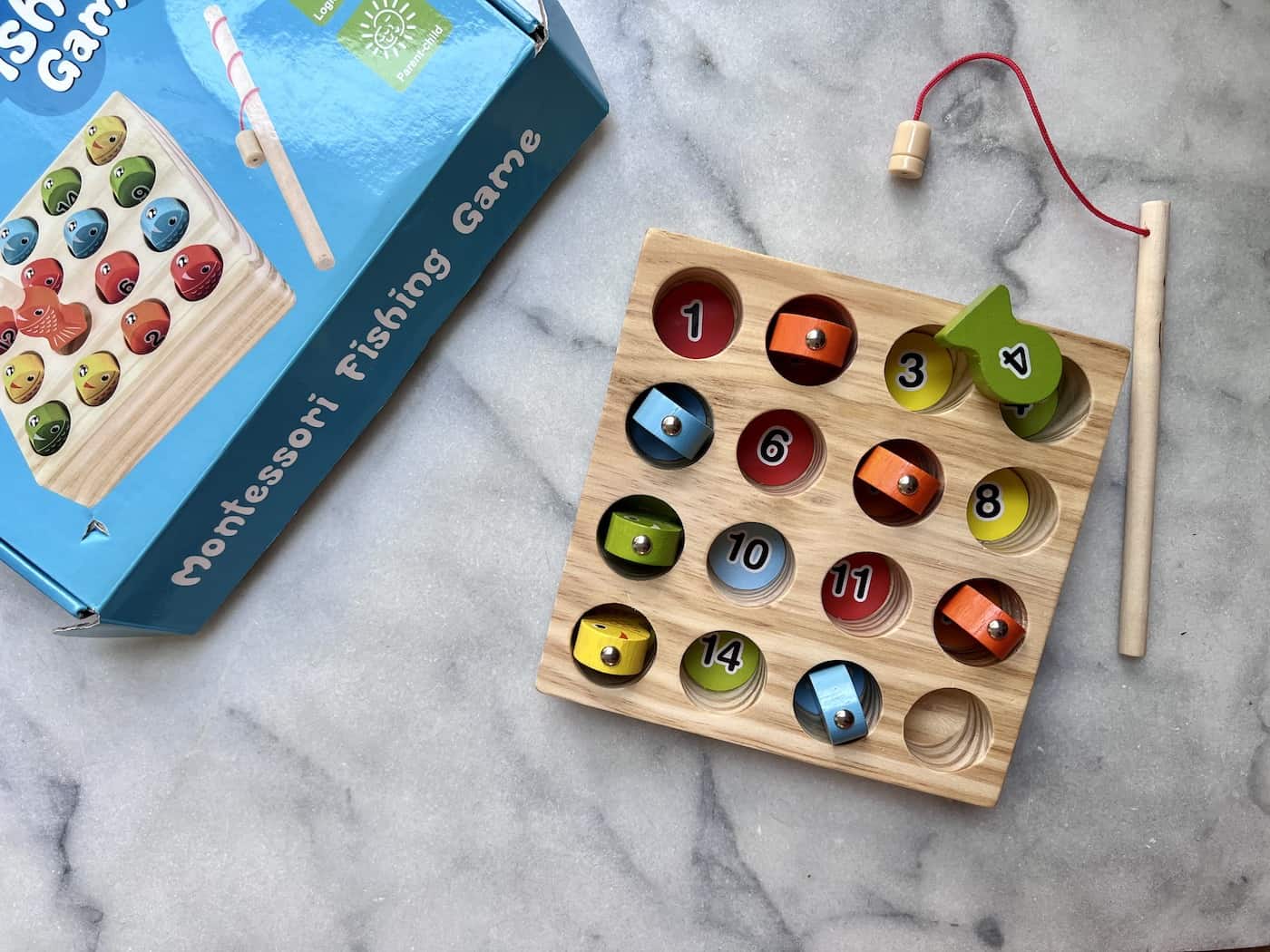
The Montessori method has been around since the early 1900s, when Maria Montessori developed her approach to education. At its core, the method supports children in building independence and following their natural curiosity. The toys that go along with this approach are a big part of how that learning happens at home.
Montessori toys are designed to encourage hands-on play and real skill-building. They tend to be made from natural materials, require the child to do the work, and focus on one concept at a time. If you are trying to build a thoughtful toy collection, understanding what makes a toy truly Montessori is a good place to start.
What makes a toy Montessori
You can usually spot a Montessori toy fairly quickly once you know what to look for. These toys share a few key qualities that set them apart from most of what you find in mainstream toy stores.
Natural materials
Montessori toys are almost always made from natural materials like wood, cotton, metal, or cloth. Plastic is generally avoided. Natural materials are safer for young children who still put things in their mouths, and they tend to hold up much better over time. A solid wooden toy can last through multiple children without falling apart.
No motors or batteries
Montessori toys do not move on their own. They require the child to make something happen. This is an important distinction. When a toy does all the work, the child just watches. When the child has to push, stack, sort, or move the toy themselves, they are the ones driving the experience. That kind of active play builds fine motor skills, hand-eye coordination, and simple cause-and-effect thinking. A push toy is a good example. The child moves it, steers it, and figures out how it works through their own effort.
Realistic and grounded
Montessori toys tend to reflect the real world. You are more likely to find a wooden elephant or a toy doctor kit than a fantasy creature or magic wand. This is intentional. Realistic toys connect children to the world they actually live in and help them process everyday life through play.
Scaled to the child
Many Montessori toys are simply real-life objects made smaller. A child-sized broom, a small watering can, or a mini toolset all fall into this category. These toys let children practice real tasks and feel capable in a world that is usually sized for adults.
One concept at a time
A good Montessori toy does one thing well. Stacking rings teach balance and size sequencing. A shape sorter teaches geometry and spatial reasoning. Keeping the focus narrow helps children build mastery without getting overwhelmed. When a toy tries to do too many things at once, it often ends up doing none of them well.
Classic Montessori toys worth having
There are certain toys that show up again and again in Montessori playrooms and Montessori homes. These are the classics for a reason. They are open-ended, durable, and genuinely useful for development.
Busy boards
A busy board is one of the most practical Montessori toys for toddlers and preschoolers. These boards are covered with latches, buckles, zippers, buttons, and locks. Each element gives a child something to figure out. They build fine motor skills and teach the mechanics of everyday objects. A child who has practiced with a busy board will have an easier time with real buttons and zippers when getting dressed.
Pretend play toys
Role play is a big part of Montessori learning. Play kitchens, doctor kits, grocery sets, and cleaning tools all fit here. These toys mirror real life and give children a way to process what they see adults doing every day. A child who plays with a dentist kit is not just playing. They are building comfort with an experience they will face in real life. Pretend play also helps children start to identify their own interests and preferences.
Building blocks
Plain wooden blocks are one of the most versatile toys you can own. Children use them to build, sort, count, and knock things down. Some sets come in natural wood tones, while others use solid, bright colors. Either way, the open-ended nature of blocks means a child can use them differently as they grow.
Wooden vehicles
Cars, trucks, and trains are just as popular in Montessori settings as anywhere else. The difference is the material. Montessori versions are made of wood and have no batteries or motors. Wooden train sets, like those from Brio, are a classic choice and hold up well over years of play.
Wooden puzzles
Puzzles are a natural fit for Montessori learning. Wooden puzzles come in many forms, from simple knob puzzles for toddlers to more complex scene puzzles for older children. Puzzle-style clocks and calendars are also popular because they combine the puzzle format with real-world concepts like time and dates.
Stacker toys
Stacker toys are ideal for babies and younger toddlers. The classic rainbow wooden stacker is probably the most well-known. Shape stacking towers also fit here. These toys teach size order, color recognition, and basic problem-solving. They are simple, but the learning they support is real.
Abacus
An abacus is a strong tool for early math. Children can use it to count, add, and track quantities in a hands-on way. It is also a good tool for keeping track of steps in a daily routine. If you are building out a Montessori math environment at home, an abacus is worth having early.
Toys that are not strictly Montessori but still valuable
Not every great toy meets every Montessori criterion. That does not mean it has no place in your home. Some toys fall just outside the definition but still offer real learning value.
Lego and Duplo are a good example. They build creativity, spatial reasoning, and problem-solving. Children sort, match, and construct with them in ways that are genuinely educational. The issue is that Lego is made of plastic, which puts it outside the traditional Montessori material guidelines. That one factor aside, the play they support is rich and worthwhile.
Magna-Tiles are another example. These magnetic plastic tiles are used in many Montessori classrooms, even though they are made of plastic. They allow children to build and experiment with geometry and structure in a way that is hard to replicate with other materials. The learning they offer earns them a place in many thoughtful toy collections.
The simplest way to evaluate any toy is to ask whether the child does the work. If the toy requires the child to think, move, build, or figure something out, it is probably worth having around, regardless of whether it earns a Montessori label.
How to use Montessori toys day to day
Having the right toys is only part of it. How you use them matters just as much. One of the best things about Montessori toys is that they blur the line between play and real learning. A child with a toy broom sweeping alongside a parent is doing both at once.
Letting children follow you through daily tasks is one of the most effective ways to support this kind of learning. Give them a small cleaning set while you clean. Let them help in the kitchen with child-safe tools. These moments teach more than any toy can on its own, and they happen naturally as part of your day. For more ideas on building this kind of environment, the Montessori kitchen and Montessori bathroom posts are worth reading.
It also helps to rotate toys rather than putting everything out at once. When fewer options are available, children tend to engage more deeply with what is in front of them. Storing some toys away and swapping them out every few weeks keeps things fresh without adding more to your collection.
Storing Montessori toys
A thoughtful toy collection deserves a thoughtful storage setup. Open shelves at child height are the standard in Montessori spaces. When children can see and reach their toys independently, they are more likely to choose them intentionally and put them back when they are done. If you want a full breakdown of how to set this up at home, the Montessori toy storage post covers it in detail.
Building a Montessori toy collection does not have to happen all at once. Start with a few well-made basics, like blocks, a stacker, and a puzzle, and add from there as your child grows. Quality over quantity is the right approach here. A small number of genuinely good toys will always serve a child better than a large number of forgettable ones.




Leave a Reply