Music is one of those things that seems simple on the surface but opens up into something much deeper the longer a child sticks with it. Whether your child bangs on a drum set in the living room or quietly plucks a ukulele in their room, they are building real skills. This guide walks through what you need to know about helping kids learn music, from picking a first instrument to finding good lessons and keeping practice from feeling like a chore.
Why learning music matters for kids
The benefits of music education go well beyond learning to play a song. Children who study music regularly tend to develop stronger memory, better attention spans, and sharper problem-solving skills. Research has linked musical training to improved performance in math, reading, and language.
Music also supports emotional growth. Playing an instrument gives children a healthy outlet for feelings they may not yet have words for. Group settings like a school band or choir teach cooperation and listening. Solo practice builds patience and self-discipline in a way that feels personal rather than imposed.
Physical coordination improves too, especially with instruments that require both hands to work independently, like piano or drums. Even dancing to music helps children develop gross motor skills and a natural sense of rhythm. These are skills that carry forward into sports, academics, and everyday life.
How to introduce music to your child
You do not need a formal program to start. Simply playing a variety of music at home is a meaningful first step. Try different genres throughout the week. Let your child hear folk, classical, jazz, and pop. Pay attention to what makes them stop and listen.
Familiar songs are a great entry point. Children build confidence when they already know the words and melody. Songs like “Twinkle, Twinkle, Little Star,” “Wheels on the Bus,” “Old MacDonald Had a Farm,” and “If You’re Happy and You Know It” are classics for a reason. They have simple structures, repetitive patterns, and often involve movement, which helps kids feel the rhythm in their bodies before they ever pick up an instrument.
Letting children interact freely with instruments, without pressure or formal instruction at first, sparks genuine curiosity. A toy xylophone, a small drum, or a ukulele left out in the living room invites exploration. You may find your child gravitates toward certain sounds naturally. That preference is worth following.
Adding movement to music helps too. Freeze dance, nursery rhyme dances, and simple action songs all make rhythm feel physical and fun. Resources like Learning music on this site offer a good starting point for parents who want more structured ideas.
Choosing the right first instrument
Picking a first instrument does not have to be a permanent decision. Many children switch instruments as they grow and their tastes change. Still, a thoughtful first choice can make the early months of learning much more enjoyable.
Piano
Piano is one of the most recommended starting instruments for young children. The layout is visual and logical. Notes are arranged in a clear sequence, and the relationship between pitch and position is easy to see and understand. Children also skip the scratchy beginner phase that comes with stringed instruments. A basic keyboard works fine for starting out and takes up less space than an upright piano.
Violin
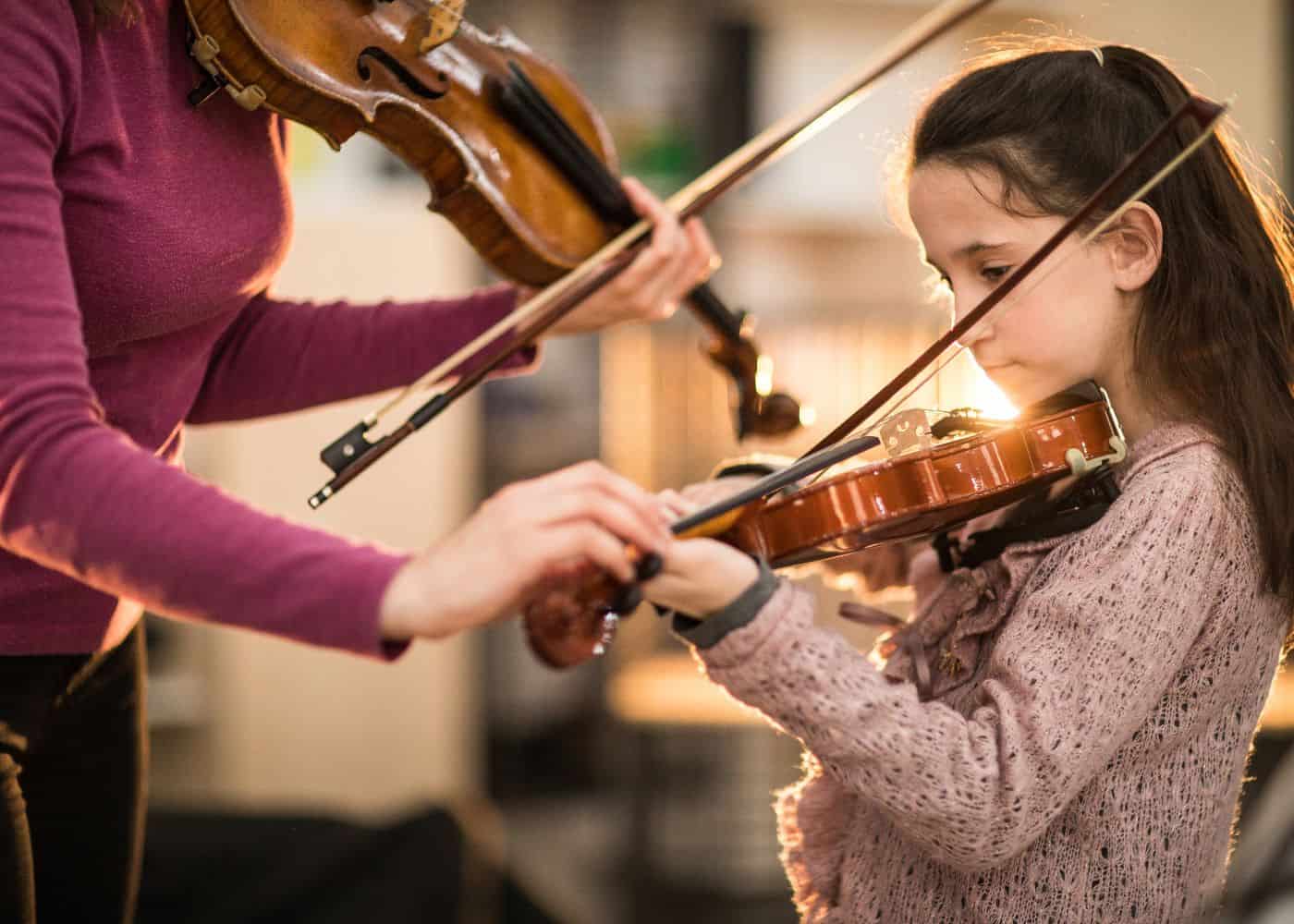
Violins come in very small sizes, including instruments scaled for children as young as three or four. That makes violin accessible earlier than many people expect. The first few years do involve some squeaky notes, but this is much easier to work through as a young child than as an adult. Violin also feeds directly into school orchestra programs, which can be a meaningful social experience later on.
Ukulele
The ukulele is light, small, and approachable. It has only four strings and a gentle sound, which means early wins come faster. Many children move from ukulele to guitar naturally as their hands grow. It is a low-cost, low-pressure starting point that still builds real musical skills.
Guitar
Guitar appeals to older kids who want to play music they recognize and love. It is portable and works across many different genres. Children with smaller hands do well starting on a half-size acoustic guitar. A baritone ukulele can also serve as a bridge between the two instruments.
Drums
Drums are a strong fit for children who are naturally physical and rhythmic. They do require space and can be loud, though practice pads and mesh drum heads help with noise levels at home. Drumming builds coordination and timing in a way that benefits any future musical learning.
Trumpet
Trumpet is a common choice in school band programs and surprisingly accessible for young beginners. Children can produce a real sound fairly quickly with good instruction. The three valves keep the physical mechanics manageable, and the instrument holds its value well over time.
When choosing, factor in your child’s age, hand size, temperament, and genuine interest. Cost and lesson availability in your area matter too. The best instrument is the one your child actually wants to pick up.
Finding good music lessons
Quality instruction makes a significant difference, especially in the early stages. A good teacher builds enthusiasm while laying a solid technical foundation. A poor fit can turn a curious child off music entirely.
In-person lessons with a local teacher remain one of the most effective formats. The back-and-forth of a live lesson allows a teacher to correct posture, technique, and habits in real time. Look for teachers who have experience working specifically with the age group of your child, not just with adult beginners.
Online lessons have become a practical alternative for families where local options are limited or scheduling is complicated. Platforms like Prodigies Music offer structured programs built for young children. YouTube also has high-quality free content, though it works better as a supplement than a primary source of instruction.
When evaluating a program or teacher, look for a curriculum that builds gradually. Lessons should revisit core concepts across multiple sessions rather than moving on before a child is ready. Check whether practice materials are included and whether there is a clear path of progression. A good curriculum keeps learning fun without sacrificing substance.
Making practice work at home
Practice is where most of the real learning happens, and it is also where most of the friction shows up. A few practical strategies make a real difference here.
Short, frequent sessions work better than long, infrequent ones for children. Fifteen minutes of focused daily practice builds more skill than an hour on the weekend. Consistent repetition is how musical memory forms. Try to schedule practice at the same time each day so it becomes a habit rather than a negotiation.
Setting small, concrete goals gives children something to work toward. Instead of “practice for twenty minutes,” try “play that passage until you can do it three times without stopping.” Reaching a specific target feels more satisfying than simply logging time.
Let your child make some choices about what they practice. If they want to spend part of the session playing around with a melody they made up, let them. Free exploration alongside structured practice keeps music feeling like something they own, not just something they are required to do.
Technology can help too. Recording a practice session so your child can hear their own progress is motivating. Some children enjoy practicing along to backing tracks or following along with a favorite song on YouTube. The goal is to keep their relationship with music positive and self-directed as much as possible.
If your child resists practice, try sitting with them rather than just requiring them to go practice alone. Younger children especially benefit from a parent’s presence. Even listening from the next room and offering genuine, specific praise afterward goes a long way.
Exploring different types of music
Introducing children to a wide range of musical genres builds both appreciation and versatility. Classical music offers structured complexity that supports concentration and analytical thinking. Composers like Mozart and Beethoven wrote music with clear patterns that children can learn to identify over time.
Jazz rewards a different kind of listening. It is improvisational and expressive, which makes it a great vehicle for teaching children that music does not always follow rigid rules. Listening to jazz together and talking about what they hear encourages creative thinking.
Folk music often tells stories, which connects well with children who love narrative and language. Many traditional folk songs share a structure with the nursery rhymes children already know, making them easier to engage with early on.
You do not need to turn every listening session into a lesson. Simply playing different kinds of music in the background and letting children absorb it passively is meaningful exposure. Over time, they develop preferences and reference points that enrich their own playing.
Musical opportunities beyond the home
Once a child has some foundation, real-world musical experiences deepen their engagement significantly. Attending live performances, even informal ones at a local park or community center, shows children what music looks like in practice. Watching musicians interact with an audience and with each other is something a recording cannot fully capture.
School-based music programs are worth prioritizing. Band, choir, and orchestra give children the experience of making music with others. The social dimension of ensemble playing teaches listening, cooperation, and timing in a way that solo practice simply cannot replicate.
Music festivals and student recitals offer performance experience for children who are ready. The goal does not have to be competition. Even a low-stakes informal recital gives a child something concrete to prepare for, which sharpens their practice and builds confidence. Many children find that performing once takes away the fear of it entirely.
For families interested in building strong foundational skills early, exploring resources around Montessori approaches to learning can offer useful perspective. Montessori principles around child-led exploration and hands-on learning translate naturally into music education.
Keeping music enjoyable long-term
The children who stick with music over the years are usually the ones whose early experience felt positive. That means protecting their relationship with music from too much pressure too soon. Progress in music is not linear, and there will be stretches where a child seems to plateau or loses interest.
During those periods, reduce the formality rather than pushing harder. Let them play whatever they want for a week. Listen to music together without any educational agenda. Watch a live concert or a documentary about a musician they find interesting. Usually, the spark comes back on its own when the pressure lifts.
Creativity matters as much as technical skill, especially in the early years. Encourage your child to make up their own songs, write out their own notation, or record themselves singing. These activities connect music to self-expression in a way that makes the harder work of technique feel worthwhile.
Parents do not need to be musicians themselves to support a child’s musical development. Showing genuine interest, attending recitals, asking about what they are working on, and listening when they play are all meaningful forms of support. Music thrives when children feel their efforts are noticed and valued.
For more ideas on activities that support learning at home, the kids activities section of this site has plenty of practical options across a range of ages and interests. You can also browse musical instruments for kids for more specific guidance on what to buy at different stages.