
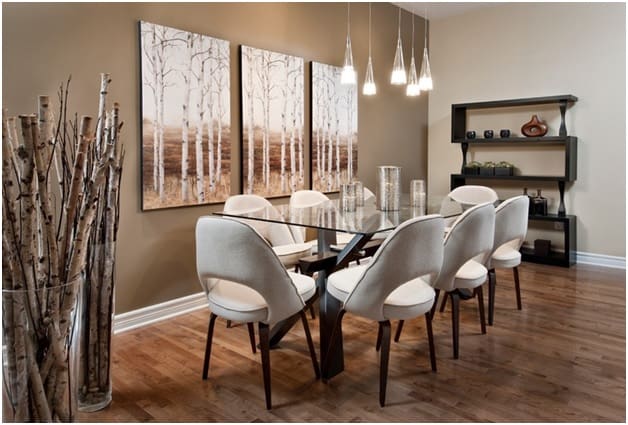
Your dining room walls say a lot about how you live and what you love. Whether your table seats two or twelve, the walls around it set the tone for every meal, conversation, and gathering that happens there. This list covers 46 ideas to help you figure out what works for your space, your taste, and your budget.
There is no single right answer here. Some of these ideas are bold, some are subtle, and some are purely practical. The goal is to give you enough options that something clicks. For more ideas on styling your home, check out our full collection of home decor ideas.
Wall arrangements and artwork
1. Framed art arrangement
A curated grouping of framed artwork or prints is one of the most reliable ways to fill a dining room wall. You can mix sizes and keep a consistent color palette to pull it together. Floating shelves work well here too, letting you layer photos, small plants, and candles without everything feeling flat. Leave a little breathing room between pieces. Negative space keeps the arrangement from feeling crowded.
2. Black and white photography
Black and white photos bring a timeless quality to a dining room. Family portraits work beautifully here, as does a curated collection of art prints. This approach pairs especially well with darker furniture, where the contrast creates real visual interest without competing with other decor.
3. Canvas paintings
A single large canvas painting above or beside the dining table draws the eye and gives the room a focal point. It does not need to match the furniture exactly. It just needs to feel intentional. A piece with colors that appear elsewhere in the room will tie things together naturally.
4. Unique art placement
Hanging pieces at varied heights, rather than in a straight line, adds dimension to the wall. It is a simple technique that makes a space feel more considered and less formulaic.
5. Wall sculpture
Three-dimensional wall art adds texture that flat prints cannot. Metal sculptures, woven wall hangings, and carved wood pieces all bring a sense of depth to the room. This works especially well in rooms that already have a lot going on at table level.
6. Gallery wall
A gallery wall lets you combine art, photos, mirrors, and small objects into one cohesive display. Plan the layout on the floor before you start hammering. This saves a lot of patching later. A unified frame color helps the arrangement feel organized even when the content varies.
7. Mural
A painted mural is a bold commitment, but it can transform a dining room completely. Whether you hire an artist or use peel-and-stick mural wallpaper, this approach makes the wall itself the statement piece. Everything else in the room can stay simple.
8. Stencil designs
Stencils offer a lower-commitment alternative to wallpaper or murals. A repeated geometric or floral pattern across one wall adds texture and personality. Choose a stencil color that coordinates with the rest of the room so the pattern reads as intentional rather than busy.
Mirrors and lighting
9. Single statement mirror
A large mirror makes a small or dark dining room feel noticeably bigger and brighter. Place it across from a window or near a light source to get the most out of it. Round mirrors soften a room with a lot of straight lines. Rectangular ones add structure to a softer space.
10. Mirror wall arrangement
Grouping several mirrors of different shapes and sizes creates a layered, decorative effect. This works as well as a gallery wall but with the added benefit of reflecting light around the room. It is a good option if you want visual interest without committing to artwork.
11. Wall sconces
Sconces add warmth and a finished look to dining room walls. Pairing them with an overhead chandelier creates a layered lighting effect that makes the room feel more complete. Choose finishes that match or complement your other fixtures to keep things cohesive.
12. Decorative lighting
Beyond sconces, you can use string lights, picture lights above artwork, or backlit shelving to add warmth to the walls. Lighting is often the easiest way to change the feel of a room without touching the furniture or paint.
Paint and wall finishes
13. Statement wallpaper
A bold wallpaper pattern on one wall can anchor the entire room. Floral, geometric, and textured options all work well in dining rooms. If the room is small, a wallpapered wall creates the sense of a feature without closing the space in.
14. Accent wall with bold paint
A single painted accent wall is a lower-cost way to add color and depth. Deep greens, navy blues, warm terracottas, and charcoal grays all work well in dining rooms. You can also try painted stripes, chevrons, or geometric shapes to add pattern without wallpaper.
15. Two-tone paint split
Dividing the wall horizontally into two paint colors adds a architectural quality to a plain room. Darker on the bottom and lighter on top is the most common approach. It makes ceilings feel higher and gives the room a finished, deliberate look.
16. Painted stripes
Vertical stripes pull the eye upward and make low ceilings feel taller. Horizontal stripes make a narrow room feel wider. Both effects are achievable with painter’s tape and two coordinating paint colors.
17. Gray walls
Gray is a genuinely versatile choice for dining rooms. It works with warm wood tones, cool metal finishes, and most upholstery colors. If you want clean walls without a lot of decor layered on top, a well-chosen gray does a lot of the work on its own.
18. Decorated ceiling
The ceiling is easy to forget, but treating it as a fifth wall opens up a lot of options. A painted ceiling, wallpapered ceiling, or exposed beam detail draws the eye upward and adds character without touching any of the other walls.
Texture and materials
19. Exposed brick
Brick walls bring warmth and texture that painted drywall simply cannot match. Real exposed brick is ideal, but brick veneer panels are a practical alternative for walls where the original structure is not brick. Either option gives the room a grounded, lived-in quality.
20. Exposed stone
Stone walls work especially well in dining rooms with natural wood furniture and candlelight. The combination feels warm and organic. If you are working with an accent wall, stone reads as intentional and architectural rather than heavy.
21. Wood cladding and panels
Wood paneling has made a strong return as a design choice. Shiplap, board and batten, and slatted wood panels all add texture and warmth. Natural or lightly stained wood keeps things feeling relaxed. A darker stain leans more formal.
22. Marble walls
Marble wall panels or large-format marble tiles bring a sense of richness to a dining room. This works best in rooms with simple furniture, where the marble can be the main visual event. Blue-veined marble is a particularly striking choice.
23. 3D wall art and panels
Three-dimensional wall panels in geometric or organic patterns add depth without requiring art or color. Neutral tones keep the effect subtle. Bolder colors make it more of a statement. Either way, the texture catches light differently throughout the day, which keeps the room from feeling static.
Shelving and functional wall decor
24. Floating shelves
Floating shelves give you a place to display things you already love, whether that is cookbooks, plants, candles, or ceramics. They keep the wall active without requiring anything to be permanently fixed in place. Styling them with a mix of heights and textures looks more natural than perfectly matched rows.
25. Built-in cabinets
Built-in cabinetry along one dining room wall is both functional and beautiful. It gives you storage for dishware, linens, and serving pieces while creating a polished, custom look. Glass-front doors let you display the contents. Solid doors keep things tidy and simple.
26. Side buffet table
A buffet or sideboard against the wall serves double duty. Day to day, it holds extra dishes or linens. When you have people over, it becomes a serving station. Style the top with a lamp, a plant, and a few objects to make it look intentional rather than utilitarian.
27. Wall clock
A large wall clock adds function and visual weight to a dining room wall. Choose one with a finish and style that fits the rest of the room. Oversized clocks with simple faces work well in modern and minimalist spaces. Ornate frames work better in traditional rooms.
Greenery and natural elements
28. Indoor plants
Plants bring life and color to dining room walls without requiring art or paint. A tall plant in the corner, a trailing plant on a high shelf, or a cluster of smaller pots on a floating shelf all work well. Natural light from a nearby window will keep them looking their best.
29. Living wall
A full living wall is a serious commitment, but it creates a dramatic, one-of-a-kind statement. Trailing plants mounted on a grid or panel system turn an entire wall into a living installation. This works best in rooms with good natural light and a fairly simple color scheme everywhere else.
30. Bohemian wall decor
Bohemian style combines macrame, woven textiles, plants, and warm tones into a layered, relaxed look. It works especially well in dining rooms that already have natural wood furniture or rattan chairs. The key is mixing textures rather than matching everything precisely.
31. Macrame and tapestry
A large macrame hanging or a canvas tapestry fills a wall beautifully and adds softness to rooms with a lot of hard surfaces. Handmade macrame has a warmth that printed art does not. It is also a good option if you want something with texture but prefer to avoid frames entirely.
Decorative accents
32. Plate wall display
Decorative plates arranged on a wall have a long history as dining room decor. The look works in traditional, farmhouse, and eclectic spaces. Wicker bowls mounted on the wall create a similar effect with more texture. Mixing both can look layered and collected over time.
33. Framed quotes and typography
Framed words and phrases tend to look more finished than wall decals. A well-chosen quote in a simple frame suits a dining room without feeling like a craft project. Keep the typography clean and the frame proportional to the wall space.
34. Signage
Wooden or metal signs with short phrases or place names add a personal touch. These work best when they feel specific to you rather than generic. A family name, a meaningful location, or a single word you come back to often all make good choices.
35. Chalkboard wall
Painting one wall with chalkboard paint gives you a surface that changes with you. Write a menu for dinner parties, let children draw between meals, or keep a running list of family notes. It is casual and practical, and it suits homes where the dining room is used heavily throughout the day.
36. Curtains and drapes
Long curtains frame a dining room and add softness to a space that can otherwise feel hard-edged. A patterned fabric introduces color and texture without requiring paint or art. Hang them high and wide to make windows look larger than they are.
37. Mounted television
A wall-mounted television in the dining room is a practical choice for families who gather there throughout the day. Mount it flush to the wall and keep the cables tidy. A pull-down cover or a framed art display that hides the screen when it is off keeps the room feeling like a dining room rather than a media room.
Style-specific approaches
38. Minimalist dining room walls
A minimalist approach means choosing one or two intentional pieces and leaving the rest of the wall alone. The quality of what you choose matters more than the quantity. A single large artwork, a clean-lined mirror, or a well-placed shelf with a few objects can be enough.
39. Rustic wall decor
Rustic style layers natural materials like wood, metal, and stone with warm, earthy tones. Vintage signs, wooden frames, and woven textiles all fit this approach. The look works best when it feels lived-in rather than perfectly assembled.
40. Antique and vintage elements
Antique mirrors, vintage posters, and old framed maps bring history and character to a dining room. Mixing a few genuine vintage pieces with newer items keeps the room from feeling like a museum. The goal is collected, not costume.
41. Industrial style
Industrial dining rooms use exposed materials like raw metal, concrete, and unfinished wood. Wall decor in this style tends to be minimal and functional. Metal shelving, pipe-frame mirrors, and oversized clocks all fit naturally.
42. Floral decor
Fresh flowers on the dining table are classic, but floral wall art extends that feeling to the whole room. Framed botanical prints, floral wallpaper, or even dried flower arrangements mounted on the wall all work. This approach is especially effective in dining rooms with a lot of natural light.
43. Room dividers and partitions
In open-plan homes, a decorative screen or room divider can define the dining area without closing it off entirely. Slatted wood panels, rattan screens, and metal frame dividers all offer privacy and visual interest at the same time.
44. Shadow boxes
Shadow boxes let you display three-dimensional objects as wall art. Shells, small toys, family mementos, or seasonal finds all look intentional when framed this way. They add personal meaning to a wall without requiring you to find artwork that speaks to you.
45. Two-sided decor complementing furniture
When wall decor echoes the colors, materials, or shapes already present in your dining furniture, the room feels intentional. A warm wood table pairs well with wooden frames or woven wall hangings. A sleek modern table suits clean-lined art and minimal decor. The connection does not need to be exact, just consistent in feeling.
46. Bohemian patterns and textiles
Layering patterned textiles on the wall, whether through framed fabric, a hung rug, or a large print, adds warmth and visual depth. This works well in rooms with natural materials and relaxed seating. The key is choosing patterns that share at least one common color with the rest of the room.
Pulling it all together
You do not need to do all of this at once. Start with one wall and one idea that genuinely appeals to you. A room that builds gradually tends to feel more personal than one that is styled all at once. The best dining room decor reflects how your family actually uses the space.
For more ideas on organizing and styling your home, visit our household organization section, browse




Leave a Reply