
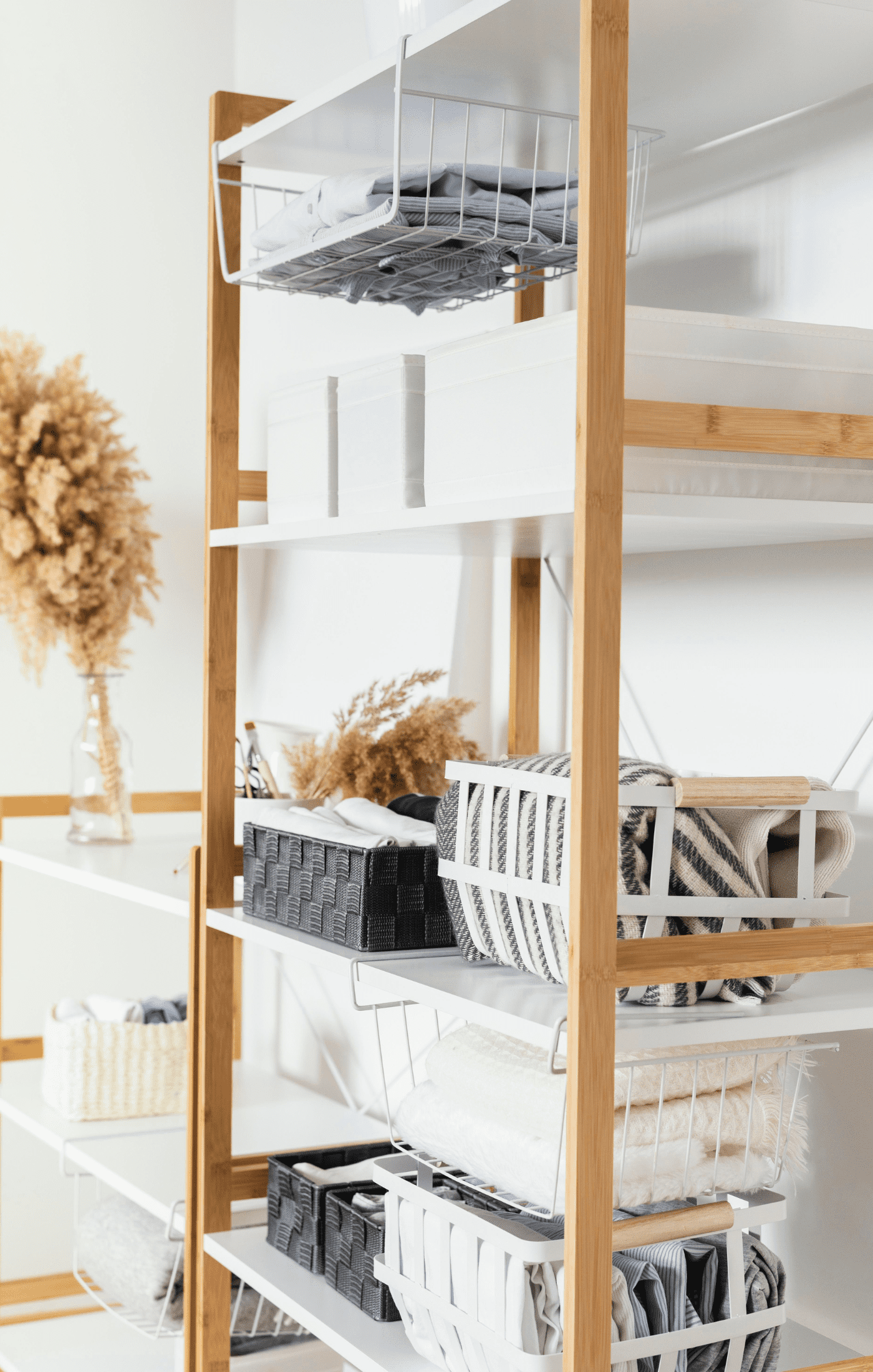
Keeping a home organized is one of those things that sounds simple but rarely feels that way. Between everyday clutter, seasonal stuff, and the general chaos of family life, it’s easy for things to pile up fast. The good news is that you don’t need a full renovation or a professional organizer to get things under control. A handful of the right tools can make a real difference. This post covers seven practical organization tools for home that actually earn their place.
Why the right tools matter
Most disorganization isn’t really about laziness. It’s about not having a good place to put things. When items don’t have a home, they end up on counters, floors, and chairs. The right storage tools fix that problem. They give everything a spot, which makes tidying up faster and keeping things tidy much easier over time. None of these tools are expensive or hard to find, and most of them work in more than one room.
Storage bins and boxes
Storage bins and boxes are the foundation of almost every organized space. They come in a wide range of sizes, materials, and styles, so you can find something that works for your space and doesn’t look out of place. Clear bins let you see what’s inside without pulling everything out. Fabric bins look softer and often work well in living rooms or kids’ spaces. Wire baskets are popular under coffee tables because they look intentional rather than just functional.
You can use bins to store almost anything. Seasonal clothing, extra linens, holiday decorations, toys, and craft supplies all benefit from being grouped and contained. Labeling each bin saves time when you’re looking for something specific. Color-coding works well in households with multiple kids, since each child can have their own color.
Under-bed storage bags are another option worth considering. They keep off-season clothing out of your closet without taking up any floor space. If you’re looking for quality bins and boxes, the Container Store carries a solid range of options for nearly every room and budget. For more ideas on where to put craft supplies specifically, our kids craft storage post has practical suggestions.
Hanging organizers
Hanging organizers work well in spots where you can’t add shelving or don’t want to drill into walls. They attach over a door or hook onto a closet rod, and they use vertical space that would otherwise go to waste. Most have multiple pockets of different sizes, which makes them flexible enough to handle everything from cleaning bottles to kids’ art supplies to bathroom products.
In a pantry, a hanging organizer on the inside of the door can hold snack bags, small packets, or foil rolls that never quite fit on a shelf. In a bathroom, the pockets are great for travel-sized products, hair ties, and small tools. In a kid’s room, they work for stuffed animals, crayons, or small books. They’re one of the least expensive tools on this list and one of the most useful.
Lazy susans
A lazy susan is a rotating turntable that sits inside a cabinet, pantry, or fridge. You spin it to reach what’s at the back instead of moving everything in front of it. That one small change makes a bigger difference than you might expect, especially in deep cabinets where things tend to disappear.
In a pantry, a lazy susan works well for canned goods, jars, and sauces. In a cabinet, it’s great for spices, oils, and small bottles. In the fridge, it helps keep condiments from getting lost in the back corner. They come in different sizes and materials, including plastic, bamboo, and stainless steel. If your kitchen storage feels frustrating to use, a lazy susan is often one of the simplest fixes. For more pantry ideas, our kitchen pantry space saving ideas post is worth a read.
Shoe racks and shelves
Shoes on the floor are one of the fastest ways a space can start to look messy. A shoe rack gives each pair a spot, which makes the entryway or closet look much cleaner right away. Shoe racks come in several formats. Tiered racks hold more pairs in less floor space. Slanted racks let you see each shoe clearly. Over-the-door racks work well in small closets where floor space is limited.
Shelves serve a different purpose but are equally useful. Open shelving in an entryway can hold shoes, bags, and hats all in one place. In a bathroom, shelves give you a spot for folded towels or extra toiletries. In a living room or bedroom, shelves keep books, baskets, and everyday items visible and reachable without adding clutter to surfaces. Both shoe racks and shelves are easy to find in a range of styles, and many can be assembled without tools.
Garment racks
A garment rack is one of those items that earns its place quickly. It’s useful for holding out-of-season clothing that doesn’t fit in the main closet, for keeping dry-clean-only pieces separate, or for organizing a linen closet that needs more hanging space. Some racks are freestanding with wheels, which makes them easy to move around. Others mount to a wall or hang over a door.
If your closet feels overcrowded, moving off-season clothing to a rack in a spare room or basement can free up a lot of space. Some garment racks also include a lower shelf or a second hanging bar, which adds more storage without a larger footprint. For more ideas on closet organization, our how to organize a small closet post covers the basics well.
Over-the-door organizers
Over-the-door organizers are different from hanging organizers in one key way. They typically use the full length of a door and can hold heavier items. Many have hooks along the top bar for bags or coats, plus pockets below for smaller things. They work on bedroom doors, bathroom doors, pantry doors, and closet doors.
In a bathroom, an over-the-door organizer can hold hair tools, products, and extra toiletries. In a bedroom, it’s useful for shoes, scarves, or jewelry. In a laundry room, it can hold dryer sheets, stain removers, and small tools. The key is matching the organizer to the door. Most standard organizers fit doors up to a certain thickness, so it’s worth checking the specs before you buy. Our wall storage ideas post has related ideas if you want to use vertical space beyond just doors.
Desk organizers
A desk organizer keeps your workspace functional. Without one, pens, chargers, paper clips, sticky notes, and random receipts tend to spread across the surface until working at the desk feels more stressful than productive. A desk organizer groups those items so they stay in one spot and are easy to grab when you need them.
Desk organizers come in compact versions meant for small surfaces and larger versions with space for folders and documents. Some include a drawer or two for items you want to keep nearby but out of sight. Beyond the desk itself, drawer organizers help tame the junk drawer and keep office supplies from becoming a jumbled mess. If you work from home, pairing a desk organizer with a few of the other tools on this list can make your home office feel much more functional. Our 15 home office hacks post has more ideas for setting up a space that works.
Putting it all together
You don’t need to buy everything at once. Start with the rooms or spaces that feel most out of control. Pick one or two tools from this list that address the specific problem. Once those are in place and working, it’s easier to see what else might help.
The goal isn’t a perfectly staged home. It’s a home where things have a place, where you can find what you need without a search, and where tidying up doesn’t take longer than it should. These seven tools are a practical starting point. For more ideas across every room, browse our household organization section.
Frequently asked questions
What are the most useful home organization tools?
Storage bins and boxes, hanging organizers, lazy susans, shoe racks, garment racks, over-the-door organizers, and desk organizers cover most of the common storage problems in a home. Each one works in multiple rooms and serves more than one purpose.
How do I keep my home organized long-term?
Start by clearing out what you don’t need. Then set up a system where every item has a designated spot. When putting things away is easy, it becomes a habit. Organization tools help by giving items a clear home, which makes both tidying and finding things much faster.




Leave a Reply