
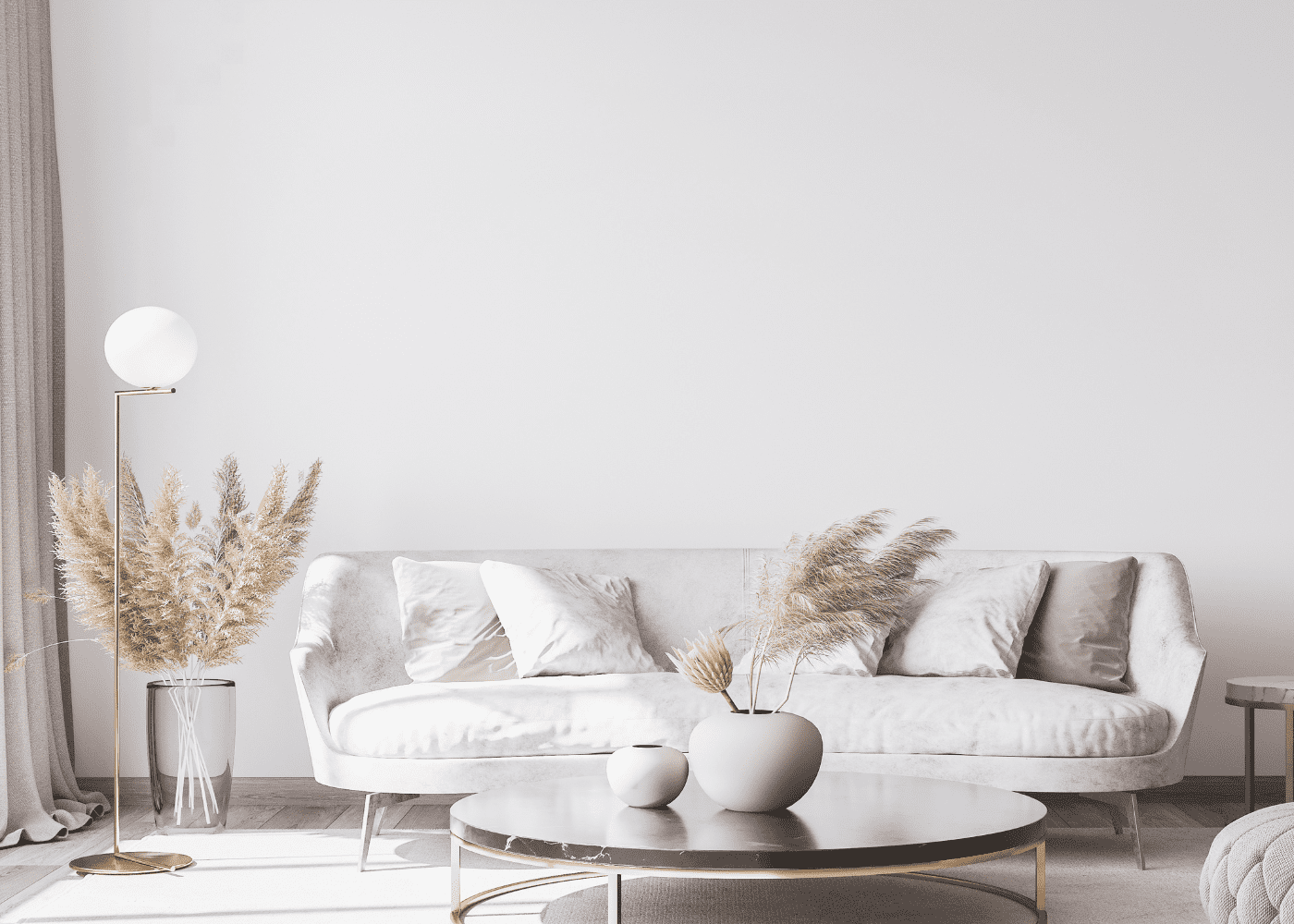
White walls are one of the most versatile choices you can make in a home. They work in any room, suit almost any style, and give you a lot of flexibility as your taste changes over time. The key is knowing how to work with them rather than just leaving them bare. These ideas will help you get the most out of your white walls, whether you’re starting from scratch or refreshing a room you’ve had for years.
Working with a white on white palette
The simplest approach to white walls is to lean into them fully. Pairing white walls with white furniture and white textiles creates a calm, cohesive space that feels open and uncluttered. This works especially well in smaller rooms, because the lack of visual contrast makes the space feel larger than it is.
White on white does not have to feel cold or sterile. The key is to layer different materials. A linen sofa, a cotton throw, a painted wood side table, and a ceramic lamp can all be white and still feel warm and interesting together. The variation in texture does the work that color usually does.
Adding texture to white walls
If your space feels flat, texture is your best tool. Textured wallpaper, woven rugs, knitted throws, and raw wood furniture all add depth without introducing new colors. A white sheepskin rug is a classic choice here. It adds softness and dimension while staying within the white palette. If you have one, it’s worth knowing how to clean a sheepskin rug properly so it stays fluffy and looking its best.
Introducing color to white walls
White walls make it easy to bring in color because the backdrop is always neutral. You can change your accents seasonally without repainting. Throw pillows, rugs, and artwork are the lowest-commitment ways to add color, and they’re easy to swap out when you want a change.
One or two accent colors
If you want color without committing to a lot of it, choose one or two accent shades and repeat them throughout the room. Blues, warm yellows, and soft pinks all look fresh against white. The repetition is what makes it feel intentional rather than random. A blue vase on the shelf, a blue throw on the sofa, and a blue print on the wall will feel connected without feeling overdone.
Bright and bold accents
White walls can handle bold color well because they don’t compete with it. If you love bright color, use it confidently. A bright red chair, a deep green velvet sofa, or a vivid abstract print will all stand out cleanly against white in a way they wouldn’t against a painted wall.
Black and white for a clean, graphic look
Black and white is a classic combination for a reason. It creates strong contrast and a graphic quality that feels sophisticated without being fussy. Black lamp bases, black picture frames, black hardware on furniture, and black-and-white photography all pair naturally with white walls. The look is easy to build up gradually, and it tends to age well.
Metallics with white walls
Gold, silver, brass, and copper all look polished against white. Metallic finishes add warmth and a sense of richness without adding visual clutter. A brass mirror, a gold-toned light fixture, or a set of silver candleholders can be enough to shift the feel of a room. Rose gold has become a popular option too, especially in bedrooms and bathrooms. You don’t need a lot of metallics for them to make an impact.
Natural elements and wood tones
Wood is one of the best complements to white walls. It adds warmth that pure white can sometimes lack. Hardwood floors, wooden shelves, a natural wood dining table, or even a few wooden frames can ground a white room and make it feel livable rather than showroom-perfect.
Plants are another natural element that works beautifully with white. Green foliage pops against white walls in a way it doesn’t against colored ones. Even a small plant on a shelf or windowsill adds life to a white room. Incorporating natural materials like stone and woven bamboo has a similar effect, bringing a sense of calm and warmth into the space.
Art and wall hangings
White walls are the ideal backdrop for art. Without a wall color competing with the piece, the art gets to speak for itself. Bold artwork is particularly effective here. A large abstract print, a dramatic photograph, or a brightly colored painting will all look their best against a white wall.
Wall hangings like macramé, woven textiles, and decorative mirrors also work well. A large mirror serves a practical purpose too. Positioned to catch natural light, it reflects light back into the room and makes the space feel brighter and more open. Round mirrors, sunburst styles, and full-length floor mirrors are all good choices depending on the scale of the room.
If you’re looking for inspiration for what to hang, our round-up of wall storage ideas includes some options that are both functional and decorative.
Patterns in a white room
A white room doesn’t have to mean a plain room. Patterns on rugs, cushions, curtains, and bedding add visual interest without introducing more paint colors. You can mix patterns in a white room more easily than in a colored one, because the white creates breathing room between them. Stripes, geometrics, florals, and checks can all coexist in a white space as long as the scale and weight of the patterns feel balanced.
Layering neutrals for depth
If bright color isn’t your style, neutrals are a quieter way to add depth to a white room. Beige, oatmeal, warm gray, and sand all layer well with white without creating sharp contrast. The result feels calm and considered. Linen upholstery, a jute rug, a sisal basket, and a wood-toned shelf can all build up this kind of layered, textural look without any single element demanding too much attention.
White walls and organization
One underrated benefit of white walls is that they make clutter more obvious. This can actually work in your favor. When the walls are white, tidiness becomes more visible, and that can be a good motivator to stay organized. Open shelving looks sharp against white walls when it’s well arranged, and built-in storage like bookcases and cabinets blends in rather than competing with the room. For more practical ideas, our home organization ideas page has a lot of useful starting points.
Keeping white walls clean
White walls do show marks more readily than painted walls in darker colors. That’s just the trade-off. The good news is that most white walls, especially those finished with a satin or eggshell paint, clean up well with minimal effort. Our guide on how to clean white walls walks through the best methods for getting scuffs and fingerprints off without damaging the paint.
Putting it all together
White walls give you a lot of options, which is both the appeal and sometimes the challenge. The most important thing is to make deliberate choices rather than leaving the room feeling unfinished. Pick a direction, whether that’s texture-focused, color-accented, natural and warm, or graphic and bold, and build from there. You don’t need to do everything at once. White walls are forgiving, and you can add to them gradually as you find pieces you love.
For more ideas on how to style your home, take a look at our home decor ideas collection. And if you’re working on specific rooms, our posts on dining room wall décor and entryway wall decor have room-specific guidance that might be useful.




Leave a Reply