
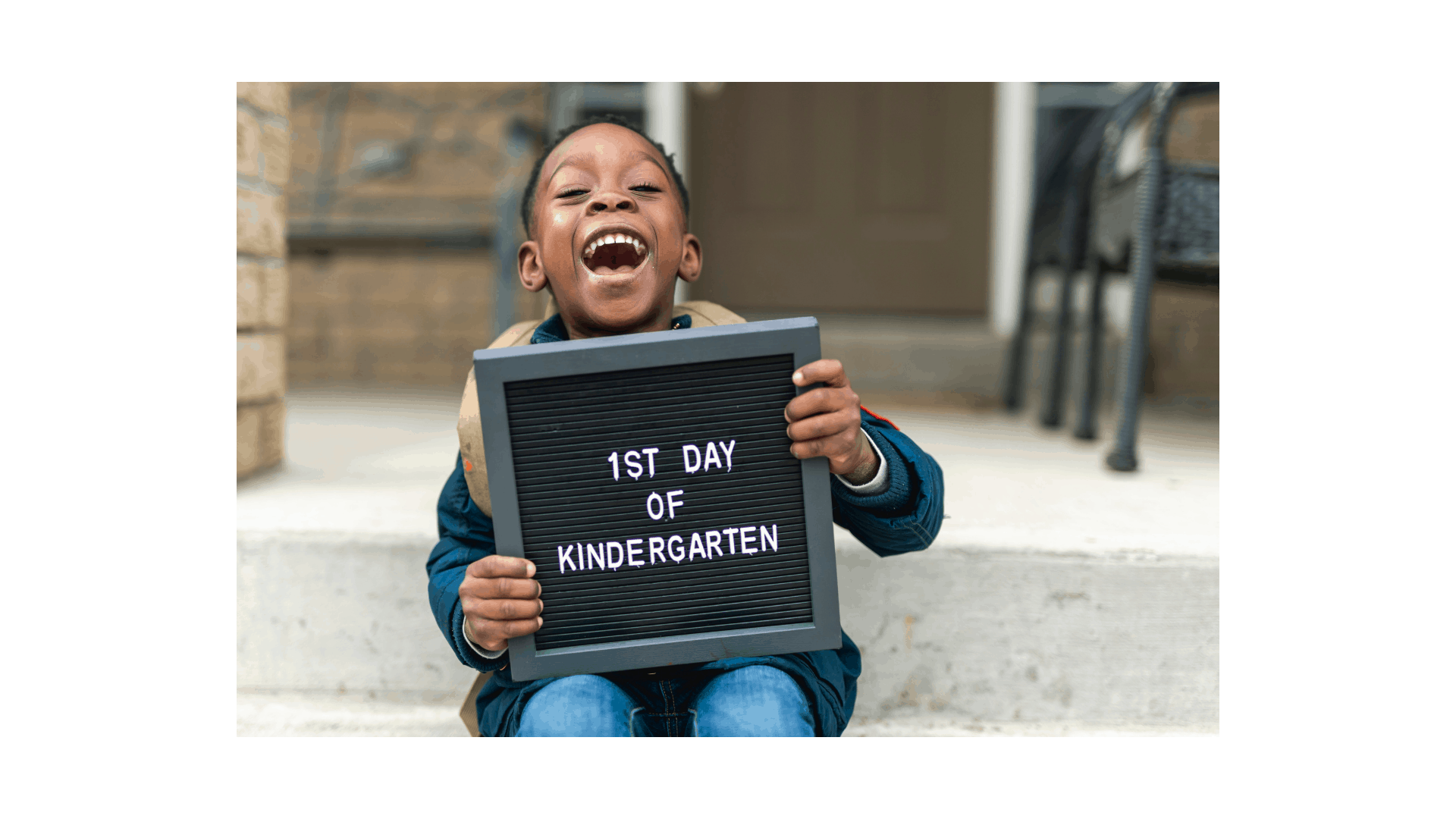
What kindergarten readiness really means
The end of summer has a way of sneaking up fast. Suddenly, back-to-school signs are everywhere, and you’re realizing that your child’s first day of kindergarten is just around the corner. It’s a big milestone for the whole family, and it’s completely normal to wonder whether your child is ready.
Here’s what I want you to know first: kindergarten readiness is not just about knowing the alphabet or counting to twenty. It covers a much wider range of skills, including how your child handles emotions, interacts with others, takes care of themselves, and follows directions. Academic knowledge matters, but it’s only one part of the picture.
This post walks through what kindergarten readiness actually looks like, and includes a practical checklist you can use at home to support your child before that first day arrives. Every child develops at their own pace, so use this as a guide rather than a test. If your child has additional learning needs, it’s worth connecting with their doctor and the school’s special education team before registration.
The case for preschool before kindergarten
If you have the option, enrolling your child in a preschool, playschool, or nature school program before kindergarten can make a real difference. These programs introduce children to classroom routines, group dynamics, and adult-led instruction in a lower-pressure setting. By the time kindergarten starts, the basic structure of a school day already feels familiar.
Children who attend an early learning program tend to handle drop-off transitions more smoothly. They’ve already practiced sitting in a group, taking turns, and listening to a teacher. That experience builds confidence. Starting something new is always easier when it doesn’t feel completely unknown.
If preschool isn’t available or accessible to your family, you can still build many of these same skills at home. The checklist at the end of this post is designed with exactly that in mind. You can also read more about why preschool matters and explore when kids typically start preschool if you’re still weighing your options.
Social and emotional skills
Social and emotional development is one of the most important areas to focus on before kindergarten. Children spend most of their school day navigating relationships, managing feelings, and working alongside others. The stronger their social and emotional foundation, the more confident they’ll feel in that environment.
Separation from caregivers
Drop-off can be hard. For some children, it takes a few weeks before they feel settled. What helps most is practicing short separations before school starts, whether that’s a drop-in playgroup, a class, or time at a neighbor’s house. Knowing that you will come back, and that they will be okay, is a skill that takes repetition to build.
Personal space and empathy
Kindergarteners share a classroom with around twenty other children. Your child will need to understand that other people have boundaries, and that their classmates have different feelings and needs. Practicing simple things like asking before taking something, and checking in when a friend seems upset, goes a long way.
Responsibility and cleanup
After activities, children are expected to tidy their own space and put materials away. This is a habit worth building at home. Even young children can put their toys back on the shelf or return art supplies to their bin. Consistent practice makes it feel natural rather than like a chore.
Self-expression and self-regulation
Kindergarten brings up a lot of big feelings. Your child will need to be able to name what they’re feeling and express it in a way that doesn’t hurt others. Teaching a simple calming strategy, like stopping, taking a slow breath, and then using words, gives children a concrete tool they can reach for when things feel overwhelming.
Self-confidence matters here too. Children who believe they can figure things out are more willing to try. Praise effort over results, and let your child see you work through small challenges yourself. That models resilience in a way that sticks.
Physical development and self-care
Teachers have a full classroom to manage. By the time kindergarten starts, your child should be able to handle basic self-care tasks on their own, without needing adult assistance for every step.
Bathroom independence
Your child should be able to use the bathroom independently, including wiping properly and washing their hands afterward. With a large group of children, a teacher cannot leave the room to assist individual students with personal care during the school day.
Managing clothing and gear
Getting dressed and undressed independently is a practical skill that comes up multiple times each school day. Zippers, buttons, velcro, coat hooks, and shoe fasteners are all worth practicing at home. The goal isn’t perfection. It’s enough independence that your child can manage without help during transitions.
Fine motor skills
Basic tool use matters in kindergarten. Your child will use pencils, crayons, scissors, and glue sticks regularly. Giving them plenty of time to practice with these at home, through drawing, cutting, and simple crafts, helps them feel comfortable from day one. If you’re looking for ideas, there are lots of easy crafts for kids that build these skills naturally.
Intellectual and academic readiness
Academic skills do matter, but they’re not the place to start your preparation. A child who feels emotionally secure and socially confident will learn academic content far more easily than a child who knows their letters but struggles with the basics of classroom life. With that said, here are the intellectual skills that genuinely help at kindergarten entry.
Personal information
Your child should know their first and last name. It’s also helpful if they know your name and phone number, or at least know where to find that information. This matters for safety as much as anything else.
Basic counting and number recognition
Counting to ten is a reasonable baseline. Higher is helpful, but not required. Some familiarity with written numbers is also useful. If you’re looking for ways to make math feel playful, the posts on preschool math concepts and math in nature are good places to start.
Letter recognition
Knowing some letters, especially the ones in their own name, is a helpful starting point. Full alphabet knowledge is great but not expected. Reading books aloud together, pointing out letters in everyday life, and using simple tracing activities are all low-pressure ways to build this skill. You can also download a free alphabet tracing sheet to use at home.
Following multi-step directions
A school day is full of multi-step instructions. “Put your backpack on your hook, take out your lunchbox, and sit on the carpet” is a completely normal thing a kindergarten teacher might say. Practice giving your child two or three consecutive instructions at home and see how they manage. This builds working memory and the habit of listening before acting.
Focus and task completion
Kindergarten asks children to sit and listen for longer than they might be used to. They also need to follow a task through from start to finish, rather than moving on when something else catches their eye. Building stamina for this takes time. Games, puzzles, and read-alouds are all helpful ways to stretch attention span gradually.
Kindergarten readiness checklist
Use the questions below as a starting point for your own thinking. This is not a pass-or-fail list. A kindergarten teacher is fully prepared to support children across a wide range of abilities. This checklist is simply a way to identify areas where a little extra practice at home might help your child feel more comfortable walking in on day one.
Ask yourself: can my child do these things?
Following directions
Can your child follow two or three consecutive instructions? This is one of the most practical skills they’ll use every single day. Practice at home by giving a short sequence of tasks, like “please put your cup in the sink, wash your hands, and come sit at the table.”
Respecting authority
Your child will interact with many adults at school beyond their classroom teacher. Can they follow instructions from adults they don’t know well? Practicing this at home, by following household rules consistently and accepting direction from other trusted adults in their life, builds this habit gradually.
Asking for help
Knowing how and when to ask for help is a skill many children find harder than it sounds. In a classroom, the teacher isn’t always immediately available. Your child needs to know it’s okay to raise their hand and wait, or to turn to a peer for support. Encourage your child to practice asking for help from people outside your immediate family when situations come up naturally.
Sharing and taking turns
Whether it’s art supplies, outdoor equipment, or a spot in line, sharing is a constant part of the kindergarten day. Your child should understand the difference between shared materials and personal belongings, and practice asking before taking rather than just grabbing. Talking through the steps out loud, “first we ask, then we wait for the answer,” helps make it a habit.
Managing emotions
Your child will face frustration, disappointment, and excitement at school, sometimes all in the same morning. The goal isn’t to eliminate those feelings. The goal is to give your child a tool they can use when feelings get big. A simple sequence like “stop, breathe, and use your words” gives them something concrete to reach for.
Bonus skills worth building
These aren’t skills a teacher will check on day one, but they do make the school day run more smoothly. Reading, writing, and recognizing their own first and last name is a strong starting point. Knowing how to put on shoes, a coat, and winter gear independently is genuinely practical. Being comfortable using a pencil, scissors, and glue on their own saves a lot of time during class activities. And being able to use the bathroom without assistance is something worth confirming well before school starts.
How to support your child at home
You don’t need a formal curriculum to prepare your child for kindergarten. The most powerful preparation happens through everyday routines and conversations. Reading together regularly, talking about feelings, playing games that require turn-taking, and giving your child small responsibilities around the house all build the skills on this list.
Keep a consistent daily routine so your child understands what comes next and feels secure in that predictability. Let them practice independence in small ways, like pouring their own cereal or packing their own bag. These moments build confidence in a way that no worksheet can replicate.
If you’re also thinking about what skills to work on through play, the posts on activities for toddlers and cognitive development activities for preschoolers have practical ideas that fit naturally into a regular week.
A note on readiness
Every child arrives at kindergarten with a different mix of strengths and areas to grow. Some children come in knowing how to read. Others are still working on managing big emotions. Both are completely normal. Kindergarten teachers are trained to meet children where they are and build from there.
Your job as a parent is not to produce a perfectly prepared child. It’s to send a child who feels safe, loved, and confident enough to give school a real try. That is the foundation everything else is built on.
For more on what to expect at this stage, take a look at the guide on preschool and kindergarten ages and the post on when kids start preschool. Both are helpful reads as you plan ahead for this transition.




Leave a Reply