
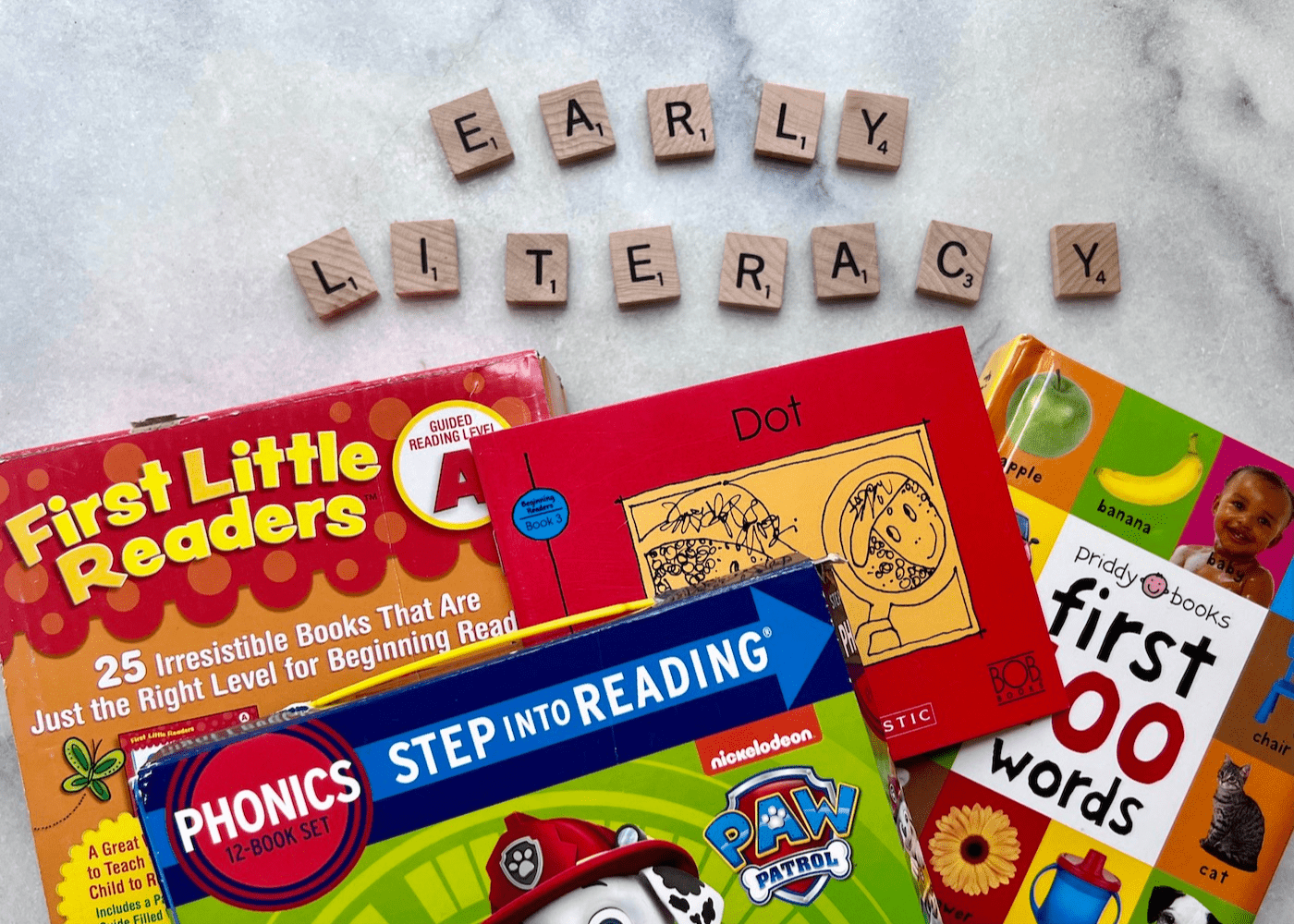
Literacy is about much more than reading. It covers speaking, listening, writing, and reading together as one connected set of skills. These skills help children understand the world around them and express their own thoughts and needs. Building a strong foundation in all four areas during the early years makes a real difference later on.
The good news is that you don’t need to run a classroom at home to support your child’s literacy. Much of this learning happens through everyday moments. These tips are practical, low-pressure, and genuinely useful for parents of toddlers and preschoolers.
What early literacy actually includes
Reading often gets the most attention, but it’s only one piece of the picture. A child who can decode words on a page but hasn’t developed strong listening and speaking skills will have a harder time with comprehension and communication. Early literacy includes reading, writing, speaking, and listening. Each skill supports the others.
When children enter school, their teachers will work on all of these areas in a structured way. But the groundwork you lay at home, before formal instruction begins, matters enormously. You don’t need to teach lessons. You just need to be intentional about how you interact with your child day to day.
Tips for building literacy skills at home
Talk to your child like an adult
Baby talk is hard to resist, especially with very young children. But the way you speak to your child directly shapes the language they learn. Children absorb vocabulary, sentence structure, and tone from the people around them. When you speak to your child using clear, complete sentences and real words, you give them a model to learn from.
This doesn’t mean every conversation has to be formal or stiff. You can still be warm and playful while using proper language. Talk to your child about what you’re doing, what you’re seeing, and what you’re thinking. Ask them questions and give them space to respond. Young children are naturally curious about big ideas and feelings. Talking through those things together builds their ability to express themselves, which is a core literacy skill.
The amount of conversation matters too. Children who hear more words spoken to them in their early years tend to have stronger vocabularies when they start school. Talk often, talk naturally, and don’t worry about making it educational. It already is.
Read together every day
Reading aloud to your child is one of the most effective things you can do for their literacy development. It builds vocabulary, listening comprehension, and a familiarity with how written language sounds. It also helps children develop a positive relationship with books, which supports their motivation to learn to read on their own.
Let your child choose books sometimes. Follow their interests. Offer a range of topics and styles. When they show an interest in trying to read themselves, encourage it and support them without pressure. Learning to read is genuinely hard, and children need patience and encouragement, not performance expectations.
Reading before bed is a particularly useful habit. It helps children wind down, transitions them away from active play, and gives them something calm and enjoyable to look forward to at the end of the day. Books on outings work well too. A few picture books at a picnic or while waiting somewhere gives children something engaging to do and keeps reading woven into regular life.
For more ideas on building a reading habit, check out our tips on how to read to kids and our list of the best books for a 1-year-old.
Encourage drawing and early writing
Writing is a key part of literacy, but in the early years, writing starts with drawing. Scribbles, squiggles, and shapes that look almost like letters are all meaningful stages of development. The National Association for the Education of Young Children has a helpful breakdown of the stages of writing, which is worth looking up if you want to understand where your child is in the process.
At this stage, focus on the habit of making marks on paper rather than the quality of those marks. Holding a pencil or crayon correctly is worth practicing. The specific shapes they draw are less important right now.
If your child wants to write letters but isn’t confident enough to try on their own, use a highlighter to write the word for them. They can then trace over your letters with a pencil. This gives them the experience of forming the letters without the pressure of starting from scratch. Our letter tracing ideas post has some good options if you want something more structured.
Keep sessions short and follow your child’s lead. Forcing writing practice when a child is tired or uninterested does more harm than good. A few willing minutes are worth more than a long reluctant session.
Use music and songs
Songs are an excellent tool for early literacy. When children learn lyrics, they practice memory, rhythm, and language patterns. Action songs add another layer by connecting words to physical movements, which deepens understanding and makes the learning stick.
You don’t need to be a musician for this to work. Singing simple songs together, listening to children’s music, or doing call-and-response rhymes all count. Learning music alongside language supports literacy in ways that feel completely natural to children.
Make time for play
Play is how young children learn. Word games, storytelling games, and imaginative play all build language skills without feeling like work. Children who are engaged and having fun retain more and feel less anxious about learning.
Simple games can be adapted to include literacy elements. You might ask your child to describe what they’re building with blocks, or narrate a story together during pretend play. Even asking them to help write a grocery list, or “write” their own version with drawings, connects writing to real life in a meaningful way. Dramatic play toys for preschoolers can help set the stage for this kind of open-ended language-rich play.
Practice phonemic awareness
Phonemic awareness is the ability to hear and work with the individual sounds in words. It’s one of the strongest predictors of reading success in young children. A phoneme is the smallest unit of sound in a word. The word “dog,” for example, has three phonemes: d, o, and g.
You don’t need worksheets to build this skill. Rhyming is one of the most natural and effective ways to practice it. Read books with rhyming text and pause to point out the rhymes. You can turn it into a game by asking your child to touch their nose every time they hear two words that rhyme. Rhyme matching games with simple printed cards work well too.
Clapping out syllables, playing with alliteration, and asking your child to guess what word you’re saying when you say it sound by sound are all easy, low-prep ways to build this skill into your day. For more structured ideas, our post on supporting early literacy at home goes deeper into this topic.
Keeping it simple and sustainable
Early literacy learning doesn’t need to be complicated. The most effective things you can do are also the most ordinary: talk with your child, read together, let them draw and write freely, sing songs, and play. These aren’t grand gestures. They’re daily habits that add up over time.
Save the formal lessons for school. At home, the goal is to build a child who feels comfortable with language, curious about books, and confident in their own ability to communicate. That foundation makes everything else easier when structured learning begins.
If you’re thinking about what else to work on alongside literacy, our kindergarten readiness checklist is a helpful place to start. It covers the full range of skills children benefit from having before they begin school, and most of them can be practiced through the same kind of everyday activities described here.




Leave a Reply