
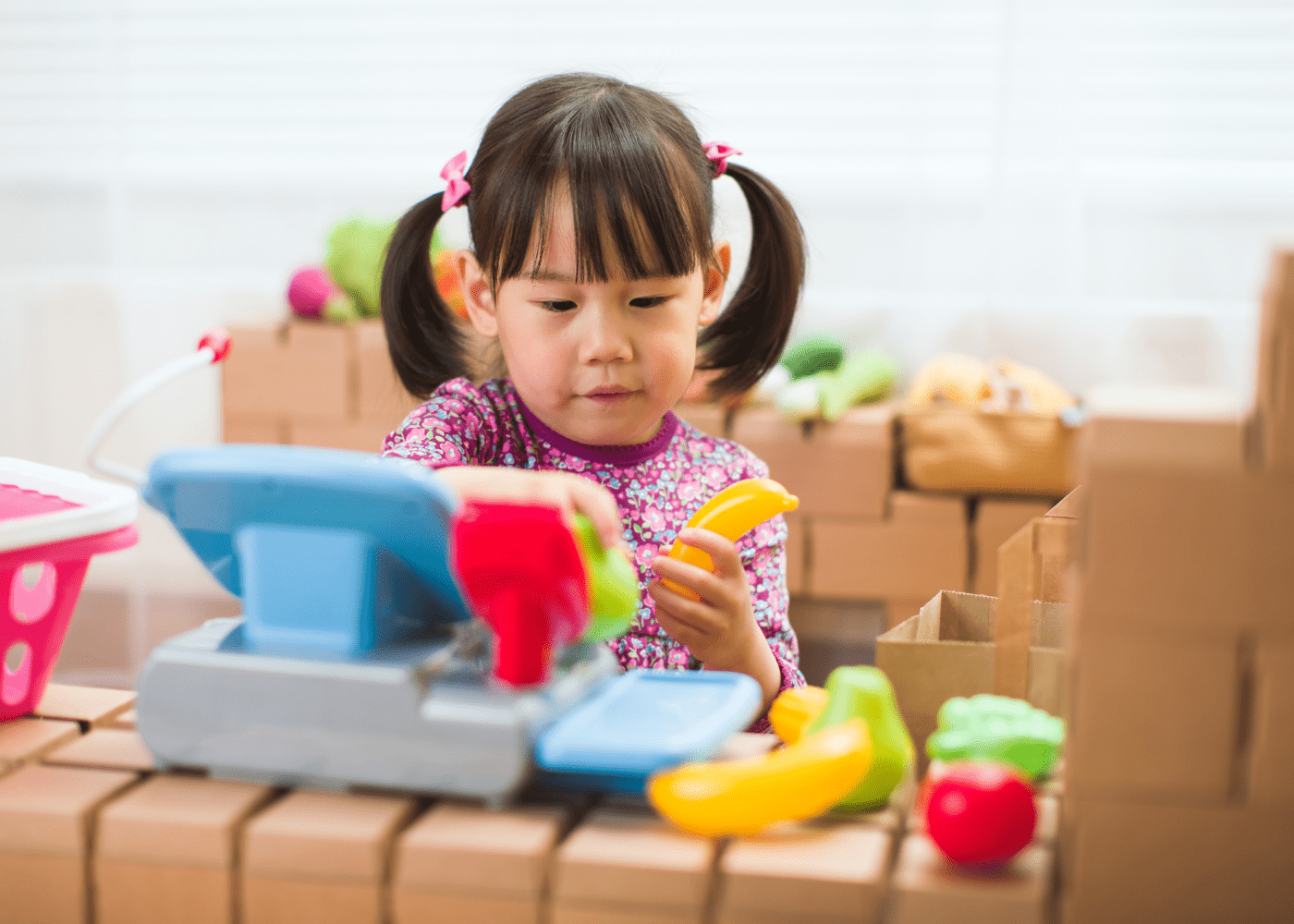
Dramatic play toys give preschoolers a way to act out the world as they understand it. Sometimes called pretend play toys, these are the tools children use to take on roles, build scenes, and work through ideas they are still figuring out. A well-stocked dramatic play area can support language, math, empathy, and creativity all at once, without children even realizing they are learning.
This post covers what dramatic play is, why it matters, which types of toys work best, and how to set up a space that children will actually want to use.
What is dramatic play?
Dramatic play is a type of pretend play where children take on roles and act out scenes from their imagination. A child might pretend to be a doctor, a chef, a parent, or an astronaut. They might replay something that happened to them, or invent a situation entirely from scratch. Either way, they are using objects, words, and movement to tell a story and make sense of their world.
It is one of the most natural things children do. You do not need to teach it. You just need to give them the right environment and tools.
Why dramatic play matters for preschoolers
Pretend play does a lot of work for a young child’s development. Through dramatic play, children practice communication by talking with each other, working out disagreements, and figuring out how to share a role or a prop. These are real social skills that transfer directly to life outside of play.
Language develops quickly during dramatic play. Children use new vocabulary as they narrate what they are doing, take turns speaking, and respond to each other in character. They also start to understand that objects can represent other things, which is an early form of symbolic thinking that supports reading and math later on.
Dramatic play also helps children process emotions. When a child pretends to take a stuffed animal to the doctor, they are often working through their own feelings about something unfamiliar or scary. Play gives them a safe way to do that.
Fine motor skills get a workout too. Pouring pretend tea, buttoning a dress-up costume, and using toy tongs all require the same small muscle control that children need for writing. If you are also thinking about cognitive development activities for preschoolers, dramatic play fits naturally into that mix.
Types of dramatic play toys that work well for preschoolers
Play kitchens and food sets
A play kitchen is one of the most versatile dramatic play toys you can buy. Children use it for years, and the play scenarios it supports are almost endless. Cooking, serving, grocery shopping, and hosting a tea party all happen around a play kitchen. Look for one that comes with basic accessories like pots, pans, and dishes. Pretend food sets are a great addition, especially ones that include a variety of foods children recognize from home.
Dress-up clothes and accessories
A dress-up bin does not need to be expensive or curated. Old Halloween costumes, thrift store finds, scarves, hats, and bags all work well. Children use dress-up clothes to try on identities and experiment with how it feels to be someone else. This kind of play builds perspective-taking skills and confidence. Keep the selection broad enough that children can invent their own characters rather than just copying a specific one.
Dollhouses and dolls
Dolls give children something to care for, and that act of caring builds empathy. Baby dolls in particular are great for this. Children feed them, wrap them in blankets, and put them to sleep. A dollhouse extends this play by giving the dolls a place to live, work, and move through daily routines. When choosing dolls for a play area, include a range of skin tones and looks so children see themselves and others reflected in their toys.
Play sets with themes
Themed play sets work well when they match a child’s current interests. A farm set, a fire station, a castle, or a construction site all give children a ready-made world to inhabit and build on. These sets tend to anchor play and give it more depth. Children return to them again and again, adding new details to the story each time.
Toys that replicate real-life tasks
Some of the best dramatic play toys are the ones that mirror what children see adults doing every day. A pretend cleaning set, a toy tool kit, a cash register, or a doctor kit all fall into this category. These toys let children practice skills they observe at home and in the world around them. A toy cash register, for example, gives children a hands-on way to practice early math concepts like counting and making change. For more on building early math skills, the post on preschool math concepts is worth reading alongside this one.
Puppets
Puppets are an underrated dramatic play toy. They give children a degree of distance from the story they are telling, which can make it easier for quieter or more cautious children to participate. A simple hand puppet or finger puppet set is enough to get started. Children will invent their own stories with very little prompting.
How to set up a dramatic play area at home or in a classroom
Pick a dedicated space
The area does not need to be large. A corner of a room works well. What matters is that children know this is the place for pretend play. A consistent location helps children get into the mindset of play more quickly and makes cleanup easier to manage.
Keep it simple and accessible
Low shelves, open bins, and clearly organized props all make it easier for children to start playing independently. If they have to dig through a pile of tangled costumes or hunt for missing pieces, they will give up before they begin. Good playroom storage ideas can make a real difference here. Keep the most-used items at eye level and within reach.
Rotate toys and props
You do not need everything out at once. Rotating toys keeps the play area fresh and gives children something new to engage with. When a play kitchen has been sitting untouched for a few weeks, swapping in a new accessory or theme can bring it back to life.
Add natural and personal touches
A small plant, a mirror at child height, or a framed piece of the child’s own artwork can make the space feel more intentional and inviting. These small details signal to children that the space is theirs.
Ideas for dramatic play scenarios
Sometimes children need a starting point. Here are a few scenarios that tend to engage preschoolers well.
A grocery store is easy to set up with a shelf of non-perishable pantry items, a basket, and a simple cash register with play money. Children take turns shopping and working the checkout. This scenario naturally brings in math, social skills, and sequencing.
A tea party can be as simple as a small table, a play tea set, and a few stuffed animals as guests. Children practice conversation, hosting, and taking turns. It is calm, focused play that works well for smaller spaces.
A puppet show requires very little setup. Give children a few puppets and a designated stage, like the back of a couch or a table turned on its side, and let them create the story. This type of play tends to bring out strong language and storytelling skills.
A fort made from blankets and furniture is a classic for good reason. Children feel a real sense of ownership over a small, enclosed space. Once the fort is built, the play inside it can go in any direction.
Ask children what they want to pretend. This simple question gives them ownership over the play area and often leads to the most creative and sustained play you will see.
The real benefits, summed up
Dramatic play supports development across almost every area: language, math, empathy, physical coordination, creativity, and social skills. The toys themselves matter less than the opportunity to use them freely. A well-stocked, accessible dramatic play area gives children the tools they need to practice being in the world before they actually have to do it on their own.
Whether your child gravitates toward a play kitchen, a dress-up bin, or a set of puppets, the play they do there is doing real work. If you are looking for more ways to support learning through play, the activities for toddlers page has plenty of ideas to build on. And for more on how structured learning environments support this kind of play, the post on why preschool matters offers useful context for parents thinking about early childhood education.
Frequently asked questions
What toys should be in a dramatic play area?
Look for toys that invite children to take on roles and act out scenarios. A play kitchen, dress-up clothes, dolls, a cash register, puppets, and themed play sets are all strong choices. The best toys are the ones that match what a child is currently curious or excited about.
What are dramatic play areas for preschoolers?
A dramatic play area is a designated space where children can pretend, act out roles, and build stories. It can be a corner of a room, a shelf with a few bins of props, or a more elaborate setup. The space does not need to be complex to be effective.
What kinds of items do preschoolers use for pretend play?
Children use almost anything they can get their hands on. Common items include dress-up clothes, toy kitchen sets, dolls, puppets, toy tools, pretend food, and play money. The key is having a range of options so children can follow their interests wherever they lead.




Leave a Reply