
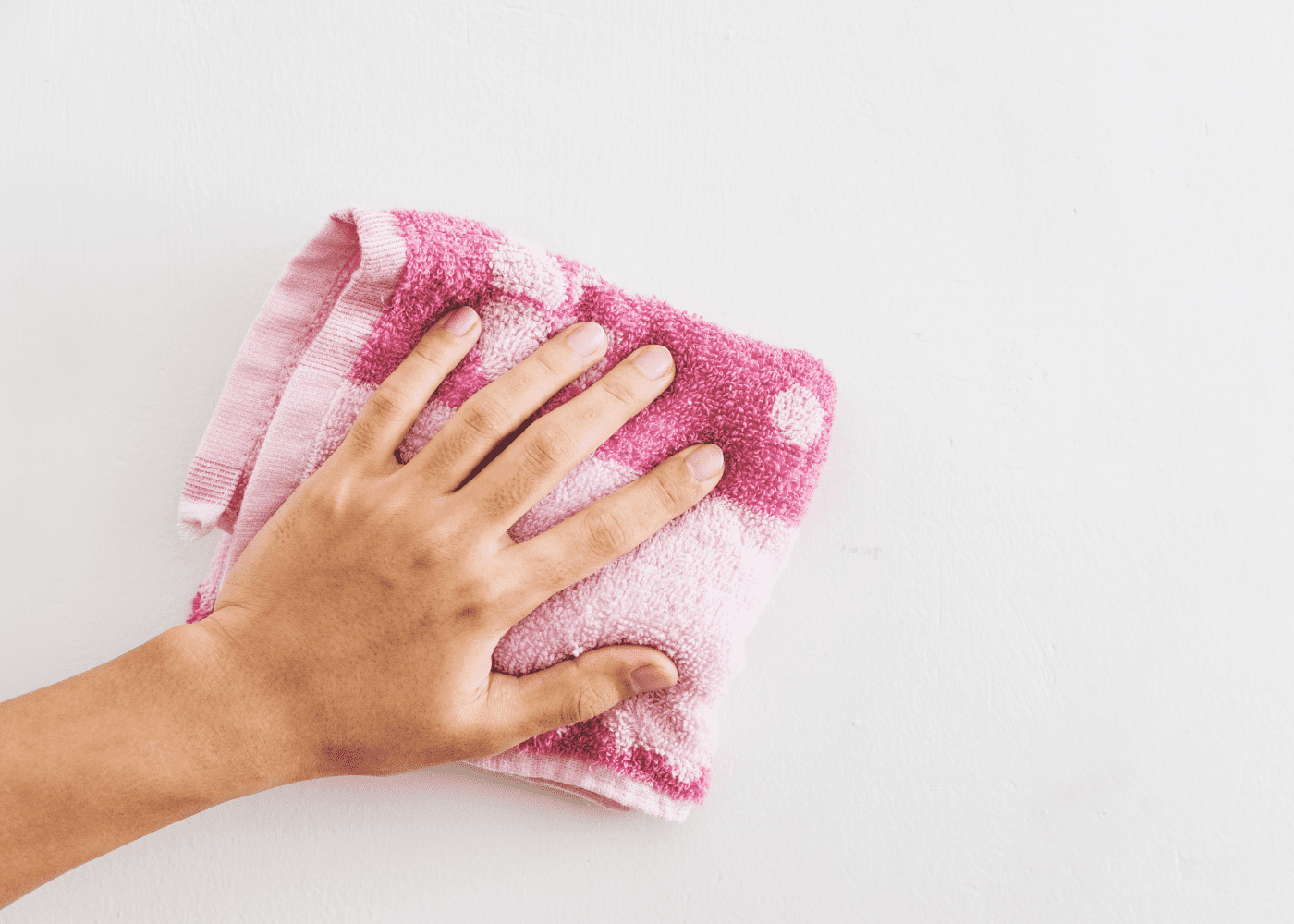
White walls look clean and bright when they’re well maintained. But they also show every scuff, fingerprint, and mystery mark your household produces. If soap and water aren’t cutting it, there are a few more options worth trying before you reach for the paint roller.
This guide walks through seven methods for cleaning white walls, from the gentlest to the most heavy-duty. I recommend starting at the top of the list and working your way down. The mildest approach that works is always the right one.
What to do before you start cleaning
A little prep goes a long way toward protecting your paint. Before you apply any cleaning solution, take a few minutes to get ready.
Start by dusting the walls. Use a soft brush attachment on your vacuum or a clean microfiber cloth to wipe away loose dust and cobwebs. Pay attention to corners and baseboards, where dust tends to collect.
Next, do a spot test. Choose a small area that is easy to hide, like behind a piece of furniture or near the baseboard. Apply your cleaning solution there first and wait a few minutes. If the paint looks fine, you can proceed with confidence.
When you do start cleaning, work from the top of the wall down. This way, any drips or dirty water fall onto areas you haven’t cleaned yet. Use gentle circular motions rather than scrubbing hard in one direction. Hard scrubbing can leave visible marks, especially on flat or matte finishes.
Also remove any wall hangings before you start. Move furniture away from the walls so you have clear access to the surface.
Know your paint finish first
The finish on your painted walls makes a big difference in how you should clean them. Not every method works for every type of paint.
Flat or matte paint is the most delicate. It has no sheen and absorbs moisture easily. Harsh chemicals or rough scrubbing can lift the paint or leave dull patches. Stick with warm water and mild dish soap for flat-painted walls. Always spot test anything else before applying it broadly.
Eggshell and satin finishes are more forgiving. They have a slight sheen and hold up better to gentle cleaning. Most of the methods in this guide work well on these finishes.
Semi-gloss and high-gloss paints are the most durable. They resist moisture and are easier to wipe clean. Still, avoid anything abrasive, since scratching a glossy surface will dull the finish and leave visible marks.
Method 1: Warm water and dish soap
This is always the right place to start. A simple mix of warm water and clear liquid dish soap handles more than you might expect, including light grease and crayon marks.
Fill one bucket with warm water and a small squirt of dish soap. Fill a second bucket with plain warm water for rinsing. Dip a soft non-abrasive sponge into the soapy water and gently wipe the stained area in circular motions. Then dip a clean microfiber cloth into the plain water and wipe the area again to rinse. Dry the spot with a fresh towel when you’re done.
The key here is to use a non-abrasive sponge. Rough scrubbers will damage paint, especially on flatter finishes.
Method 2: All-purpose cleaner
If dish soap doesn’t fully do the job, an all-purpose cleaner is a reasonable next step. It works on most paint finishes, including flat, satin, eggshell, semi-gloss, and gloss. Look for a non-abrasive formula.
Simple Green All-Purpose Cleaner is a solid option. It cuts through fingerprints, smudges, and light stains without being harsh on painted surfaces. Spray it onto a soft cloth or sponge rather than directly onto the wall, then wipe gently. Follow up with a damp cloth to remove any residue, and dry the wall when you’re finished.
Method 3: Magic Eraser
A Magic Eraser is one of the most effective tools for white walls. It works especially well on scuffs, marks from shoes or furniture, and stains that won’t respond to liquid cleaners.
Wet the eraser with water and gently rub it on the stained spot. Let the eraser do the work. You don’t need to press hard. Too much pressure can scuff the paint or remove the finish, particularly on flat or matte walls.
Magic Erasers are widely available online and in most grocery or hardware stores.
Method 4: White vinegar and water
White vinegar is a mild acid that breaks down grease, grime, and some types of staining. It’s a practical option for walls that need a little more than soap and water.
Mix half a cup of white vinegar with two cups of warm water. You can put this in a spray bottle and mist the wall directly, or mix it in a bowl and apply it with a sponge. Let it sit for a few minutes, then wipe the wall clean. Pat the area dry with a clean cloth afterward.
Vinegar has a strong smell. Open a window while you work and leave the room ventilated for a while after cleaning. Do not use vinegar on marble, natural stone, or any stone-adjacent surfaces, as the acid can damage them.
Method 5: Baking soda paste
Baking soda works as a gentle abrasive. It can lift stubborn stains that have dried onto the wall without requiring harsh chemicals.
Mix equal parts baking soda and water to form a thick paste. Apply the paste directly to the stain. Scrub gently with a soft cloth or sponge, using circular motions. Once the stain lifts, wipe away the paste with a damp cloth and dry the area thoroughly.
Baking soda is inexpensive and easy to find at any grocery store.
Method 6: Hydrogen peroxide
Hydrogen peroxide can remove stubborn stains, but it does carry some risk of bleaching or discoloring paint. Use it carefully.
Always do a spot test in a hidden area before applying it to a visible stain. Dilute the hydrogen peroxide with water in a 1:1 ratio. Apply the diluted solution to the stained area with a cloth and scrub gently. You may need to repeat this a couple of times for tough stains. Rinse the area with clean water when you’re done, then dry it with a cloth.
Good ventilation helps here too. Hydrogen peroxide has a mild but noticeable smell when used in a closed space.
Method 7: Bleach or Comet
Bleach and Comet are the most powerful options on this list. They work well on mold, mildew, and deeply set stains. They are also the most likely to damage paint if used incorrectly. Use these as a last resort, and take a few safety precautions first.
Using bleach
Wear rubber gloves and protective eyewear before you start. Mix one part bleach with three parts water. Apply the diluted solution to the wall with a clean sponge or cloth, using gentle circular motions from top to bottom. Rinse the area well with clean water when done, then dry it with a cloth. Keep the room ventilated while you work, since bleach fumes are strong and can irritate your airways.
Using Comet
Wet the wall first with a damp sponge. Sprinkle a small amount of Comet onto a damp sponge and gently scrub the stained area in circular motions. Rinse thoroughly and dry the wall when finished.
One rule that matters
Never mix bleach with vinegar, ammonia, hydrogen peroxide, or other household cleaners. These combinations create toxic gases. Use bleach on its own, with water only. This is not an area to improvise.
How often should you clean white walls?
Most painting and cleaning professionals recommend cleaning walls at least twice a year. A light dusting or wipe-down every few months keeps buildup from turning into a bigger job later.
If you have children or pets, you will likely need to clean more often. Dealing with a mark right when it happens is much easier than trying to remove it once it has dried and set into the paint.
For more ideas on keeping your home tidy and well organized, check out the house cleaning tips and home organization ideas sections of the blog. If you’re working on a full room refresh, the post on how to clean a sheepskin rug and the guide to household organization are also worth a read.
Frequently asked questions
How do you clean white walls without stripping the paint?
Use mild dish soap and warm water with a soft, non-abrasive cloth or sponge. Apply light pressure and wipe in gentle circles. For tougher stains, try baking soda paste, a Magic Eraser, or diluted hydrogen peroxide. Always spot test first, and avoid harsh scrubbing on flat or matte finishes.
How do you clean white walls quickly?
The fastest approach is to clean stains as soon as they happen. Fresh marks respond much better to a damp cloth than old ones do. Regular dusting also helps prevent buildup that requires more intensive cleaning later.
Can a Magic Eraser be used on painted walls?
Yes. A Magic Eraser is one of the most effective options for scuffs and stubborn marks on white walls. Use it with water and apply light pressure. Scrubbing too hard can dull or remove the paint finish, especially on flat or matte surfaces.




Leave a Reply