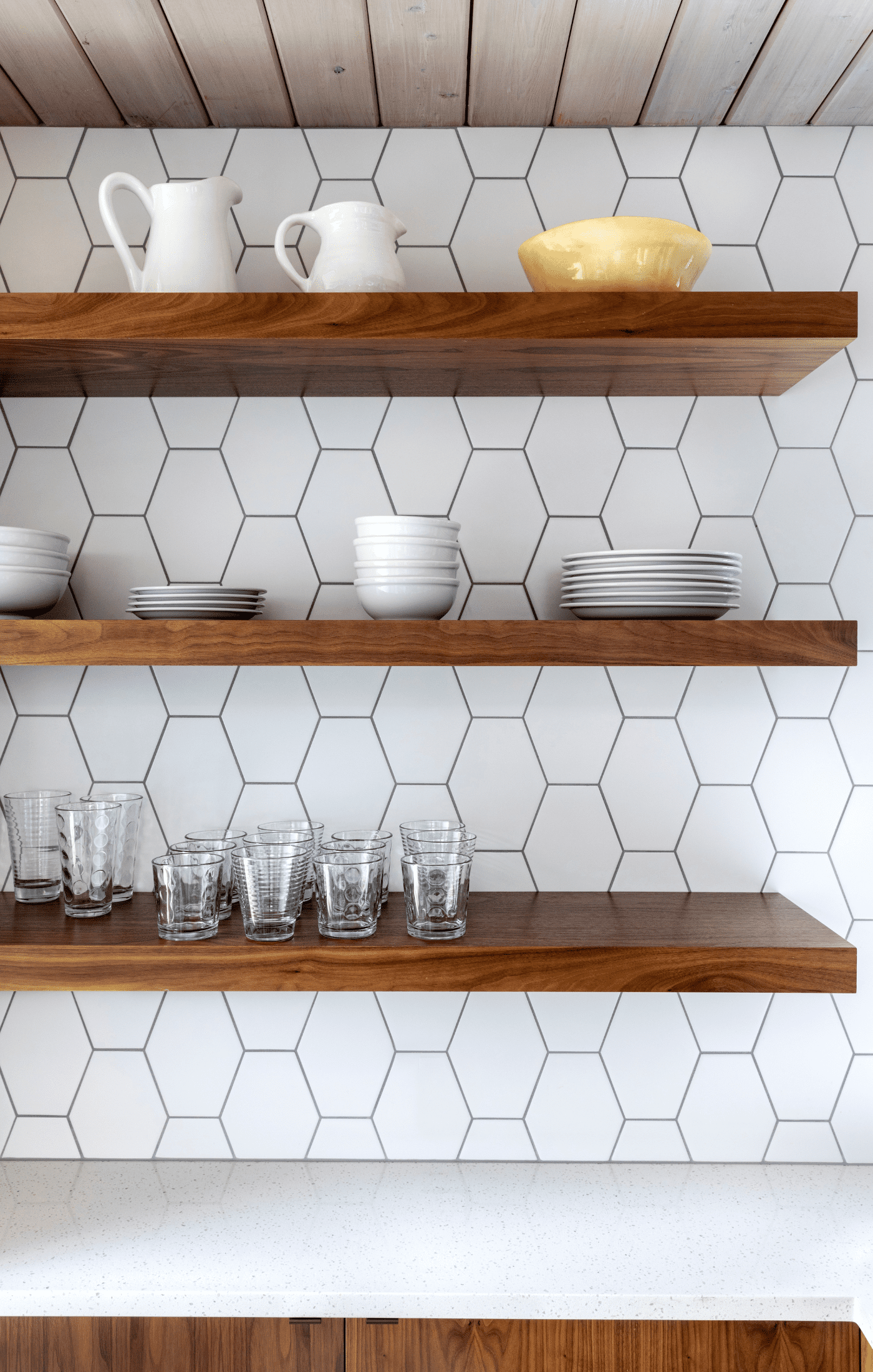
Open kitchen shelving has become one of the most popular ways to refresh a kitchen without a full renovation. The idea is simple: remove the cabinet doors, or skip them entirely, and let your shelves do the work in plain sight. Done well, open shelving makes a kitchen feel lighter, more personal, and easier to use day to day. Done poorly, it can feel chaotic. This guide covers everything you need to know to get it right.
Why open shelving works in a kitchen
The biggest draw of open shelving is the sense of space it creates. When you take away solid cabinet fronts, the eye travels further and the room feels less enclosed. This matters most in smaller kitchens, where closed cabinetry can make the walls feel like they are closing in.
There is also a practical side to open shelves that people underestimate. When your dishes and glasses are visible, you grab what you need without opening and closing doors. Things get put back more consistently because there is no extra step involved. For everyday items like plates, mugs, and prep bowls, that kind of easy access actually saves time.
On the style side, open shelves give you a surface to work with. A row of matching ceramic bowls, a few cookbooks stood upright, a plant in a simple pot. These small choices add up to a kitchen that looks like someone lives in it, not a showroom.
Types of open kitchen shelving
The style of shelf you choose sets the tone for the whole kitchen. There is no single right answer, but some options suit certain kitchens better than others.
Floating shelves
Floating shelves are the most common choice right now, and for good reason. They attach directly to the wall with hidden hardware, so there are no visible brackets underneath. The result is a clean, minimal look that works in modern kitchens, transitional spaces, and even more traditional rooms depending on the material you choose. You can cut them to any length and set them at whatever height works for your storage needs.
Reclaimed wood shelves
If your kitchen leans toward a warmer, more lived-in feel, reclaimed wood shelves are worth considering. The wood comes from salvaged sources, so each plank has its own texture and color variation. That natural irregularity adds character. Reclaimed wood pairs well with stone countertops, exposed brick, and simple hardware in matte black or unlacquered brass.
Glass shelves
Glass shelves suit kitchens where light is a priority. Because they are transparent, they do not block the wall behind them, which keeps the space feeling open even when the shelves are full. They work especially well for displaying glassware or anything with a delicate look. Cleaning is straightforward. A damp cloth and glass cleaner keeps them clear.
Open corner shelves
Corner spaces in kitchens are often wasted. A standard cabinet in the corner is hard to reach into and tends to swallow items whole. Open corner shelves solve this by turning that awkward spot into usable, visible storage. You can go with a single shelf for a simple display or stack several to make full use of the vertical space. Either way, the corner becomes part of the room rather than dead space.
How to style open kitchen shelves
Styling open shelves is where a lot of people get stuck. The goal is a display that looks intentional without looking staged. A few reliable principles make this easier.
Group similar items together
Plates with plates, glasses with glasses, mugs in a cluster. Grouping similar items creates visual order and makes the shelves easier to use. You always know where things are, and the shelf reads as organized rather than random.
Vary heights and shapes
A shelf full of objects at the same height looks flat. Mix taller items like a pitcher or a stack of cookbooks with shorter ones like small bowls or a candle. The variation in height keeps the eye moving across the shelf and gives the display more energy.
Add something living
A small plant makes a real difference on a kitchen shelf. It softens the hard lines of dishes and jars, and adds a bit of color that feels natural rather than decorative. Pothos, snake plants, and trailing herbs all do well in kitchen conditions. Keep the pot simple so it supports the plant rather than competing with it.
Bring in different materials
A mix of materials keeps shelves from feeling monotonous. Ceramic next to wood, glass next to woven baskets, metal next to linen. The contrast between textures makes each item stand out more clearly and gives the overall display a layered look.
Use baskets and trays for small items
Loose small items are the fastest way to make open shelves look messy. A basket or tray corrals things like spice packets, tea bags, or small tools and turns a potential mess into a contained display. It also makes it easy to pull the whole basket off the shelf when you need something.
How to install open kitchen shelves
Good installation makes the difference between shelves that feel permanent and ones that feel like an afterthought. Take the time to plan before you pick up a drill.
Measure before you buy
Measure the wall space where you want shelves to go. Note the width, the ceiling height, and any obstacles like outlets, switches, or vents. Decide how many shelves you want and how far apart they should be. Standard spacing between kitchen shelves runs between 12 and 18 inches, depending on what you plan to store. Taller items need more clearance.
Choose the right brackets
Even if your shelves will look like they are floating, most still use some form of bracket or internal rod system. Choose hardware rated for the weight you plan to put on each shelf. Dishes and canned goods are heavier than they look. If the bracket packaging does not list a weight rating, choose something else.
The style of the bracket matters too, since it will be visible. A heavy industrial bracket in black steel reads very differently than a slim brass one. Match it to your hardware and fixtures for a cohesive result.
Anchor into studs
Drywall anchors alone are not enough for shelves that will hold real weight. Find the wall studs and drive your screws into them. A stud finder makes this quick. Use a level during installation to keep shelves straight. A shelf that is even slightly off level becomes obvious once you put items on it.
When open shelves are not the right choice
Open shelving genuinely is not for everyone, and it is worth being honest about that before you start pulling off cabinet doors.
If keeping surfaces tidy is a constant struggle, open shelves will make that struggle more visible. The lack of doors means everything is always on display. There is no closing a door and calling it done. For some households, that accountability is motivating. For others, it is just stressful.
Families with young children or curious pets should think carefully about what goes on lower shelves. Glassware, sharp tools, and anything breakable or hazardous needs to be out of reach. Open shelves at counter height and below can pose real safety issues if the wrong things are stored there.
Dust is also a real consideration. Open shelves collect it, and items stored on them need to be wiped down regularly. If your kitchen sees a lot of cooking with oil or steam, things on open shelves will need cleaning more often than items behind cabinet doors.
Finally, if you have items you want to protect from light or humidity, a closed cabinet is simply better suited for the job.
A middle-ground approach works well for a lot of people. You do not have to commit to open shelving throughout the entire kitchen. Replacing just one or two sections of upper cabinets with open shelves can change the feel of the room without eliminating covered storage entirely. This lets you get the visual benefit while keeping closed cabinets for the things that do not belong on display.
Putting it all together
Open kitchen shelving is one of those changes that looks simple but requires some real thought to get right. The style of shelf, the installation method, and the way you organize and display items all affect whether the end result feels polished or chaotic.
Start with a clear sense of what you want to store and display. Choose a shelf style that suits your kitchen. Install carefully with proper hardware. Then take your time with the styling, grouping things with intention and leaving a little breathing room so each item can be seen clearly.
If you want more ideas for organizing your home, the household organization section has plenty of practical starting points. For more room-by-room inspiration, the home decor ideas page covers a wide range of spaces. You might also find the posts on small kitchen storage ideas and how to organize a small closet useful if you are working through storage challenges in other parts of your home.
Frequently asked questions
What are the most popular styles of open kitchen shelving?
Floating shelves are the most widely used right now because of their clean look and versatility. Reclaimed wood shelves are popular in kitchens with a warmer or more rustic feel. Glass shelves suit modern spaces where light and transparency are priorities. Open corner shelves work well for awkward spaces that are hard to use with standard cabinetry.
Are open kitchen shelves practical for everyday use?
Yes, for many people they are. When everyday dishes and glasses are within easy sight and reach, they tend to get used more consistently and put back more reliably. The practical benefit depends on staying organized. If clutter builds up easily in your home, open shelves require more maintenance than closed cabinets.
How do I keep open kitchen shelves looking tidy?
Group similar items together, use baskets or trays for small loose items, and do a quick wipe-down regularly. Keeping only items you actually use on display helps. The more purposeful you are about what goes on the shelf, the easier it is to maintain.
Can open shelving work in a small kitchen?
It often works especially well in small kitchens. Replacing upper cabinets with open shelves removes visual bulk from the walls and makes the room feel more open. The key is to keep the shelves organized so that more visual exposure does not mean more visual noise.