
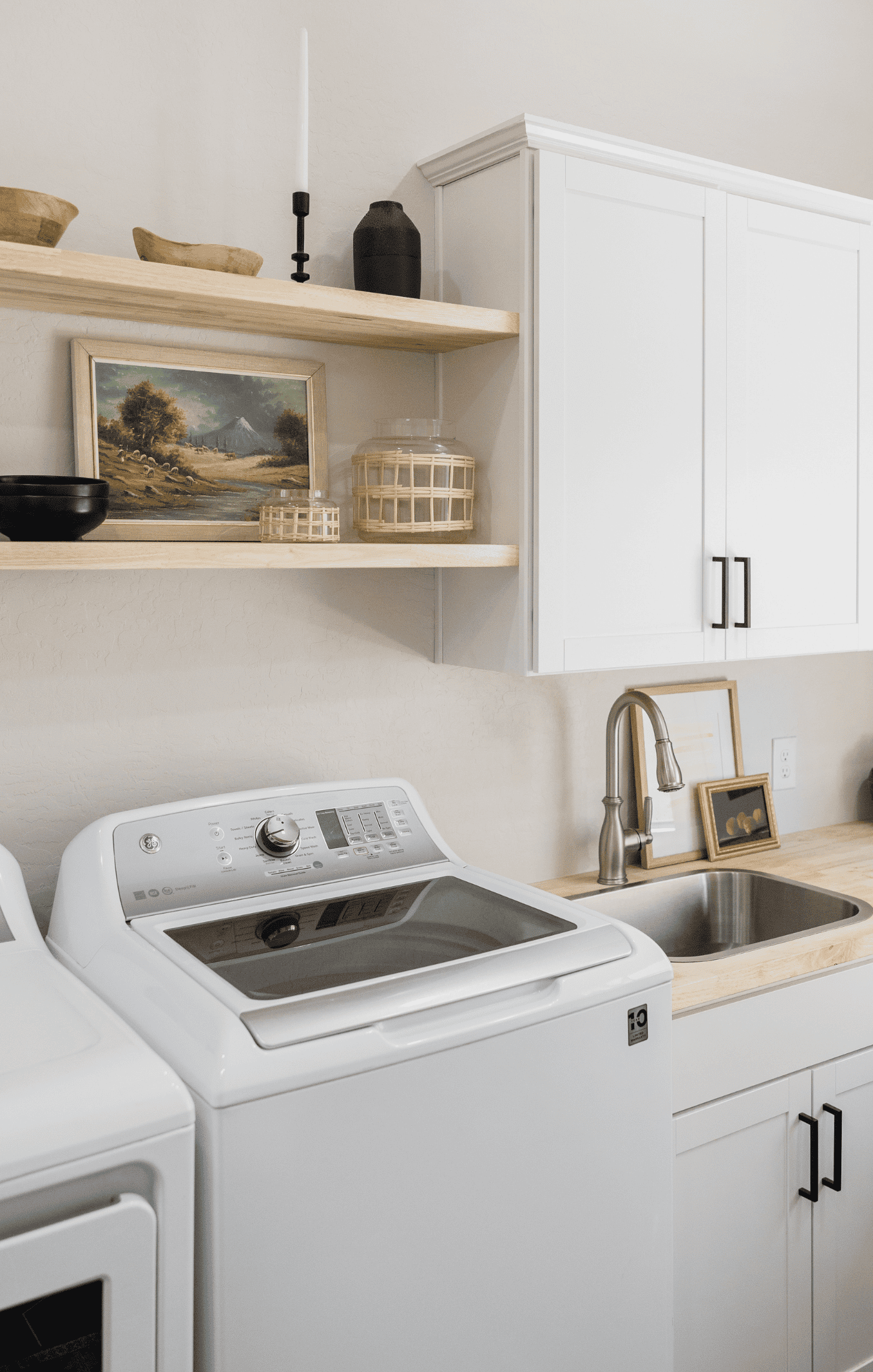
The laundry room is one of the most used spaces in a home. It’s also one of the most ignored when it comes to decorating. But a well-designed laundry room makes a real difference. It’s easier to stay organized, more pleasant to spend time in, and a lot less likely to become a dumping ground for random household stuff. Whether you have a large dedicated room or a tight closet-sized space, there are practical ways to make it work harder and look better.
These laundry room decor ideas cover storage, layout, style, and the small finishing touches that pull a room together. I’ve included options for a range of styles, from farmhouse to clean and modern, so you can pick what fits your home.
Maximizing storage in the laundry room
Storage is the foundation of a functional laundry room. Without enough of it, surfaces get cluttered fast. The good news is that most laundry rooms have more usable space than they appear to. It’s often just a matter of looking up, behind doors, and between appliances.
Using your wall space well
Walls are often the most underused surface in a laundry room. Wall-mounted shelves or cabinets give you a place to store detergent, fabric softener, stain removers, and cleaning supplies without taking up any floor space. Open shelves work well if you keep things tidy. Closed cabinets are better if you prefer a cleaner look or have a lot of mismatched products.
Hooks are another simple addition that makes a big difference. A row of hooks on the wall can hold an ironing board, reusable laundry bags, drying racks, or clothing that needs to be hung straight from the dryer. They’re inexpensive and easy to install, and they keep the floor clear.
Creative ways to add storage
One of the most practical upgrades in a laundry room is installing a countertop over the washer and dryer. It creates a dedicated folding surface, which means clothes get folded right away instead of piling up in a basket. Above that, you can add shelving or a cabinet for extra storage.
The narrow gap between appliances is another spot worth using. A slim rolling cart fits neatly in that space and can hold detergent pods, dryer sheets, and other small supplies. It slides out when you need it and tucks back in when you don’t.
For organizing smaller items, glass jars or labeled containers work well for things like clothespins, dryer balls, or individual detergent pods. Mason jars on a shelf look tidy and make it easy to see when you’re running low. Storage baskets in neutral tones keep the room feeling calm rather than chaotic. If you want more ideas for keeping supplies organized and accessible, the snack storage ideas post has some container and basket solutions that translate well to laundry rooms, too.
Small laundry room ideas
A small laundry room requires a bit more thought, but it can absolutely be both functional and attractive. The key is choosing the right layout and making every inch count.
Getting the layout right
If you have a narrow space, stacking your washer and dryer vertically frees up a significant amount of floor area. A side-by-side arrangement works well in slightly wider rooms, especially when you add a countertop over the top for folding. Think about the order of your workflow too. You want to move naturally from sorting to washing to drying to folding without having to cross the room repeatedly.
Smart solutions for tight spaces
Overhead shelving is one of the first things I’d add to a small laundry room. Even one shelf above the appliances gives you room for detergent and supplies without cluttering the workspace below. A pegboard panel on one wall is another flexible option. You can hang hooks, small baskets, and shelves wherever they’re most useful, and rearrange them as your needs change.
Behind the door is valuable real estate in a small room. An over-the-door organizer or a row of hooks can hold cleaning supplies, hand towels, or spray bottles. A fold-down drying rack mounted to the wall or door gives you space to air-dry clothes without taking up permanent floor space. When it’s not in use, it folds flat against the wall.
A retractable hanging bar is another practical addition. Mount it to the wall and use it for hanging clothes straight from the dryer, or for items that need to air dry on hangers. It folds away completely when you don’t need it. For broader inspiration on keeping a smaller space feeling organized and calm, the household organization section has plenty of useful ideas.
Farmhouse laundry room style
Farmhouse style has stayed popular for good reason. It’s warm, simple, and works well with natural materials and practical storage. A laundry room is actually one of the best places to lean into this look, since the room is already built around utility.
Rustic materials and finishes
Wooden shelves with a matte or distressed finish add warmth without feeling overdone. Reclaimed wood looks especially good in a farmhouse-style laundry room and holds up well in a high-use space. Pair wood shelving with woven baskets or galvanized metal bins for storage that fits the style and does a real job.
Shiplap or board-and-batten paneling on one wall is another popular farmhouse touch. It adds texture and visual interest without requiring a full renovation. A simple coat of white or cream paint keeps the look fresh and light.
Vintage-inspired details
The details are what make a farmhouse laundry room feel complete. An antique washboard hung on the wall, a few old-fashioned wooden clothespins in a jar, or a hand-lettered laundry sign adds character without being fussy. Vintage laundry tins or enamel containers can hold supplies while looking intentional rather than utilitarian. These small touches are low-cost and easy to change out if your taste shifts.
Design and layout considerations
Once you have a sense of your storage needs and style direction, it’s worth thinking about the broader design and layout of the room. A few practical decisions here will affect how the space feels to use every single day.
Planning an efficient workflow
The most functional laundry rooms are designed around how laundry actually gets done. Dirty clothes come in, get sorted, go into the washer, move to the dryer, get folded, and leave the room. Every step should flow from the one before it without backtracking or awkward movements.
Place sorting baskets near the entrance. Position the washer and dryer close together. Have a folding surface right next to the dryer. Keep hangers within arm’s reach. When the layout supports the process, laundry takes less time and feels less like a chore.
Choosing the right materials
Laundry rooms deal with moisture, heat, and frequent use, so the materials you choose need to hold up. Tile or vinyl flooring is a practical choice because both are water-resistant and easy to clean. For walls, a semi-gloss or satin paint finish handles humidity better than flat paint and wipes down more easily. For countertops, laminate or sealed wood work well at a reasonable cost. Stone or quartz is more durable if your budget allows.
Functional features worth adding
A few additions go beyond basic storage and layout to make the laundry room genuinely easier to use. These aren’t strictly necessary, but if you’re already planning updates, they’re worth considering.
A deep utility sink
A large sink in the laundry room is one of those features that quickly becomes hard to imagine living without. It’s useful for hand-washing delicate items, pre-soaking stained clothes, rinsing out mops, and filling buckets for cleaning. A farmhouse-style apron sink fits the aesthetic of a rustic room, while a standard deep utility sink is a practical choice in a more neutral space. A tall faucet with a pull-out sprayer adds extra function.
An ironing station
If you iron regularly, having a dedicated spot for it in the laundry room makes the task much more manageable. A fold-out ironing board mounted to the wall or the back of a cabinet door keeps the board accessible without occupying floor space. Add a few hooks nearby for hanging ironed items, and a small shelf for your iron and spray bottle. Everything stays in one place, and the process moves faster.
Style details that make a difference
Once the practical elements are in place, it’s the finishing touches that make a laundry room feel like a designed space rather than just a utility closet.
Bringing in natural light
Natural light makes any room feel larger and more pleasant to be in. If your laundry room has a window, keep the treatment simple. A sheer white curtain or a simple Roman shade lets light through while still giving you privacy. If there’s no window, a well-placed mirror can bounce artificial light around the room and make the space feel more open. A ventilation fan is worth adding if you don’t already have one, since good airflow helps prevent moisture buildup and keeps the room smelling fresh.
Creating a comfortable atmosphere
Soft lighting makes a real difference in how a room feels. A pendant light or a wall sconce gives a warmer, more intentional look than a single overhead fluorescent bulb. A small rug in front of the appliances adds softness underfoot and a bit of color. Plants do well in laundry rooms that get decent light and add life to the space. A framed print, a few decorative hooks, or even a small chalkboard for notes gives the room personality without taking up much space. For more ideas on pulling a room together with decor, the home decor ideas page is a good place to browse.
Sorting and organizing with baskets
Baskets are one of the simplest and most effective tools for keeping a laundry room tidy. Use separate baskets for whites, darks, and colors if your household does sorted loads. Label them clearly so everyone in the family knows where things go. Wicker baskets add warmth and work especially well in a farmhouse or natural-material-inspired room. Wire baskets have a more industrial feel. Either way, the consistency of using the same style throughout the room creates a more finished look.
Sliding barn doors
A sliding barn door is a stylish option for laundry rooms that are visible from a main living area or hallway. The door slides along a track rather than swinging open, which saves floor space and makes a strong visual statement. They look particularly good in farmhouse or modern rustic rooms.
That said, barn doors do have real limitations. They require a level installation to slide and close properly. They also don’t provide much sound dampening, since the door doesn’t seal against the frame. If your laundry room is in a spot where noise traveling to the rest of the house is a concern, a standard door might be the better choice. But if sound isn’t an issue and you want something that looks distinctive, a barn door is a good option.
Putting it all together
A well-designed laundry room doesn’t require a major renovation or a big budget. It starts with good storage, a layout that makes sense for how you actually do laundry, and materials that can handle the wear. From there, the style details, whether you prefer a clean modern look, a warm farmhouse feel, or something in between, layer on top of a practical foundation.
Start with the changes that will have the most impact on your daily routine, whether that’s adding a folding counter, installing better shelving, or simply sorting your supplies into labeled containers. Small improvements add up quickly in a room you use this often. For more ideas on organizing and decorating your home room by room, take a look at the home organization ideas section and the open kitchen shelving ideas post, which covers some of the same principles for a different high-use space.




Leave a Reply