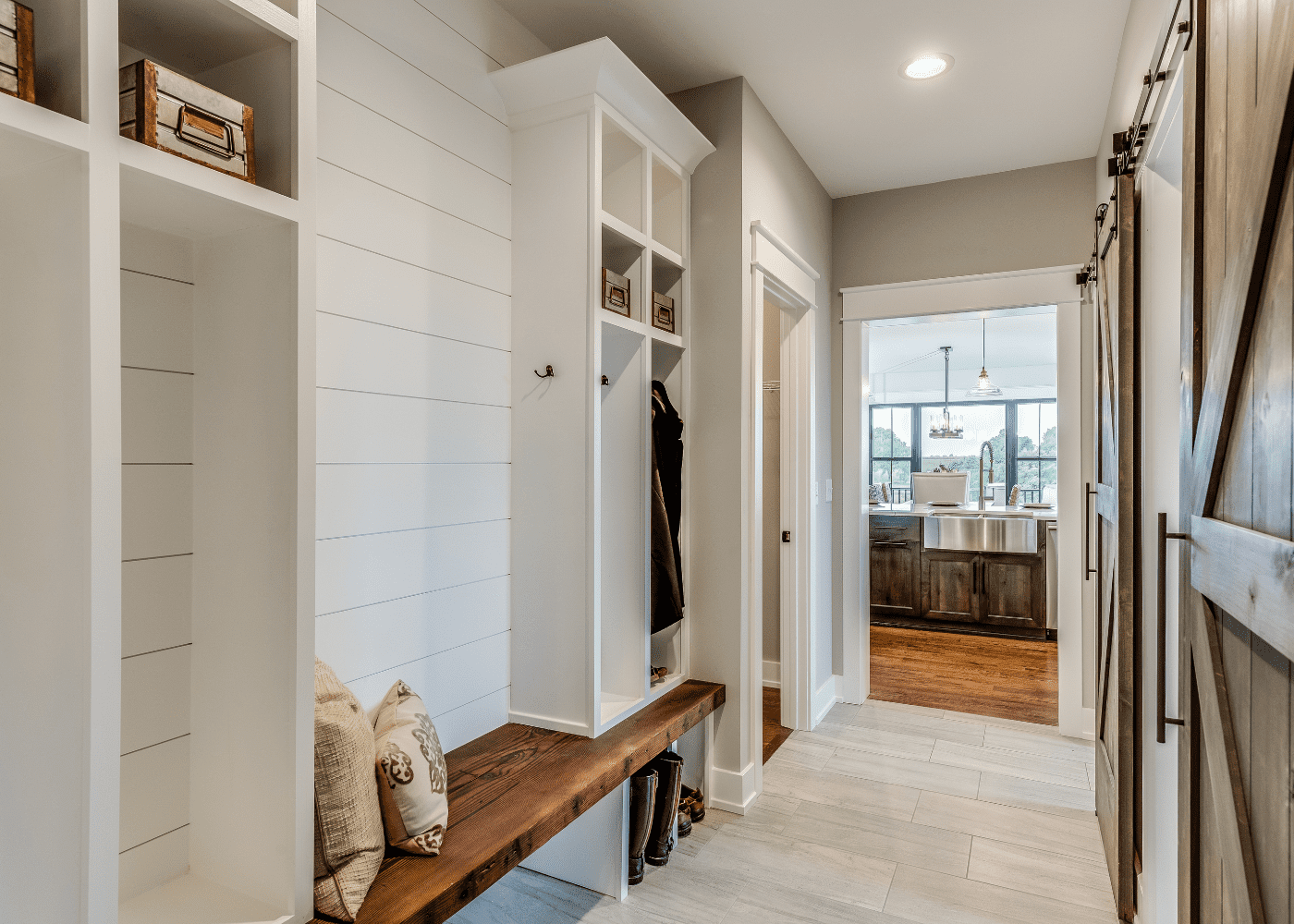
A mudroom is one of those things that sounds simple but makes a real difference in how a home feels day to day. It sits between the outside world and the rest of your house, giving your family a place to shed dirty shoes, wet jackets, and bulky backpacks before tracking anything inside. If you have never had one, it can be hard to explain how much easier it makes the morning rush or the after-school chaos. If you have had one, you probably can’t imagine living without it.
This guide covers what mudrooms are, how they differ from a basic entryway, and what goes into designing one that actually works for your family.
What is a mudroom?
A mudroom is a dedicated transition space inside your home, usually positioned just inside a back door, side door, or garage entrance. Its job is to catch the mess before it spreads through your house. Boots come off here. Wet coats get hung here. Backpacks, sports bags, and umbrellas find a home here instead of landing on the kitchen floor or the living room couch.
The name comes from exactly what you’d expect. In homes with yards, farms, or snowy driveways, mud is a constant problem. A mudroom gives that mess a contained place to stop. Beyond the practical side, a well-designed mudroom also helps reduce the feeling of clutter in the rest of your home, because the stuff that tends to pile up near doors has somewhere proper to live.
Mudroom vs. entryway
These two spaces often get mixed up, but they serve different purposes. An entryway is the area just inside your front door. It’s where guests arrive and where you might hang a coat or drop your keys. It’s meant to be welcoming and tidy.
A mudroom is more functional and less formal. It’s designed to handle real everyday mess. You’re not trying to impress anyone in the mudroom. You’re trying to keep the rest of your house clean. Many homes have both: a front entryway for guests and a mudroom near the garage or back door for daily family use.
Key features of a mudroom
The best mudrooms share a few things in common. They have enough storage for the whole family, surfaces that are easy to clean, and a layout that makes it natural to stop and get organized before walking further into the house.
Durable flooring
Mudroom floors take a beating. Water, dirt, snow, and grit all land here first. Tile is one of the most popular choices because it’s waterproof and easy to mop. Vinyl plank flooring is another solid option. It’s softer underfoot, comes in a wide range of looks, and handles moisture well. Whatever you choose, skip anything that stains easily or needs frequent deep cleaning. A simple mat or rug near the door also helps catch the first layer of mess right at the threshold.
Storage for shoes and boots
Shoe storage is usually the biggest need in a mudroom. A built-in bench with cubbies underneath works well because it handles two problems at once: somewhere to sit while you pull off boots and somewhere to put them once they’re off. Open cubbies labeled by person work well for families with school-age children. Closed cabinets look cleaner but require more discipline to keep organized. Shelves along the bottom of a wall are simple and inexpensive if you’re working with a tight budget.
Hooks and hanging storage
Wall hooks are one of the hardest-working elements in any mudroom. Assign a set of hooks to each family member. Include hooks at child height so younger kids can hang their own things. Over-the-door organizers, pegboards, and rail systems with adjustable hooks all give you flexible options, especially in a small space. You want a spot for daily-use coats, a separate spot for seasonal gear, and hooks sturdy enough to hold a wet winter jacket without pulling out of the wall.
A bench or seating area
Sitting down to remove shoes is far more comfortable than balancing on one foot. A bench also signals to everyone who enters that this is the spot to stop and get sorted. It doesn’t need to be fancy. A simple wooden bench with or without a cushion does the job. If you want to add storage, a bench with a hinged top lid or open cubbies underneath uses the same footprint twice.
Cabinets and shelves
Closed storage keeps a mudroom looking calm even when life is messy. Cabinets work well for bulky items like sports equipment, extra bags, and seasonal accessories. Upper cabinets can hold items you don’t need every day. Lower cabinets near floor level are good for kids’ backpacks and shoes. If you’re working with a tighter budget, open shelving is an affordable alternative. Baskets or bins on shelves give you contained storage without the cost of full cabinetry.
Easy-to-clean surfaces
Everything in a mudroom should be easy to wipe down. Painted walls in a washable finish are worth the extra investment. Coat hooks and cabinet hardware in a finish that won’t show every fingerprint makes daily life easier. If you add a cushion to the bench, choose a fabric that’s washable or easy to spot clean. The whole point of this space is to absorb mess, so it needs to be able to handle regular cleaning without looking worn out.
Mudroom design ideas
Mudrooms don’t have a single right look. They range from a simple row of hooks and a mat to fully built-out spaces with custom cabinetry, a utility sink, and integrated laundry. What works depends on your home’s layout, your family’s habits, and your budget.
Small mudroom ideas
A small mudroom can still do its job well with the right setup. Wall-mounted hooks and a narrow floating bench take very little floor space. A slim shoe rack fits more footwear than a pile of shoes on the floor. Mirrors make a tight space feel less cramped. Light paint colors help too. In a very small space, even a single row of hooks and a mat near the door counts as a mudroom. The function matters more than the size.
For more ideas on making smaller spaces work harder, take a look at these small kitchen storage ideas and how to organize a small closet. Many of the same principles apply.
Mudroom laundry room combination
Combining a mudroom with a laundry room is a practical choice for homes where space is limited. The two spaces share similar needs: durable surfaces, a utility sink, and storage for items that come in from outside. A stacked washer and dryer tucked into a cabinet keeps the laundry appliances from dominating the room. A folding counter above the machines gives you a work surface. Hooks and cubbies on the opposite wall handle the mudroom functions. It’s a tight balancing act, but it works well when the layout is planned carefully.
Mudroom with a utility sink
A utility sink in a mudroom is especially useful in homes where outdoor activities mean muddy gear, dirty sports equipment, or kids who come home covered in garden soil. It’s also useful for rinsing off pets after walks or outdoor play. If you have the plumbing access and the budget, a utility sink is one of the most practical upgrades you can make to a mudroom.
Built-in mudroom storage
Custom built-ins give a mudroom a clean, finished look. A row of cubbies with a bench below and hooks above is the classic configuration. Each cubby assigned to one family member creates a natural system. Everyone knows where their things go, and the space stays organized without much effort. Built-ins can be done by a carpenter or, for those with some DIY confidence, with IKEA-style modular systems that cost far less. The result doesn’t need to be expensive to be effective.
Choosing the right location for a mudroom
Most mudrooms sit near the back door, side door, or garage entrance because those are the doors families actually use every day. The front door is usually reserved for guests. If you’re adding a mudroom to an existing home, the best location is wherever your family naturally enters and exits. That’s where the mud lands, and that’s where the mudroom needs to be.
If you have a garage, a mudroom between the garage and the main living space is ideal. It creates a clean break between outside and inside. Wet boots stay in the mudroom. Clean floors stay in the kitchen.
How to add a mudroom to your home
Adding a mudroom doesn’t always mean a full renovation. In many homes, it starts with a few hooks on a wall and a mat on the floor. From there, you can add a bench, then storage bins, then cabinets over time. If you’re planning a bigger project, think through the layout carefully before you start buying anything. Measure the space, figure out how many people need storage, and decide which features matter most to your family.
Flooring is usually the first permanent decision. Tile is the most durable choice and the easiest to keep clean. Once the floor is sorted, storage comes next. Start with the things you use every day and build from there. There’s no need to design the perfect mudroom all at once. A good mudroom is one that works for your family, not one that looks perfect in a magazine.
For more ideas on keeping your home organized, the household organization section of the site is a good place to browse. You’ll also find useful ideas in our home organization ideas and living room storage ideas posts if you’re working on the broader picture.
Frequently asked questions
What is a mudroom used for?
A mudroom is used to store outdoor gear like shoes, boots, coats, and backpacks. It creates a buffer zone between the outside and the rest of your home, helping keep dirt and clutter contained near the door.
What kind of flooring works best in a mudroom?
Tile and vinyl are the most popular choices. Both are durable, water-resistant, and easy to clean. Avoid carpet or any flooring that absorbs moisture or stains easily.
Do I need a bench in my mudroom?
A bench isn’t strictly necessary, but it makes removing shoes much easier, especially for children. It also adds a natural visual anchor to the space and can double as storage if it has cubbies or a hinged lid underneath.
Can I create a mudroom in a small space?
Yes. Even a narrow wall with hooks, a small shelf, and a floor mat functions as a mudroom. The key is having a dedicated spot near the door where outdoor gear can be removed and stored, regardless of how much square footage you have.
What’s the difference between a mudroom and an entryway?
An entryway is typically a welcoming space near the front door. A mudroom is a more functional space near a back or side door, designed specifically for handling outdoor gear and keeping mess out of the main living areas.