
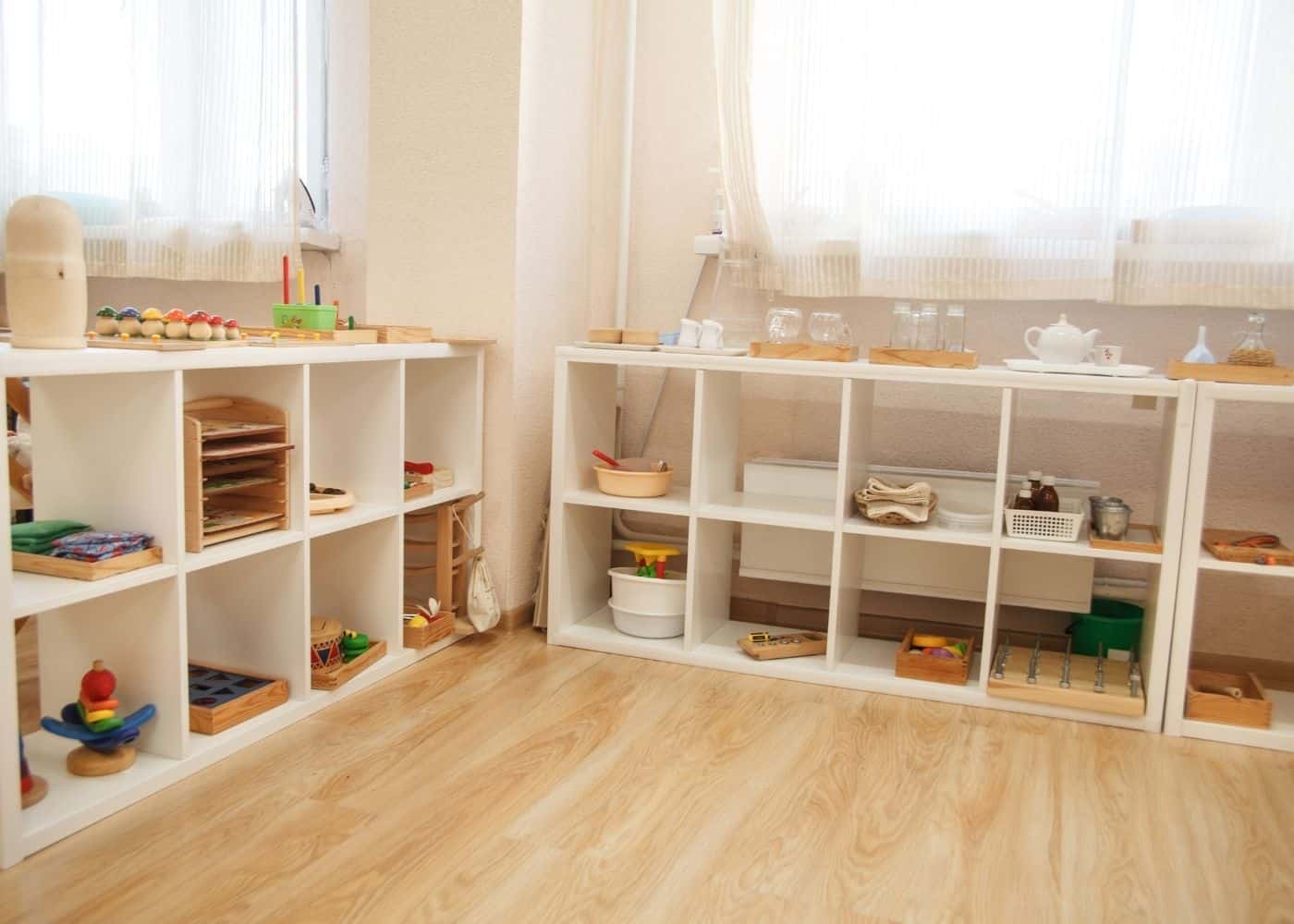
Toy storage is one of those things that looks simple until you’re stepping over blocks at 7am or fishing a puzzle piece out from under the couch for the third time this week. Getting the storage right makes a real difference, not just for tidiness, but for how well your child actually uses and cares for their toys. The Montessori approach gives us a useful framework here, one built around accessibility, simplicity, and encouraging kids to manage their own things.
This post covers the storage options that work best in a Montessori-style setup, along with some practical habits that make a big difference over time.
What makes toy storage Montessori-friendly?
The core idea in Montessori is that children should be able to access, use, and return their things without needing an adult to help. That means storage needs to be at the child’s height, easy to open, and visually clear enough that kids can see what belongs where.
Open shelving is the most common approach because toys are visible and within reach. When a child can see what they have, they are more likely to choose it, use it fully, and put it back in the right spot. Storage with doors or deep bins can work against this, since out of sight often means out of mind for young children.
The Montessori method also tends to favor natural materials and simple toy designs. The reasoning is that simpler toys invite more creative, open-ended play. That said, you do not need to replace everything you own. The storage principles work just as well with the toys you already have. Use what you have, and add pieces gradually if it makes sense for your space and budget.
Storage bin units
Storage bin units are one of the most practical options for families with a lot of toys. They keep things contained without hiding everything behind a door. Because the bins are open at the front, children can see the contents and understand where things belong.
The IKEA KALLAX and TROFAST systems are popular choices because they are affordable, sturdy, and easy to configure. Vinyl labels made specifically for IKEA bins are widely available and help young children, especially those who are not yet reading, identify which bin holds which toys. Picture labels work particularly well for toddlers and preschoolers.
A bin unit works best when each bin holds one category of toy. Cars go in one bin, blocks in another, and art supplies in a third. This makes cleanup faster and clearer. A child does not need to sort through a mixed pile. They just return the toy to the right bin.
Montessori toy shelves
Low, open shelving units are the most classic Montessori toy storage option. They display toys at eye level for the child, which makes everything easy to see and reach. They also give each item a defined spot, which is one of the most effective ways to teach children to put things away.
When a toy has a specific place on the shelf, a child can see at a glance whether it has been returned or not. This is much clearer than a bin where things pile up and get buried. Shelves also work well for puzzles, stacking toys, and loose parts, since these items sit neatly on a flat surface rather than getting jumbled together.
Purpose-built Montessori shelves from makers on Etsy tend to be made from solid wood and designed with young children in mind. They are low to the ground, open on all sides, and sized to hold a small number of toys rather than a massive collection. Keeping fewer items on the shelf at any one time is part of what makes this system work.
Toy sacks and drawstring bags
Toy sacks are not the most visually tidy option when toys are put away, but they are extremely practical for certain situations. They work well for sets with many small pieces, like building blocks or wooden animals, and they are easy for young children to use. Pulling a drawstring shut takes almost no effort, which means kids are more likely to actually do it.
They are also useful for portable play. If your child wants to bring a set of toys to another room, a grandparent’s house, or on a trip, a toy sack makes that simple. Small rainbow toy sacks or organic cotton bags in neutral tones are easy to find and hold up well with regular use.
Individual bins and baskets
If you do not have room for a full shelving unit, individual bins and baskets placed around the play space work well. These are especially good for toddlers because a child can reach in and grab what they want without pulling the whole container off a shelf.
The same rule applies here as with bin units: one type of toy per basket. A basket of stuffed animals, a basket of cars, a basket of dress-up accessories. Mixing everything together makes cleanup harder and discourages kids from returning things properly.
Woven baskets, fabric bins, and simple wooden crates all look good and are easy to find at stores like IKEA, Walmart, and Homesense. Keeping a consistent look across your bins, even if they are not identical, makes the space feel calmer and more organized. You can find more ideas for keeping the space tidy in this post on playroom storage ideas.
Habits that keep toy storage working
Storage systems only work if the habits around them support them. Here are the practices that make the biggest difference over time.
The one out, one in rule
This is a simple habit with a big impact. When a child takes out a new toy, they put away the one they were playing with first. It keeps the number of toys in active use manageable, which means cleanup at the end of the day is faster and less overwhelming.
It also helps children who get overstimulated by too many choices or too much mess. Fewer things out at once means a calmer play environment and a more focused child. Teaching this habit early makes it feel natural rather than like a rule being imposed.
Toy rotation
Keeping all toys accessible at all times is not necessary and is often counterproductive. When children have fewer toys available at once, they tend to use each one more thoughtfully. A good general target is around ten items out at a time, enough to give choices without creating clutter.
Rotating toys every couple of weeks also keeps things feeling fresh. A toy that has been stored away for a month can feel almost new when it comes back out. Rotation also lets you match the available toys to your child’s current stage and interests, which is one of the ideas behind the broader Montessori home philosophy.
Regular decluttering
Broken toys, toys with missing pieces, and toys that a child has clearly outgrown take up space without adding value. Going through the collection a few times a year and removing what is no longer useful keeps the storage system from getting overwhelmed.
Donating usable toys that your child no longer plays with is a good habit to build alongside decluttering. Explaining to a child that another child will enjoy their old toy makes the process feel purposeful rather than upsetting. Over time, most kids come to feel good about passing things on.
A dedicated play space
Having a specific area for play, even if it is just one corner of a room, makes a difference. When toys live in one place, children know where to find them and where to return them. It also contains the mess, which makes cleanup faster and more straightforward. A clear boundary between the play space and the rest of the room helps children understand that toys belong in that area, not scattered throughout the house.
A reading corner
Books fit naturally into a Montessori toy shelf setup. Displaying them with the covers facing out, at the child’s eye level, makes them much more appealing than stacking them spine-out on a high shelf. When books are visible and easy to grab, children reach for them more often. A small reading corner with a soft cushion or low chair nearby turns the shelf into an inviting spot rather than just a storage unit. You can find more ideas about building early reading habits in this post on early literacy tips for parents.
Putting it together
Montessori toy storage is not about having a perfectly curated playroom. It is about setting up a system where children can find what they want, use it well, and put it back on their own. Low shelves, clear bins, simple labels, and consistent habits get you most of the way there. Start with what you have, keep it simple, and adjust as your child grows.




Leave a Reply