
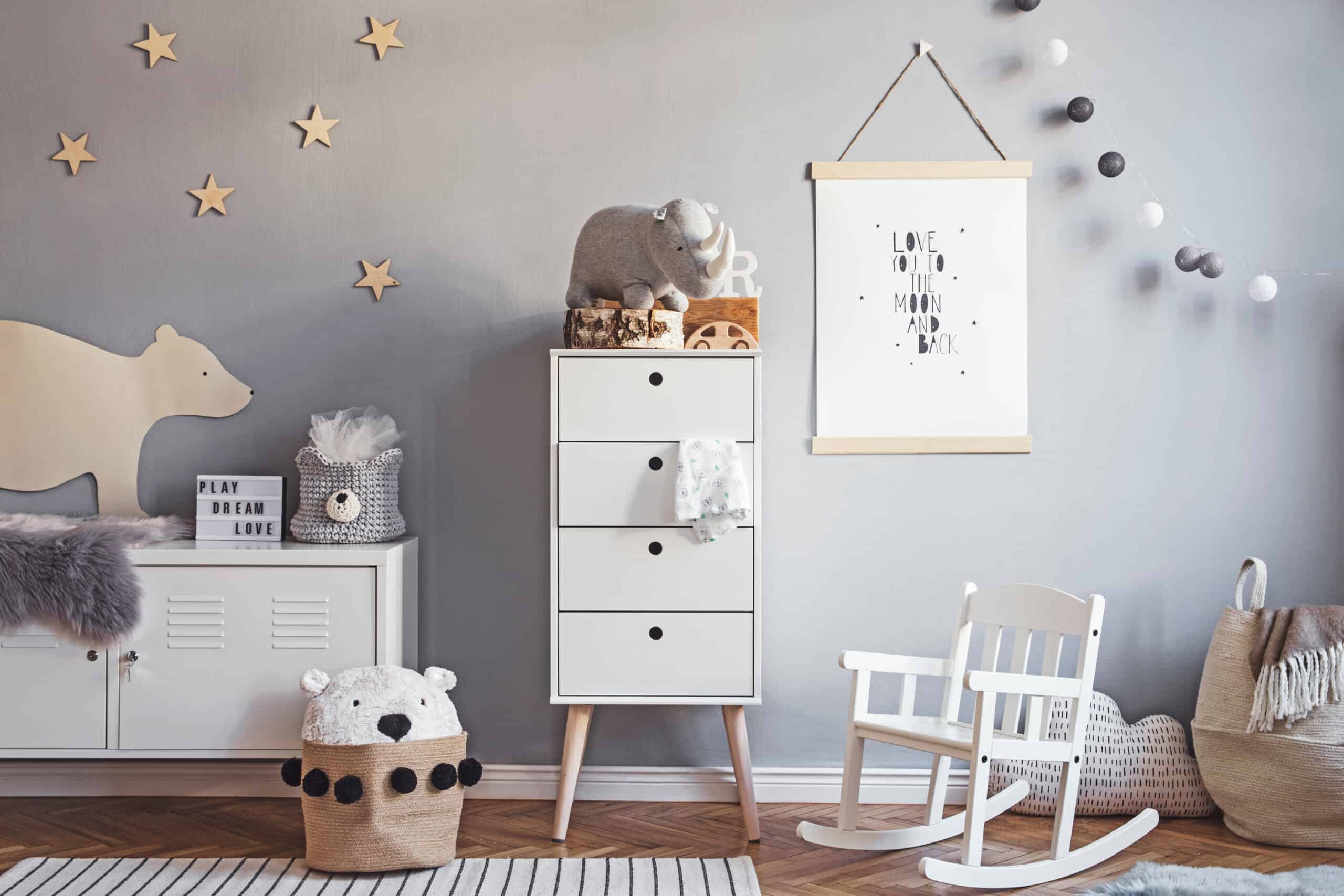
A playroom that actually stays organized is possible. It just takes a system that works for both you and your kids. The goal is to make it easy for children to get toys out and, just as importantly, put them back. When storage is simple and accessible, kids are far more likely to use it.
This guide covers how to sort toys, choose the right storage, edit your collection, and set up habits that stick. You do not need to spend a lot of money or follow every idea you find online. Start with what makes sense for your space and your family.
Start by laying everything out
Before you buy a single bin or basket, take everything out of the playroom and lay it on the floor. This works whether you are setting up a new play space or trying to fix one that has gotten out of hand. Seeing everything at once helps you understand what you actually have.
Once it is all out, sort the toys into groups. Think about how your child plays. Some kids naturally gravitate toward categories like building sets, figures, or dress-up. Others play by mixing everything together. Your sorting system should reflect how your child actually uses the toys, not how they look in a photo.
Common groupings include dolls and figures, building blocks or LEGO bricks, farm animals and sets, dress-up clothes and accessories, and art supplies. These are just starting points. You may find that your family needs completely different categories, and that is fine.
Avoid making the system too detailed. Sorting LEGO bricks by color, for example, looks great but rarely survives contact with a real child. Keep categories broad enough that a young child can sort independently. If the system is too complicated, only you will maintain it.
Choosing the right storage containers
Good playroom storage does not have to be expensive. Start with what you already have at home. Bins, baskets, boxes, and totes you already own can work just as well as anything bought new. Once you know what you need, you can fill in the gaps.
Open bins and baskets work well for toys kids use every day. Children can see what is inside and grab things quickly. They can also toss things back in without needing to lift a lid. This makes cleanup faster and more likely to actually happen.
Lidded bins are better for toys that are used less often, or for smaller pieces that need to stay together. Stackable options are useful if you are working with limited floor space. Just keep in mind that anything requiring a lid to be removed and replaced adds a step, which can slow kids down during both play and cleanup.
Shelving is one of the most flexible options for a playroom. Low shelves that children can reach on their own support independence. A simple bookshelf works well for books, puzzles, and games. Open cubbies let kids see their options and make choices on their own, which is especially useful if you follow a Montessori-style playroom setup.
Seating with built-in storage, like a bench or ottoman, does double duty. It gives kids a place to sit and hides toys underneath. Pull-out drawers, whether built-in or freestanding, are another strong option for larger items like stuffed animals or dress-up clothes. They close cleanly and keep the room looking tidy.
For art supplies and craft materials, small cups, jars, or divided containers help keep pencils, markers, and crayons sorted. A drawer or bin for paper keeps it flat and easy to access. If wall space allows, displaying your child’s artwork creates a creative atmosphere and keeps surfaces clear at the same time.
Where to put the storage
Storage only works if kids can reach it. Place bins and baskets at child height so your child does not need help accessing their own toys. This removes a barrier to independent play and independent cleanup.
Think about the natural flow of the room. Toys that get used the most should be the easiest to reach. Less-used items can go higher up or inside a closet. If the playroom has a closet, low shelves inside it are useful for bins and baskets that you want out of sight but still accessible.
For playroom storage to stay functional over time, it needs to be simple enough that a tired child can use it after a long afternoon of playing. If putting toys away requires too many steps, it will not happen consistently.
Editing the toy collection
No storage system will fix a playroom with too many toys. Reducing the number of toys regularly is one of the most effective things you can do to keep a playroom manageable.
Kids hold onto toys out of habit and familiarity, even when they have not touched them in months. As a general rule, if a toy is not being played with, it is taking up space without adding anything to your child’s day.
One approach is to go through toys together with your child. Ask which ones they still use and let them participate in the decision. This works well for older children who can reason through it. For younger children, you may need to quietly remove items and see if they are missed. Toys that go unnoticed after a week or two are safe to pass along.
Donate outgrown toys to a local organization, pass them to a friend with younger kids, or set them aside for a garage sale. Keeping the collection edited makes it easier to maintain any storage system you put in place.
A smaller, well-organized collection is genuinely better for kids. Fewer choices can actually increase focused play and creativity. If you are thinking about how to structure the space with that in mind, our post on Montessori toy storage covers this approach in more detail.
Setting up habits that work
Even a well-organized playroom needs consistent habits to stay that way. A simple rule that many families use is the one-in, one-out approach to play. Before getting a new toy out, the previous one goes back. This prevents the room from becoming a full layered mess mid-afternoon.
End-of-day cleanup is another habit worth building. Tidy-up time before dinner or before bed gives kids a predictable routine. It also resets the room so the next day starts fresh.
Consistency matters more than perfection. Children need reminders, and they need them often. That is normal. A gentle reminder works better than a long explanation, especially for younger children. Over time, the routine becomes familiar and kids begin to do it with less prompting.
Keep the rules simple and make sure the storage system supports them. If putting toys away is easy, kids are more likely to do it. If it is complicated or requires adult help, the habit will not hold.
For more ideas on structuring a child’s day with routines built in, the toddler schedule post is a good starting point.
Putting it all together
A functional playroom does not require a major renovation or a matching set of custom furniture. It requires a clear system, the right containers at the right height, and a toy collection that has been edited down to what your child actually uses.
Start by sorting what you have. Use bins, baskets, and shelves your child can reach. Remove toys that are no longer being played with. Set a few simple rules and practice them consistently.
The result is a room that is easier to clean, easier to play in, and easier for your child to manage on their own. That is the whole goal. For more ideas on keeping your home organized room by room, take a look at our household organization resources.




Leave a Reply