
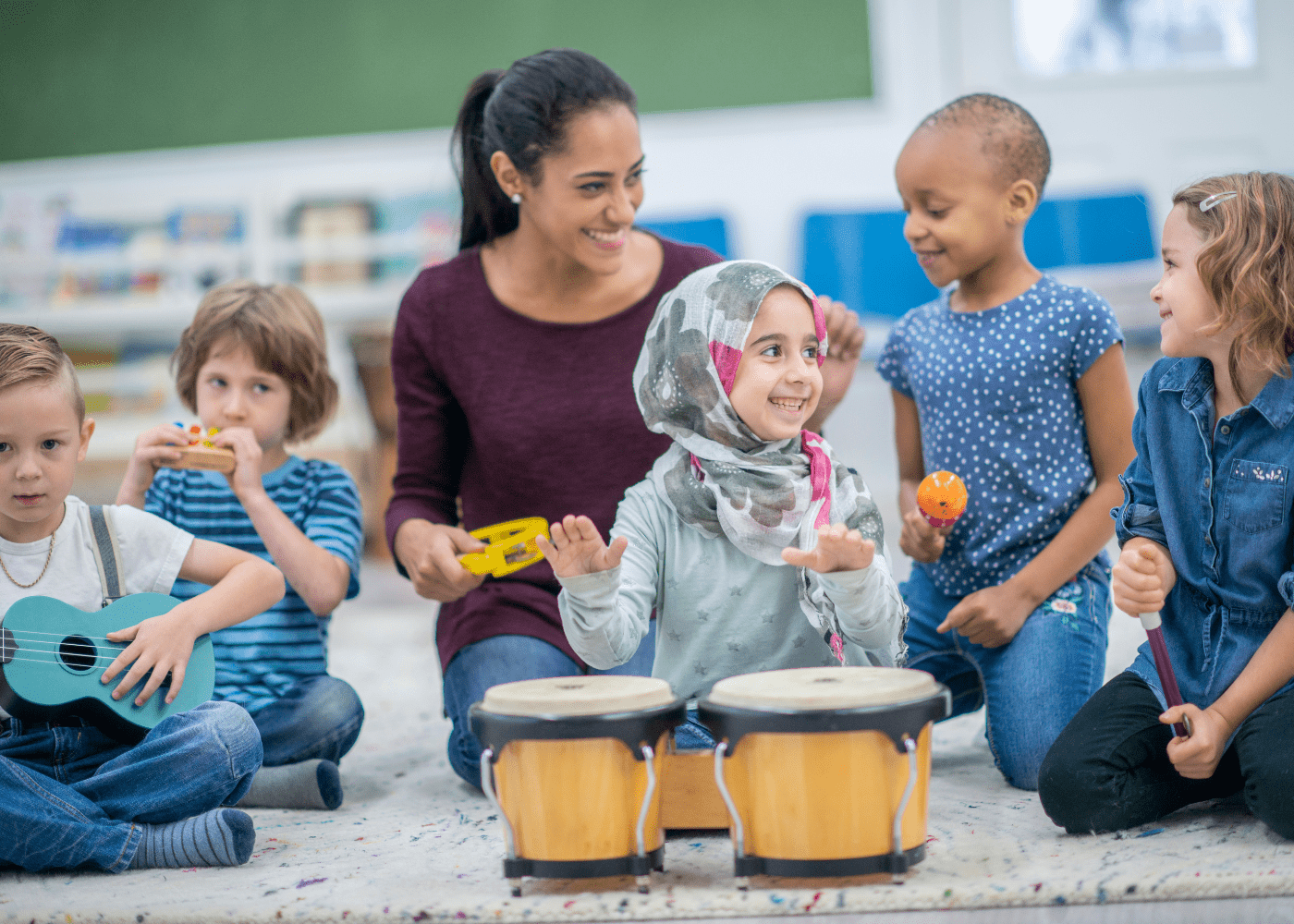
Music is one of the most accessible and rewarding things you can offer a child. It builds skills across the board, from language and math to focus and emotional awareness. And it does not have to start with formal lessons or expensive equipment. A simple drum, a small keyboard, or even a set of shakers can open the door to a lifelong relationship with music.
This guide covers the real benefits of music for kids, how to choose a first instrument, and some practical tips for making the experience positive from the start.
Why music matters for kids
Research by music education professor Susan Hallam found that engagement with music improves literacy skills, fine motor coordination, and spatial reasoning in children. She also noted that positive musical experiences can increase self-confidence and spark creativity, especially when children have chances to improvise and play freely.
Music also supports emotional health. According to Children’s Health, it can reduce stress, improve mood, strengthen memory, and encourage bonding between children and caregivers. Beyond the emotional side, music builds social skills too. Playing with others teaches communication, turn-taking, and listening, all things that transfer directly to the classroom and friendships.
Early childhood educators at Bright Horizons point out that music engages every area of child development at once. It works the body and the mind together. Singing and playing instruments help young children learn the sounds and meanings of words, which supports early literacy in a natural and enjoyable way. For kids who are not yet drawn to books or worksheets, music can be the thing that makes learning feel good.
Starting with musical play
You do not have to sign up for lessons right away. Nurturing a love of music can start simply, with toys and instruments that children can pick up and explore on their own terms. A xylophone on the floor, a small drum set in the playroom, or a set of rhythm sticks are all great starting points.
Free play with musical toys lets children experiment without pressure. They figure out cause and effect. They notice rhythm. They start to connect sounds with emotions and movement. This kind of open-ended musical play pairs well with other activities for toddlers that encourage hands-on learning.
Once a child starts showing genuine interest, you can layer in a little more structure. Try playing along to familiar songs together, or introduce simple musical games. From there, it becomes easier to see which instruments they gravitate toward and whether they might enjoy more focused learning.
How to choose an instrument for your child
The best instrument is usually the one your child is most excited about. If they light up when they hear a guitar or keep tapping on every surface like it is a drum kit, that interest is worth following. Letting them guide the choice makes it far more likely they will stick with it.
That said, a few practical factors are worth thinking through before you commit.
Age and physical readiness
Some instruments require fine motor control that younger children have not fully developed yet. A toddler can absolutely bang on a drum or shake a maraca, but asking a four-year-old to manage a full-size violin may lead to frustration rather than fun. Match the instrument to where your child actually is, not where you hope they will be in six months.
Size and fit
Most instruments come in child-sized versions for good reason. A half-size guitar or a 1/4-size violin is much easier for small hands to manage. An instrument that physically fits your child will be more comfortable to hold and easier to play correctly from the start.
Durability
Children are not always gentle. A fragile instrument that breaks after a week will discourage everyone. Look for something solidly built that can handle regular use without constant repairs.
Cost and budget
Instruments range widely in price. For a first instrument, you do not need to spend a lot. Check local buy-and-sell groups or secondhand music shops before buying new. Many families sell instruments their children outgrew or stopped using, and you can often find good-quality options at a fraction of the retail price. If your child sticks with it and wants to go deeper, you can invest in something better later on.
Access to instruction
If your child wants to take lessons eventually, it helps to choose an instrument that has teachers available in your area. Some instruments are easy to find instruction for, while others may require more searching. This is worth a quick check before you commit.
Popular instruments for kids
Piano and keyboard
The piano is one of the best first instruments for building a strong foundation in music theory. The layout is visual and logical, which makes it easier for beginners to understand how notes relate to each other. A basic keyboard is affordable and does not require tuning, which makes it very practical for home use.
Guitar
The guitar is enduringly popular with older kids and teens, but younger children can start on a child-sized acoustic guitar too. It works across a huge range of musical styles, from folk to pop to rock. Building up calluses on the fingertips takes some patience at first, but most kids push through once they can play a song they love.
Ukulele
The ukulele is smaller and lighter than a guitar, with only four strings and a gentle sound. It is genuinely manageable for young children, and the basic chords are not hard to learn. Many kids pick up their first song within a few weeks, which does a lot for motivation.
Recorder
The recorder shows up in many elementary school music programs for a reason. It is inexpensive, simple to hold, and a good introduction to reading music and playing in a group. It is not the most glamorous instrument, but it is a solid first step for kids who want to learn a wind instrument.
Drums and percussion
For kids who love rhythm and movement, drums are a natural fit. Percussion instruments range from simple hand drums and bongos to full drum kits. They build timing and coordination, and they are genuinely fun to play. If volume is a concern at home, an electronic drum kit with headphones is a reasonable option.
Violin
The violin takes real dedication to learn well, but many children start at a young age through programs like Suzuki, which are designed specifically for early learners. It rewards consistent practice and can be deeply satisfying for kids who enjoy classical music. Child-sized violins are widely available, starting at 1/16 size for the youngest players.
Trumpet
The trumpet is a great option for kids who want to play in a school band. It produces a strong, bright sound and is central to jazz, classical, and marching music. Most children start learning trumpet around age seven or eight, once they have enough breath control and coordination to manage the embouchure.
Tips for introducing instruments at home
Start simple
An instrument that matches your child’s current age and ability will feel rewarding rather than frustrating. There is no rush to move to something more complex. A child who masters a simple instrument builds the confidence and ear training they need to take on bigger challenges later.
Keep it enjoyable
Practice works best when it does not feel like a chore. Short sessions, familiar songs, and the occasional silly challenge all help. If your child is dreading it, something needs to change, whether that is the instrument, the teacher, the schedule, or the approach. Music should feel like something they want to come back to.
Make room for creativity
Not every session needs to follow a lesson plan. Let your child make up their own songs, experiment with sounds, or play along to whatever they are listening to. Free musical play builds creativity and keeps the joy alive even during harder stretches of learning.
Set realistic expectations
Learning an instrument takes time. Most kids will not sound polished for a while, and that is completely normal. Celebrate small wins, like learning a new chord or playing a song all the way through without stopping. Progress that feels meaningful to the child matters more than progress that looks impressive to adults.
Stay consistent and supportive
Regular, short practice sessions are more effective than occasional long ones. Your encouragement matters too. Listening when they play, noticing what they have improved, and staying patient during the frustrating patches all make a real difference in whether a child sticks with music long-term.
Building a musical life
Music does not have to be a formal subject or a structured activity to have an impact. Singing in the car, listening to a wide range of genres at home, attending live performances, and giving children access to instruments at their own level all add up over time. The goal is not to raise a professional musician. It is to give children a way to express themselves, connect with others, and experience the satisfaction of learning something real.
Whether your child picks up a ukulele and never puts it down or cycles through three instruments before finding their favourite, the time spent with music is never wasted. The skills it builds, and the joy it brings, tend to stay with kids long after the lessons end.





Leave a Reply