
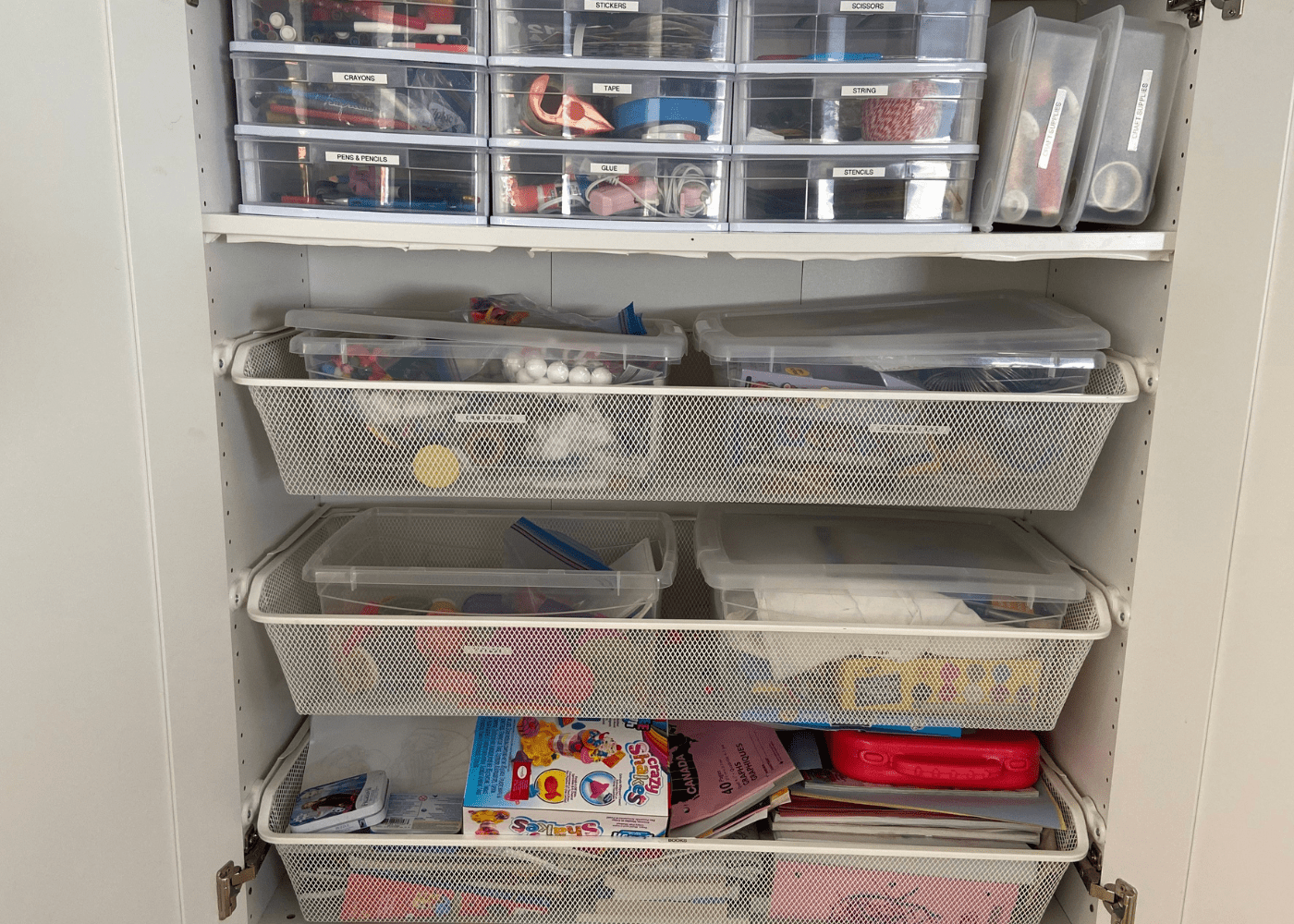
Craft supplies have a way of spreading across every surface in the house. Glitter ends up on the dog, pom poms migrate to the couch, and somehow a single glue stick is never where you left it. The good news is that a little structure goes a long way. When kids can find what they need and put it back without help, craft time becomes a lot more enjoyable for everyone.
Good kids craft storage comes down to three things: a dedicated space, grouped supplies, and containers that are easy to grab and return. You don’t need a purpose-built craft room to make this work. A single shelf, a rolling cart, or even one well-organized drawer can be enough.
Where to store kids craft supplies
Before you think about containers, decide where the supplies will live. Keeping craft materials in one consistent spot helps kids know where to go and where to put things back. It also keeps art supplies from blending in with homework materials, kitchen junk drawers, or toy bins.
A dedicated craft drawer
A drawer is one of the simplest options. You clear out an existing drawer, assign it to craft supplies, and everything stays out of sight between projects. This works well in a kitchen, a playroom, or a home office. It’s also a practical place to store scissors and other items you want within reach for you but not always accessible to younger children.
If possible, keep the main craft drawer at a height your child can reach on their own. Kids are more likely to clean up when the process is easy. Put the things they’re allowed to use independently at their level, and keep anything that needs adult supervision on a higher shelf.
A craft storage cabinet
A cabinet with multiple compartments gives you a lot of room to work with. Many craft storage cabinets include small drawers or cubbies, which makes sorting by category straightforward. Teachers rely on these for good reason. The sections help keep supplies separated, and everything stays visible at a glance.
The downside is that cabinets can get disorganized quickly if kids aren’t putting things back in the right spots. Labels help a lot here. A picture label on each drawer works well for children who aren’t reading yet. A small sticker of glue on the glue drawer, or a drawing of scissors on the scissor section, makes it clear where each item belongs without needing to read a word.
A rolling cart
A rolling cart is one of my favorite craft storage options. You can organize bins or jars on the shelves, then wheel the whole thing to wherever you’re working. No carrying supplies from room to room. Just roll it over, craft, and roll it back.
These carts tend to be sturdy and come in a range of colors, which kids often love. They work well for art supplies but also for notebooks, paper, and coloring books. If your child does crafts in different spots around the house, a cart gives you flexibility without creating chaos.
A wall pegboard
Pegboards use vertical wall space, which frees up your shelves and floors for bulkier items. You can hang containers, hooks, and small bins to hold supplies like brushes, scissors, tape, and ribbon. Everything stays visible and within reach.
A pegboard in a playroom or craft corner also keeps supplies organized without requiring a cabinet. For items you want out of reach, just position those hooks higher up. Wall storage is especially useful for frequently used tools that kids can learn to return independently. If you want more ideas for using wall space in your home, the wall storage ideas post has plenty of practical options.
How to organize supplies inside storage
Once you have a storage spot, the next step is organizing what goes inside it. Grouping similar items together and using clear containers makes a big difference. When a child can see through the container, they find what they need without dumping everything out first.
Plastic storage cases with dividers
Flat plastic cases with built-in dividers are a classic choice. You can find craft-specific versions at any hobby store, or repurpose a fishing tackle box. The compartments keep small items like beads, buttons, and googly eyes separated so they don’t end up mixed together at the bottom of a bin.
Clear cases let kids see the contents immediately. That alone cuts down on the number of containers that get opened and tipped during a search. For small, loose items, divider cases are far easier to manage than a single large bin.
Mini drawer sets
Small plastic drawer sets that sit on a shelf are practical for everyday supplies. Clear drawers are ideal because you can see what’s inside without pulling each one out. Most have a small label slot on the front, which makes organizing simple.
One feature I find genuinely useful is the removable drawer. A child can pull out the whole crayon drawer, bring it to the table, and return the whole thing when they’re done. There’s no pouring, no searching, and no stray crayons rolling under the couch. These sets also fit neatly in a cabinet or look tidy sitting on a shelf.
Photo cases and small storage boxes
Photo storage cases, the kind designed to hold 4×6 prints, work surprisingly well for craft supplies. Each small interior case holds a specific category of item. Stickers go in one, sequins in another, small foam shapes in a third. The individual cases then fit back into the larger carrier, which is easy to move from shelf to table and back.
Many of these cases are now marketed specifically for craft storage because they translate so well to the job. Look for sets where the smaller cases come in different colors. It adds some visual interest and helps kids remember which case holds which supplies.
Teabag organizers
Teabag organizers are a compact and inexpensive option. They’re usually clear, divided into six or more sections, and take up very little space on a shelf or counter. They work best for longer items like markers, colored pencils, brushes, and pens. I’d steer away from using them for very small loose items like glitter or tiny beads, since those tend to spill between sections.
Turntables and lazy susans
A divided turntable is a fun and functional option, especially when more than one child is crafting at the same time. Everyone can spin it to reach what they need without grabbing across the table. Many craft-specific turntables have removable inserts, so you can set up just the supplies needed for a particular project and swap them out for the next one.
This works well for paint brushes, glue sticks, small scissors, and other tools that get used repeatedly. It keeps the table tidy while still making everything accessible.
Jars, containers, and door organizers
Beyond dedicated craft storage products, plenty of everyday items work just as well. Glass or plastic jars are great for holding brushes, pencils, and markers upright. Clear snack containers work for small loose items. An over-the-door shoe organizer with clear pockets is surprisingly effective for storing flat items, rolls of tape, and individual supply categories.
The main thing to look for in any container is that you can see what’s inside without opening it. That one feature saves more time and frustration than almost anything else.
What to keep in your craft storage
A well-stocked craft area doesn’t need to be elaborate. The basics go a long way, and kids tend to be creative with whatever is available. Here’s what I recommend keeping on hand.
For painting and coloring, stock washable and non-toxic paints, foam and bristle brushes, a variety of markers, crayons, and colored pencils. Food coloring is worth keeping as well since it opens up a surprising number of hands-on activities. Offer a mix of paper types, including construction paper, textured sheets, and plain white paper. And keep a paint smock or an old t-shirt nearby. Crafts get messy, and having something dedicated to craft time saves your good clothes.
For general supplies, keep scissors in at least two sizes, glue sticks, liquid glue, and a hot glue gun stored out of reach for adult use. Pom poms, pipe cleaners, ribbon, thread, buttons, stickers, and assorted beads round out a solid craft collection. Beyond that, repurposed materials work well too. Cardboard boxes, bottle caps, fabric scraps, and old magazines have all been useful in our craft sessions. If something has an interesting shape, color, or texture, it’s worth keeping in a bin for future projects.
If you’re looking for more inspiration on what to make with these supplies, the easy crafts for kids post is a good place to start.
Keeping craft storage working long-term
The best storage system is one that your child can actually maintain. That means containers they can open themselves, labels they can understand, and a location they can reach. When cleanup is straightforward, kids are more willing to do it.
Do a quick reset every few weeks to reorganize anything that has drifted out of place. Restock supplies as they run low, and clear out anything that’s dried up, broken, or no longer used. A small amount of regular maintenance keeps the whole system running without a major overhaul.
For more ideas on keeping your home organized with kids around, take a look at the household organization section. There’s a lot of practical advice on everything from playroom storage to nursery organization that translates well to family life in general.




Leave a Reply