
Kitchen pantry space saving ideas that actually work
A disorganized pantry makes cooking harder than it needs to be. You buy duplicates of things you already own, ingredients expire before you use them, and finding anything takes longer than it should. The good news is that most pantry problems come down to a lack of system, not a lack of space. These ideas will help you work with what you have.
Start by clearing everything out
Before you buy a single bin or shelf, take everything out of your pantry. This step is not optional. You cannot organize a space properly without seeing exactly what is in it. Pull each item out one by one and check the expiration date. You will likely find things that are well past their date, and getting rid of them immediately frees up more space than almost anything else you can do.
Toss expired food, recycle empty boxes, and lay everything that remains on a flat surface like your kitchen table or counter. Seeing it all spread out gives you a clear picture of what you are actually working with. From there, you can make better decisions about how to store things.
Once everything is visible, group similar items into broad categories. Baking supplies in one pile, dry grains in another, canned goods together, snacks in their own group. Doing this on the counter, rather than inside the pantry, makes it much easier to plan where things should go before you start putting them back.
Use bins and baskets to group categories
Loose items on a shelf are hard to manage. Things get pushed to the back, stacks fall over, and you end up digging through everything to find what you need. Corralling similar items into labeled bins solves this problem.
You do not need to spend a lot of money on matching containers. Clear plastic bins from a dollar store work just as well as anything else, as long as you label them clearly. Label each bin by category, such as baking, pasta, snacks, or canned goods. When everything has a home, it is much easier to maintain the system over time.
If your pantry has enough vertical space, stacking bins or containers can double your storage without requiring any extra square footage. Just make sure the items you reach for most often are the easiest to access.
Decant or keep original packaging
There are two approaches to storing pantry staples, and both have merit. Some people prefer to keep everything in its original packaging so the ingredient list and expiration date are always visible. This works well if you buy smaller quantities and rotate stock regularly.
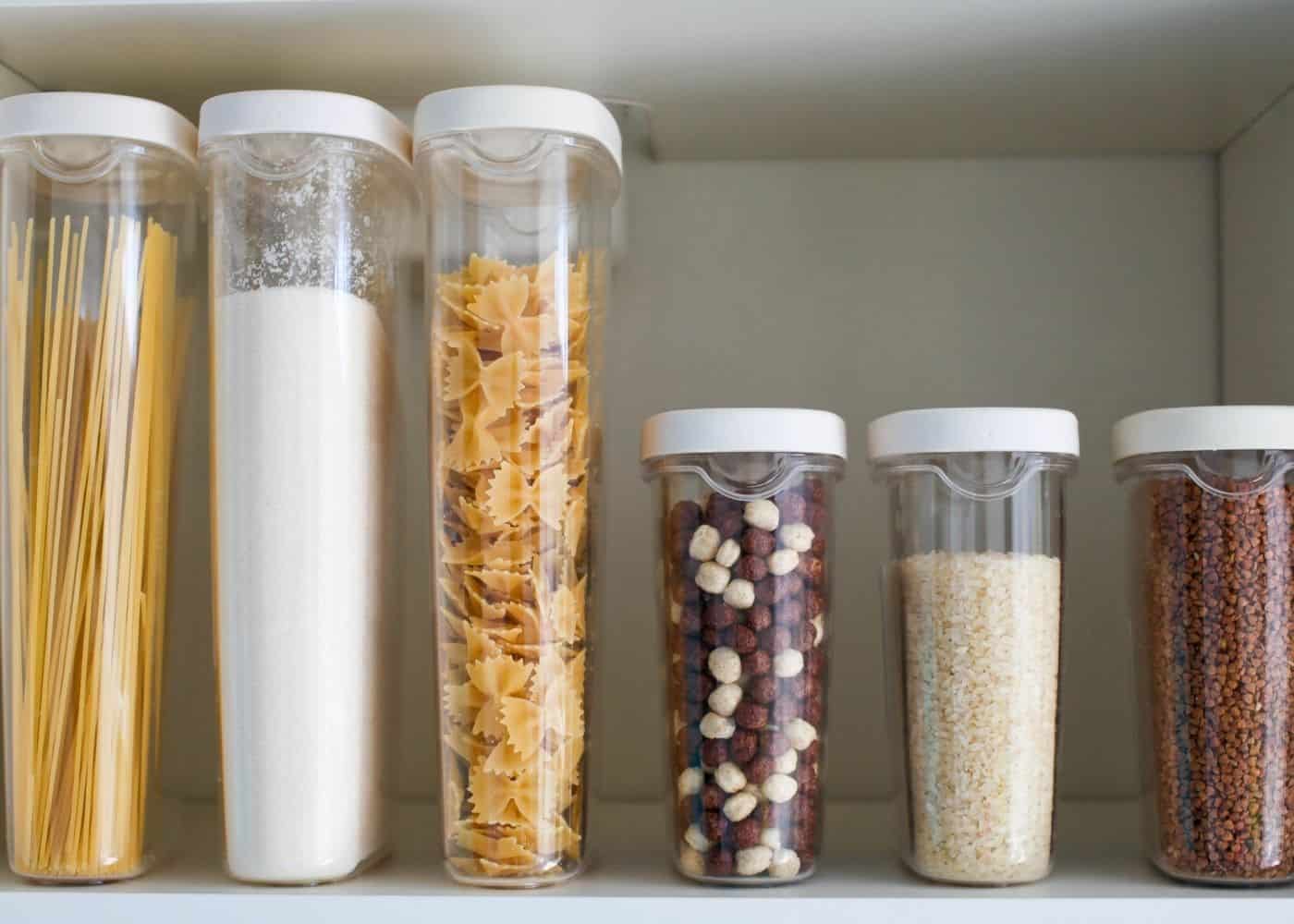
Others prefer to transfer dry goods like flour, rice, oats, and pasta into clear airtight containers. This works especially well for bulk purchases, where the original packaging is just a large bag with no useful label. Clear containers let you see at a glance how much you have left, and they stack more neatly than irregular bags and boxes.
Whichever approach you choose, consistency matters. Mixing loose bags with containers and half-open boxes leads to clutter. Pick one system and stick with it.
Install a pullout pantry or sliding shelves
One of the most frustrating things about a deep pantry is the dead space at the back of the shelf. Items get pushed behind other items and forgotten entirely. Pullout shelves or drawer-style inserts solve this by bringing everything to the front when you open the cabinet.
Pullout pantry inserts are available at most home improvement stores and are worth the investment if you have deep shelving. They make it easy to see and reach everything without moving other items out of the way. Sliding shelves work the same way for pots, pans, and heavier items stored in lower cabinets.
Add a spice rack to free up shelf space
Spice jars are small, but they take up a surprising amount of shelf space when stored flat. A dedicated spice rack pulls them all into one compact spot and makes it easy to find what you need at a glance.
Spice racks come in several formats. A wall-mounted rack keeps spices off the shelves entirely. A rack that hangs on the inside of a cabinet door uses space that would otherwise go to waste. A tiered countertop rack works if you have counter space to spare. Any of these options will free up shelf room for larger items.
Use a lazy susan for small items
A lazy susan is one of the simplest and most practical pantry tools available. It works best for small items that tend to get lost, like oils, vinegars, sauces, and condiments. Instead of reaching behind a row of bottles, you simply spin the turntable to find what you need.
Keep the lazy susan near the front of the shelf rather than pushed to the back. A small one placed in an accessible spot will get used consistently. A large one pushed into a corner will just collect clutter.
Use tray dividers for vertical storage
Vertical dividers are often overlooked, but they are excellent for storing flat items like baking sheets, cutting boards, and trays. Without dividers, these items get stacked flat and you have to lift everything to reach the one at the bottom. With dividers, each item stands upright and can be pulled out individually.
Tray dividers can be purchased as standalone inserts or attached to the inside of a cabinet. Either way, they make good use of vertical space that would otherwise go unused.
Add a pot rack to free up cabinet space
Pots and pans take up a lot of room in kitchen cabinets. A ceiling-mounted or wall-mounted pot rack moves them out of the cabinets entirely and keeps them within easy reach while you cook. This can free up significant cabinet space for pantry overflow or small appliances.
Before installing a pot rack, measure the clearance in your kitchen carefully. You want enough room to move around without bumping into hanging cookware. Choose a rack made from sturdy materials that can support the combined weight of your pots and pans without any flex or sag.
Designate a beverage area
Drinks take up more pantry space than most people realize. Bottles of sparkling water, juice boxes, sports drinks, and wine can scatter across multiple shelves and make the pantry feel more cluttered than it actually is. Grouping all beverages into one dedicated section solves this.
If you have the room, a small wine rack or can organizer keeps bottles upright and easy to grab. A mini fridge near the pantry, if space allows, can handle drinks that benefit from being cold. Keeping all beverages in one spot also makes it easier to see when you are running low and need to restock.
Move cleaning supplies out of the pantry
Cleaning supplies and food do not need to share the same space. If your pantry currently holds both, moving the cleaning products out can free up a surprising amount of room. A hall closet, mudroom, or under-sink cabinet is a better home for mops, buckets, sprays, and paper towels.
If you have a mudroom or coat closet near the kitchen, consider converting part of it into overflow storage for bulk pantry items and cleaning products. This keeps your main pantry focused on food and makes both spaces easier to manage. You can read more about what mudrooms are and how to make the most of that space.
Convert a coat closet into a pantry if needed
If your kitchen pantry is genuinely too small for your needs, a nearby coat closet can become a second pantry with minimal effort. Remove the coats, measure the interior dimensions, and install shelving that fits the space. Use this secondary pantry for items you reach for less frequently, like backup supplies, bulk purchases, and specialty ingredients.
Keep your most-used pantry items close to your cooking area. Save the converted closet for things you only need occasionally. This division keeps your kitchen workflow smooth without requiring you to run across the house for everyday staples.
Organize spirits and mixers together
If you keep alcohol in your pantry, grouping bottles by type makes them easier to find and frees up scattered shelf space. Keep liquors together, group liqueurs by style, and store mixers like tonic water, soda water, and bitters in their own section. This approach works especially well if you entertain regularly and need to find specific bottles quickly.
Maintain the system with regular decluttering
A well-organized pantry only stays that way with occasional upkeep. A quick check every few months, where you pull items forward, remove anything expired, and return things to their proper bins, is enough to keep the system working. You do not need to do a full overhaul every time. A few minutes of maintenance goes a long way.
Good household organization is not about perfection. It is about creating simple systems that are easy to maintain. A pantry that works for your family’s actual habits will always serve you better than one that looks great but falls apart within a week.
If you are working on organizing other areas of your home, you might also find these posts useful. Our guides on small kitchen storage ideas, snack storage ideas, and Montessori kitchen setups cover a lot of the same practical principles applied to different spaces.




Leave a Reply