
Getting outside is one of the best things preschoolers can do. Fresh air, open space, and the right toys make for an afternoon that is both fun and genuinely good for their development. You don’t need a lot of gear to make it work. A few well-chosen toys go a long way.
This post covers the best outdoor toys for preschool-aged children, why outdoor play matters, and some simple activity ideas you can set up in your own backyard. If you have a younger child at home too, check out these outdoor toys for 1-year-olds for age-appropriate ideas.
Why outdoor play matters for preschoolers
Outdoor play is not just about burning energy, though it does that well. It also builds skills that are hard to practice indoors. When children run, climb, jump, and throw, they develop their gross motor skills and coordination. When they play alongside other children, they practice sharing, taking turns, and reading social cues. When they dig in the dirt or splash in a puddle, they engage their senses and learn how the natural world works.
Outdoor space also gives children room to move freely. That freedom encourages creativity in a way that indoor play often cannot. A child with open space and a simple toy can invent games that last for hours. Activities for toddlers do not need to be elaborate to be valuable.
Classic outdoor toys preschoolers love
Swings and slides
Swing sets remain one of the most used pieces of outdoor equipment for a reason. Swinging builds balance and coordination, and it gives children a physical outlet that feels rewarding. Many children find the rhythmic motion calming as well. Slides add to the appeal of a backyard play structure. Going down a slide requires a child to coordinate their body, build confidence, and, in group settings, practice patience while waiting their turn.
Trampolines
A trampoline is one of those purchases that gets used again and again. Jumping builds core strength, balance, and coordination. It also gives high-energy children a healthy outlet on days when they need to move. When siblings or friends jump together, there is a natural social element too. Just make sure you choose a model with a safety enclosure net, and set clear rules from the start.
Bicycles and balance bikes
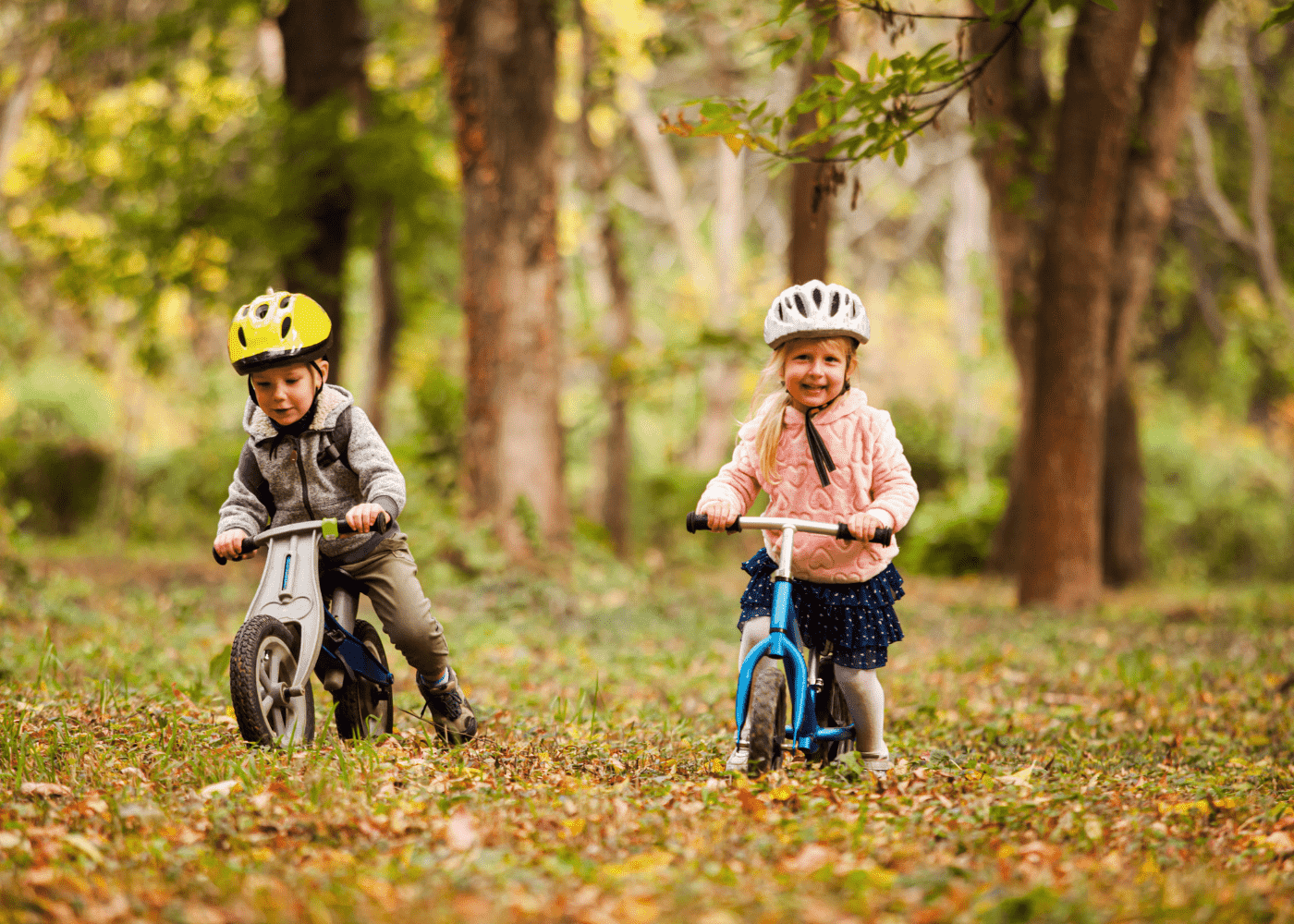
Learning to ride a bike is a milestone that takes practice, persistence, and a fair amount of falling down. That process is genuinely good for children. It teaches them that skills take time and that trying again after a setback is worth it. Balance bikes work well for younger preschoolers because they allow children to develop balance before adding pedals to the mix. A properly fitted helmet is non-negotiable from day one.
Outdoor play kitchen
A play kitchen placed outside opens up a whole new level of imaginative play. Children can collect sticks, leaves, mud, and water to make their own recipes. They are watching what adults do in the real kitchen and making their own version of it outdoors. This kind of open-ended, child-led play supports creativity, language development, and even early math thinking like measuring and sorting. These kitchens tend to grow with children too. A two-year-old makes mud soup. A five-year-old runs a full restaurant. It shifts as they do.
Simple backyard activities that don’t need much
Not every family has room for a full swing set, and that is completely fine. Some of the best outdoor play happens with very little equipment. Here are a few ideas that work well for preschoolers.
Obstacle courses
Set up a course using whatever you already have. Hula hoops work for jumping from spot to spot. A jump rope laid flat on the ground becomes a balance beam. A low step becomes a jumping-off point. You can make it as simple or as involved as your child needs, and they can help design it themselves. Letting them build their own version is often even more engaging than the activity itself.
Ball games
A ball is one of the most versatile outdoor toys you can own. Kicking, throwing, catching, rolling, and aiming at targets all build coordination and hand-eye skills. You can introduce simple versions of soccer, basketball, or bowling with cones. The game itself matters less than the movement and the back-and-forth between players.
Water play
Water play is a natural fit for warm weather. A kiddie pool, a bucket and some cups, or even just a hose gives children a rich sensory experience. Pouring, filling, and splashing all support fine motor development and early science thinking. Children naturally start to notice how water moves and what floats, which connects to sink or float experiments you can try together. Water also keeps everyone cool on hot days, which is reason enough on its own.
Nature exploration
Sometimes the best outdoor activity is just going outside with no agenda. Give your child a bucket or a magnifying glass and let them look around. Children notice things adults walk past. A trail of ants, a bird nest, the way shadows move across the ground. This kind of free exploration builds curiosity and observational skills that no structured lesson can replicate. A 5 senses nature walk is a simple way to add a little structure if your child enjoys a bit of direction.
Skills that develop through outdoor play
Physical development
Outdoor play naturally involves more large-muscle movement than indoor play. Running, climbing, jumping, and carrying things all strengthen the body and build coordination. These gross motor skills form the physical foundation that children need for sports, handwriting, and everyday tasks as they grow.
Social development
When children play outside together, they work things out in real time. Who goes first. How to take turns. What to do when someone gets upset. These are not easy skills, and they take practice. Outdoor group play provides that practice in a low-pressure setting. The stakes feel lower outside than in a classroom, which makes it easier for children to try, mess up, and try again.
Creativity and imagination
Open-ended outdoor play gives children the space to direct their own experience. A sandbox becomes a construction site. A pile of sticks becomes a fort. A garden hose becomes a river. When adults step back and let children lead, they come up with scenarios that are far more elaborate than anything we would have designed for them. Dramatic play thrives outside, and it is one of the most important ways preschoolers make sense of the world.
Emotional regulation
Physical activity helps children process big feelings. A child who is frustrated or overstimulated often does better after time outside. Running, jumping, and moving through space gives the nervous system a chance to reset. Many parents notice that children are calmer and more cooperative after a solid stretch of outdoor play. That is not a coincidence.
Curiosity about the natural world
Children who spend time outside develop a relationship with nature that starts early and lasts. They learn to notice seasons, weather, insects, and plants. This is the foundation of scientific thinking. Asking questions, making observations, and testing ideas are habits that begin in the backyard. If you want to extend that curiosity indoors, science activities for preschoolers are a natural next step.
Choosing the right outdoor toys
The best outdoor toys are the ones your child actually uses. A beautiful swing set that sits empty is less useful than a ball that gets kicked around every single day. Think about what your child gravitates toward. Does she love to pretend and create stories? An outdoor kitchen or a sandbox might get the most use. Does he prefer movement and physical challenge? A balance bike or a trampoline might be worth the investment.
Outdoor toys also do not need to be expensive. Some of the most valuable outdoor play happens with the simplest materials. Chalk, a bucket, a ball, and some open space can fill an entire afternoon. Start with what you have and add pieces over time based on what your child actually plays with.
When you do invest in larger equipment, look for solid construction and age-appropriate safety features. Check weight limits and assembly instructions carefully. A piece of equipment that is built to last will serve your family through multiple years and, if you have more than one child, more than one childhood.
Outdoor play is not a luxury. It is one of the most practical and effective ways to support a preschooler’s growth. The toys and activities you choose are just tools. The real benefit comes from time spent outside, moving freely, and learning through experience.




Leave a Reply