
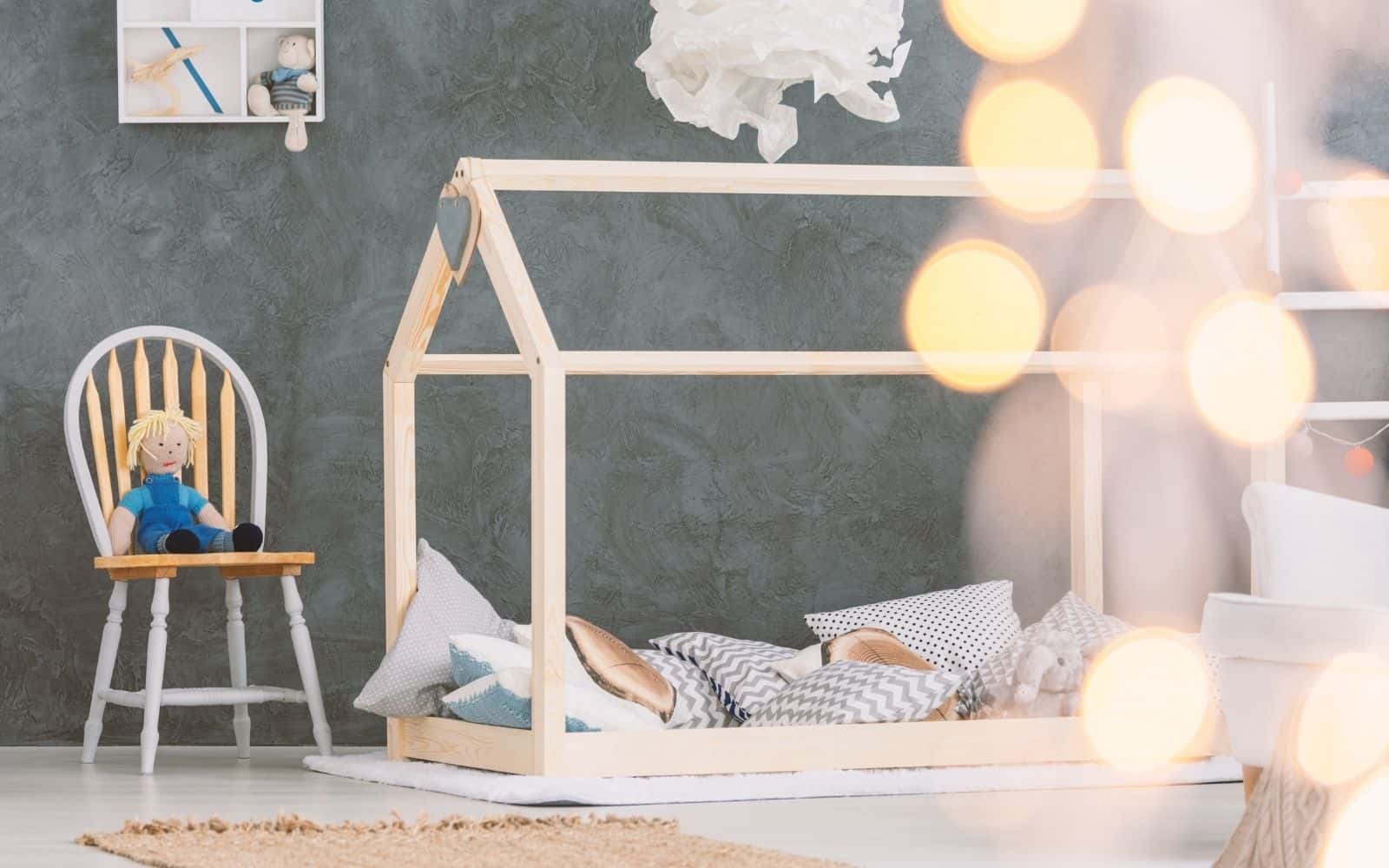
A child’s bedroom is more than just a place to sleep. It is where they play, rest, observe, and slowly become more capable. Dr. Maria Montessori built her whole approach around letting children lead, and their own room is one of the best places to put that into practice.
If you are already familiar with Montessori principles or have been looking into Montessori furniture for your home, this post takes things a step further. Here we focus specifically on the bedroom, what to include, how to arrange it, and why it matters.
The guiding idea is simple. Everything in a Montessori bedroom is designed to support independence. That means items are placed at the child’s level, within their reach, and chosen with their ability to use them in mind. Keep that principle in mind as you read through each section below.
The floor bed
The floor bed is probably the most recognizable feature of a Montessori bedroom. The core idea is that a child should be able to get in and out of bed on their own, without needing help from a parent or caregiver.
A traditional Montessori floor bed is simply a mattress placed directly on the floor, with no rails or enclosures. This gives children full freedom of movement. They can roll out of bed in the morning, explore their room when they wake up, and return to bed when they feel tired, all without waiting for an adult to lift them in or out.
That said, every family is different. Some children transition from a crib and need a little more support. Some parents feel more comfortable with a low frame or a soft bumper around the mattress. There are beautiful low-profile bed frames designed with this in mind, including house-shaped toddler beds and simple wooden platforms that sit just a few inches off the ground. The right choice is the one that works for your child and your family.
One practical note: if your child is under six months old, keep the sleep surface clear. No blankets, pillows, or stuffed animals on the mattress. Safety always comes first.
Sleep and quiet time
A consistent bedtime routine helps children know what to expect. When the same sequence of events happens each night, the transition to sleep becomes easier for everyone. This is true whether you have a newborn, a toddler, or a preschooler.
A white noise machine can be a helpful tool for both naps and nighttime sleep. Many children sleep more soundly with steady background sound, especially in homes with siblings or other noise. You can read more about sleep music for kids if you want ideas beyond white noise.
Blackout curtains are worth the investment if your child naps during the day. Darkening the room signals that it is sleep time, even when it is bright outside. This is a simple change that makes a real difference for many families.
A dressing and self-care area
This is one of the most underrated elements of a Montessori bedroom setup. A small dressing area is useful even for babies, and it becomes increasingly valuable as your child grows.
The basic setup includes a low, full-length mirror and easy access to their clothing. When children can see themselves while getting dressed, they develop body awareness and self-confidence. They can watch what their hands are doing as they learn to button, zip, and pull on their own clothes.
For clothing storage, choose pieces that your child can actually use. Shallow drawers that slide easily, open cubbies, or low baskets all work well. The goal is that your child can choose what to wear and access it without asking for help. A small hamper in the same area teaches them where dirty clothes belong.
For infants, try to use this area for diaper changes when you can. The mirror gives babies something to look at, which often settles them down during diaper changes. It also begins building that sense of body awareness from very early on.
Helping children learn to dress themselves
Many children will insist they cannot do something the first time they try. It is worth acknowledging that feeling directly. Saying something like “you can’t do it yet” validates what they are feeling while also planting the idea that they will get there.
From there, the approach is to let them try before stepping in, and when you do help, guide them step by step rather than doing it for them. Most children can manage much more than adults expect when given the chance to practice. The mirror helps a lot here. Children can see what they are doing and start to take pride in dressing themselves.
Art and decor at the child’s level
Montessori-style decor is not about a specific aesthetic. It is about placing things where your child can actually see and engage with them. Wall art hung at adult height means nothing to a toddler who cannot see it without being lifted up.
Hanging a few pieces at your child’s eye level makes their room feel like it truly belongs to them. This could be educational prints, nature illustrations, simple affirmations, or even their own artwork displayed with clips on a piece of twine. You can find ideas for DIY photo string displays that work just as well for children’s art as for photos.
Keep the decor intentional. Choose pieces that are calming, meaningful, or gently educational. A room that is visually busy can feel overwhelming. A few well-chosen pieces at the right height will do more for your child than a wall covered in decorations they cannot even see properly.
A reading nook
If you have extra space in the bedroom, a reading nook is one of the best ways to use it. It does not need to be elaborate. A low bookshelf, a soft rug, and a comfortable place to sit are all you need to create a space where your child can choose a book and settle in on their own.
Forward-facing bookshelves work particularly well for young children because they can see the covers and choose what they want to read. A beanbag chair or floor cushion keeps things low and accessible. Building a love of reading early is one of the best things you can do for your child, and having a cozy, dedicated spot helps. You can find more ideas in our early literacy resources if you want to take it further.
Other ways to use extra space
Once the sleeping, dressing, and reading areas are set up, think about what your specific child loves most. If they enjoy dressing up, a row of low hooks with a few costumes is a simple and practical addition. If they are drawn to music, a small corner with a few instruments for kids gives them a place to explore sound on their own terms.
If your home does not have a separate playroom, the bedroom can take on that role with the right storage. Low shelving with a few trays or baskets, each holding one type of activity, is the classic Montessori approach to toy storage. Rotating what is on the shelves keeps things fresh without overwhelming the space.
Putting it all together
A Montessori bedroom does not need to look a certain way or cost a lot of money. The underlying principle is that the space serves the child. Furniture is low and accessible. Belongings are organized so the child can find and return them independently. Decor is placed at their level. The room feels calm, not cluttered.
When children have a space that is genuinely designed for them, they use it differently. They become more confident, more capable, and more willing to manage their own routines. That independence builds gradually, but the environment you create plays a real role in how quickly it develops.
Whether you are setting up a nursery for the first time or rethinking a toddler’s room, the Montessori bedroom approach is worth considering. Start with one or two changes, see how your child responds, and adjust from there. For more ideas on bringing these principles into your whole home, take a look at our full guide to the Montessori home.




Leave a Reply