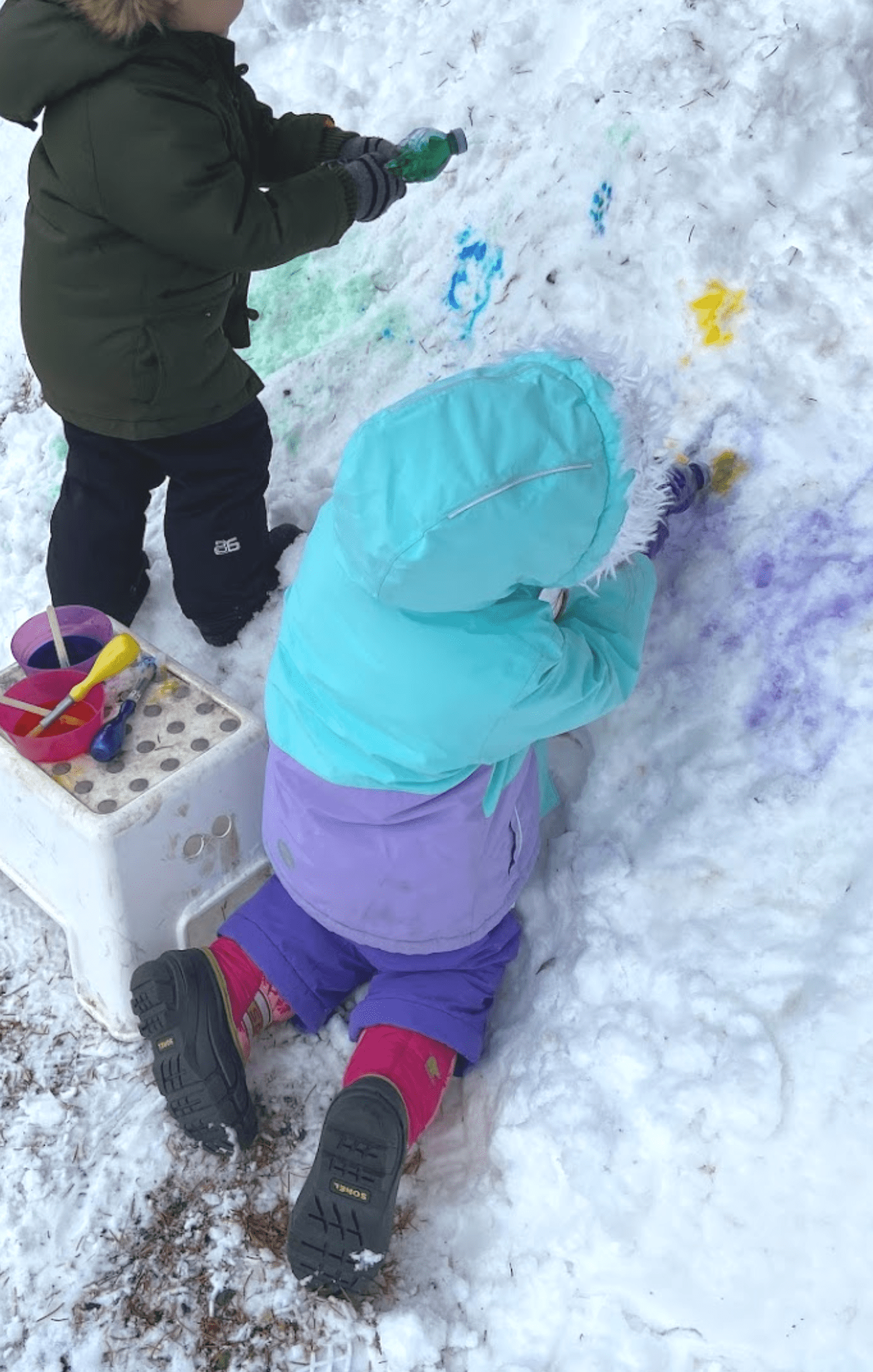
Snow painting is one of those winter activities that costs almost nothing and keeps kids genuinely busy. It combines fresh air, color, and creativity in a way that feels open-ended and fun without requiring a lot of setup. If you have snow on the ground and a few basic supplies, you are ready to go.
What you need to make snow paint
The supply list is short. You need water, food coloring, and something to apply the paint with. That is really it. Fill a water bottle or spray bottle with cold water, then add a few drops of concentrated food coloring. Shake it gently and the color will mix right in.
If you prefer, you can also use washable tempera paint diluted with water. Tempera works well and the colors tend to be vivid, but food coloring is faster to prepare and easier to clean up afterward. The one thing to watch with food coloring is that it can stain light-colored mittens or snow gear, so keep that in mind before you head outside.
For application, paintbrushes and sponges both work well. Spray bottles are a big hit with younger kids because squeezing the bottle is satisfying and the color spreads in interesting patterns. If you do not have spray bottles on hand, you can poke a few small holes in a water bottle lid and show kids how to squeeze it to spray. It works just as well.
How to set up the activity
The setup takes about five minutes. Mix your colors before you go outside, or let kids help you mix them at the kitchen table first. Bring a few different colors so there is room to experiment. Watching red and yellow mix into orange on a white snow canvas is a simple and satisfying color theory lesson that happens naturally.
Once you are outside, let kids choose their canvas. A flat section of packed snow works well. A snowbank is another good option. You can also build a simple frame by laying four sticks in a rectangle on the snow. This gives kids a defined area to work in, and the finished result really does look like a piece of art. For a more structured version of this activity, stencils cut from cardboard work well on snow and give older kids a different kind of challenge.
We built a small snowman to use as a painting subject, and the kids had a great time decorating it with color. There is no wrong approach here. Some kids will make careful patterns. Others will cover every inch of snow with as much color as possible. Both are equally valid.
Why outdoor play matters
Snow painting is more than just a way to fill time on a cold afternoon. Getting outside in winter has real benefits for kids. Research cited by the Encyclopedia on Early Childhood Development found that children who play outdoors are more physically active than those who play indoors. Outdoor play is also linked to higher vitamin D levels, better attention, improved self-regulation, and better spatial memory.
Winter can make it tempting to stay inside, but fresh air and movement do a lot for kids’ moods and focus. A short outdoor session like this one can reset the afternoon in a positive way. If you are looking for more ideas to get kids outside year-round, the outdoor learning section of this site has plenty of options. There are also lots of science activities for preschoolers that translate well to outdoor settings if you want to add a learning angle.
Fine motor skills and art-making
Snow painting gives kids a real fine motor workout. Gripping a paintbrush, controlling pressure while squeezing a spray bottle, and making deliberate marks in the snow all require the small muscles in the hands and fingers to work hard. The Philly Art Center notes that art lessons strengthen the small muscles in fingers, hands, and wrists, and that this kind of practice helps make learning to write easier over time.
This is one reason I like art-based activities that involve tools. Kids are building hand strength and coordination while they play, and they have no idea they are doing it. The preschool nature crafts post on this site has more activities that give kids similar fine motor practice in an outdoor setting.
Creativity and self-expression
Snow is an unusual canvas. It changes the way kids think about making art because the rules feel different outside. There is no paper to stay within, no desk to sit at, and no right answer. That kind of open space encourages kids to try things they might not try in a more structured setting.
Letting kids mix their own colors and decide where to paint gives them a sense of ownership over what they make. A child who feels free to experiment is more likely to take creative risks. Snow painting supports that kind of thinking without requiring any prompting from adults. You set up the supplies and step back. They do the rest.
Even for kids who are not naturally drawn to art, painting outside feels different enough from regular crafts to hold their interest. There is something about the scale of it, working on snow instead of a small sheet of paper, that makes kids feel like what they are doing matters.
Safety tips for snow painting
A few simple steps will keep the activity comfortable and safe. Dress kids warmly before you head out. Waterproof boots, a winter jacket, mittens, and a hat are all essential. Cold and wet hands will end the fun quickly.
If you are concerned about staining clothing, use diluted washable tempera paint instead of food coloring. Either way, have kids build any snowmen or stick frames before they start painting. This keeps their mittens dry during the building phase so they are not already soaked when it is time to paint. A smock or an old apron worn over a jacket adds an extra layer of protection for clothing.
Keep the session time realistic for your child’s age. Toddlers may be happy for 15 to 20 minutes. Older kids can easily stay outside for an hour or more with this kind of open-ended activity. Follow their lead and head in when they are ready.
A simple activity worth doing
Snow painting does not need to be elaborate to be worthwhile. A few bottles of colored water and a fresh patch of snow is enough to spark an hour of creative, active outdoor play. Kids get fine motor practice, exposure to color mixing, and time outside in the winter air. You get a simple activity that requires almost no prep and leaves no mess indoors.
If you are building a collection of easy outdoor activities, this one earns its place. Pair it with a nature walk, a snow volcano experiment, or some outdoor physical education for kids for a full afternoon outside. Winter is a lot more enjoyable when kids have a reason to look forward to going out in it.