
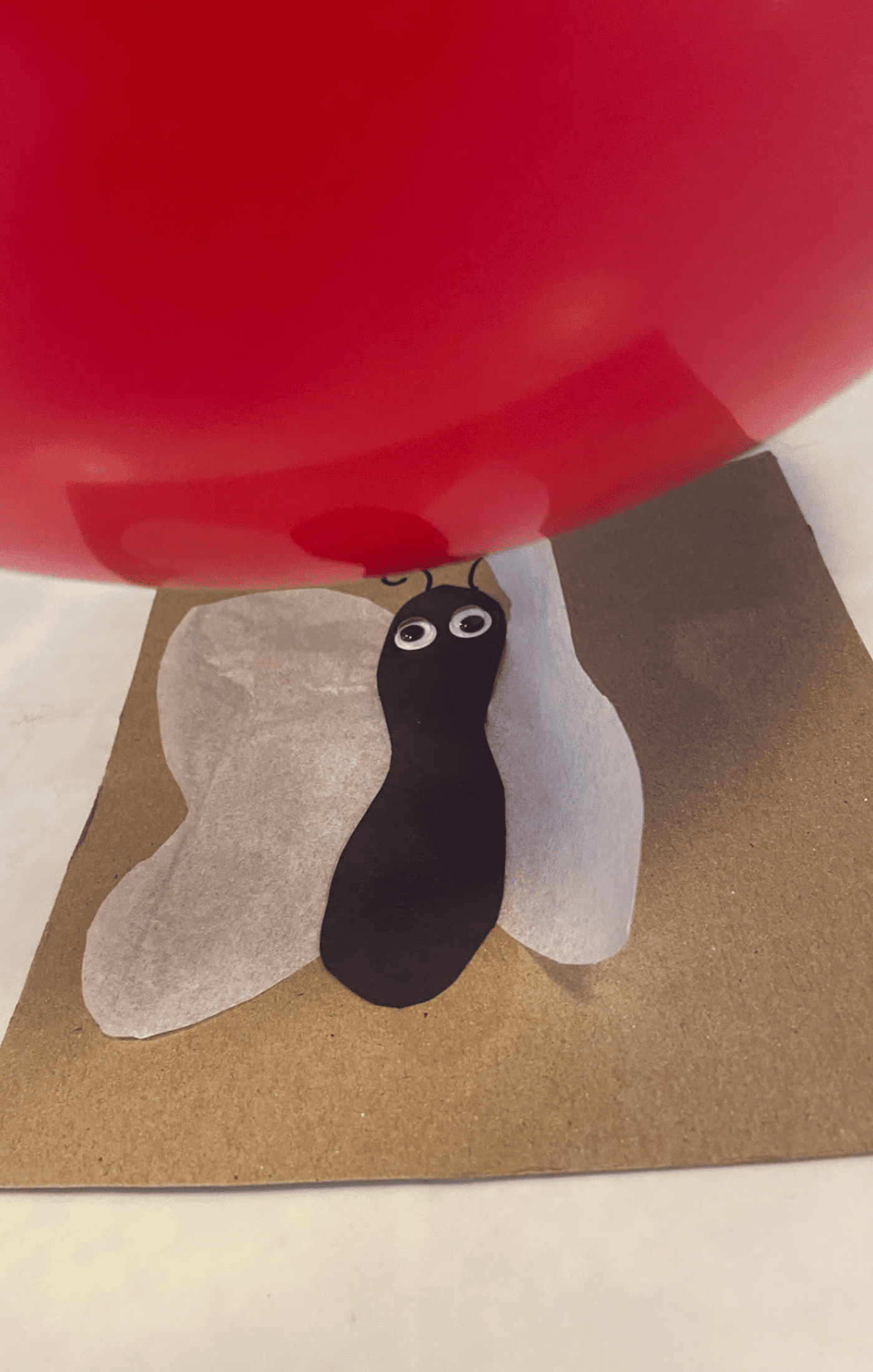
If your child has ever slid down a playground slide and then zapped you with a shock, you have already seen static electricity in action. It is one of those invisible forces that is easier to show than to explain. This static electricity experiment uses a tissue paper butterfly and a balloon to make that invisible force visible. The butterfly appears to flap its wings and reach toward the balloon, and kids find it genuinely surprising every time.
This works well for preschoolers and early elementary kids. It takes only a few minutes to set up, uses supplies you likely already have at home, and opens up a real conversation about how electricity works. If you enjoy doing simple science experiments for kids at home, this one is worth adding to your list.
What is static electricity?
Everything around us has an electric charge. That charge comes from tiny particles called electrons. When electrons build up on the surface of an object instead of flowing through it, that buildup is called static electricity. The word “static” means not moving, and that is exactly what is happening. The charge sits still on the surface until it has a chance to jump somewhere else.
When your child slides down a plastic slide, friction moves electrons from the slide onto their body. That gives them a negative charge. When they then touch you, those electrons jump across, and you feel the zap. The same thing happens when you rub a balloon on your hair. Electrons transfer from your hair onto the balloon. The balloon becomes negatively charged, and your hair becomes positively charged. Opposite charges attract each other, which is why your hair stands up and reaches toward the balloon.
That attraction is also what makes the butterfly wings move. The tissue paper holds a slight positive charge. When the negatively charged balloon gets close, the tissue is pulled toward it. It looks like the butterfly is flying, but it is really just physics doing its job.
What you need for this experiment
You do not need much to put this together. Gather a small square of cardboard for the base, tissue paper for the wings, cardstock or extra cardboard for the butterfly body, glue, and one inflated balloon. Googly eyes are optional, but they make the finished butterfly look a little more lively. Keep the base cardboard to a manageable size, something around 20 to 25 centimetres square works well.
How to make the tissue paper butterfly
Start by cutting your tissue paper into a butterfly wing shape. Both wings should be cut from a single connected piece of tissue, not as two separate pieces. This keeps the butterfly intact when it lifts. Make the wings large enough to move freely, but small enough to stay within the edges of your cardboard base.
Next, cut the butterfly body from your cardstock or extra cardboard. A simple oval or elongated teardrop shape works fine. Position the tissue wings on the cardboard base but do not glue them down. This is the most important step. If the tissue is glued flat, it cannot lift or flap. The wings need to sit loose.
Place the cardstock body over the centre of the tissue wings. Glue only the very top and bottom edges of the body to the cardboard base. Again, do not glue through the tissue itself. The wings should still be able to move freely on either side of the body. If you want to add googly eyes, glue them onto the body now. Hold off on decorating the tissue wings until after you have tested the experiment, since adding anything to the tissue can weigh it down.
Running the experiment
Blow up your balloon and tie it off. Rub it vigorously against your hair or against a wool sweater for about 10 to 15 seconds. This builds up a static charge on the surface of the balloon.
Hold the balloon a few centimetres above the tissue wings without touching them. Watch what happens. The wings should lift toward the balloon, giving the appearance of a butterfly in flight. Move the balloon slowly back and forth, and the wings will follow. Kids usually want to try this themselves right away, which is a good sign the experiment is working.
If the wings are not responding, try recharging the balloon with more friction. Dry air and cooler temperatures actually help static electricity build up more easily, so this experiment can work especially well in winter months indoors.
Questions to ask while you experiment
Asking questions as you go is one of the best ways to turn a fun activity into a real learning moment. You do not need a script. Just be curious alongside your child and let the conversation follow where their interest leads.
Ask them what they notice when the balloon gets close. Ask them why they think the wings move. Ask what they think would happen if you glued the wings flat, then try it so they can see for themselves. You can also ask whether the balloon would attract other materials, then test it with things like a small piece of aluminum foil, a plastic bag, a stream of water from the tap, or a few grains of salt. Each test becomes its own mini experiment, and the results are not always what kids expect.
If you want to add more structure, a simple scientific method worksheet can help older kids record their predictions, observations, and conclusions. Writing down what they expect before testing, and then comparing it to what actually happens, builds real thinking skills. You can find free printable worksheets through a quick search, or check out our free printables page for resources.
Other static electricity experiments to try
Once your child sees how static electricity works with the butterfly, they will likely want to keep testing. There are several other easy experiments that use the same charged balloon.
Hold the charged balloon near a thin stream of water running from the tap. The water will bend toward the balloon. This is a reliable crowd-pleaser and it works because water molecules are polar, meaning they have both positive and negative ends that respond to the charge on the balloon.
Pour a small pile of salt or ground pepper onto a flat surface. Hold the charged balloon just above it. The lighter pepper grains will jump up toward the balloon, while the heavier salt mostly stays behind. This is a good way to start talking about weight and how it affects whether something can be attracted.
Try rubbing the balloon on different surfaces, like a cotton T-shirt, a wool sweater, or a synthetic fleece, and compare how strong the charge feels each time. Some materials transfer electrons more easily than others, and kids can feel the difference when they hold the balloon near the butterfly wings.
For more hands-on ideas in this same vein, the science activities for preschoolers page has a good range of options that work at home without any special equipment.
Why this experiment works well for young kids
Static electricity is abstract when you try to explain it with words alone. This experiment makes it concrete. The wings actually move. The effect is immediate and visible, which means even a three or four year old can connect what they see to the explanation you give them. They do not need to understand electrons to understand that the balloon is pulling the tissue toward it.
It also involves making something first, which adds a crafty element that keeps hands busy and gives kids a sense of ownership over the experiment. The butterfly is theirs. That makes them more invested in what happens next.
If you are looking for other activities that combine making and learning, cognitive development activities for preschoolers has a solid collection of ideas that work in a similar way. And if your child is ready for more science at home, the full science for kids section is a good place to browse for your next project.
A simple experiment worth keeping
The tissue paper butterfly is one of those experiments that looks impressive but takes almost no time or money to put together. It explains a real scientific concept in a way kids can actually see and touch. You can run it in under 20 minutes, extend it into a longer investigation if your child is curious, and come back to it again when the season changes and the air gets dry. Once you have made the butterfly, it keeps. Pull it out on a rainy afternoon and charge up a fresh balloon. It will still work just as well the second time around.




Leave a Reply