
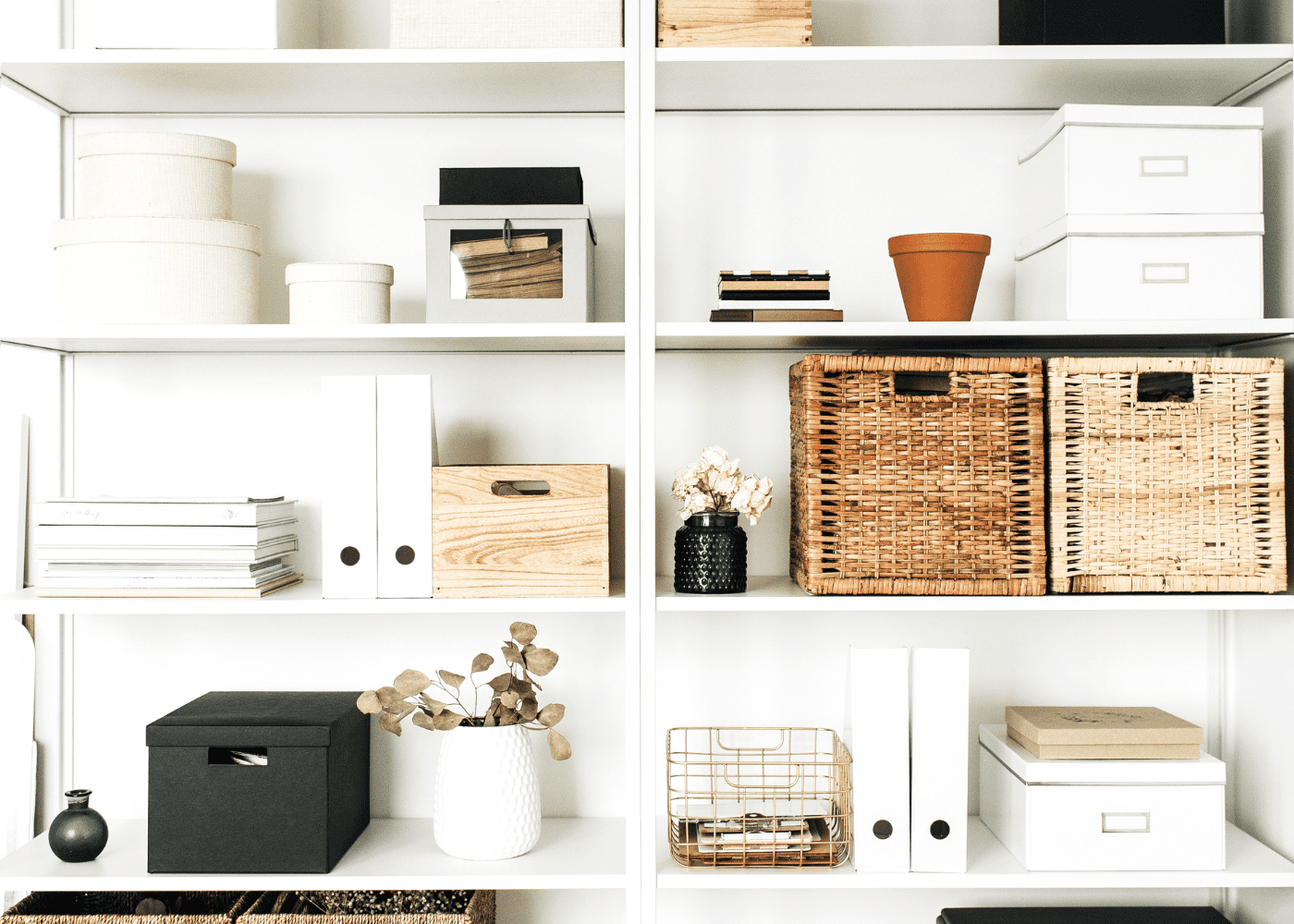
Walls do a lot more than hold up a ceiling. With a little planning, they can also hold up your whole organizational system. Whether you’re working with a small apartment or a larger home that somehow never has enough storage, using vertical space is one of the most practical things you can do. These wall storage ideas are straightforward, budget-friendly, and genuinely useful for everyday life.
Why wall storage makes sense
Floor space is finite. Once you’ve placed your furniture, there often isn’t much room left. Walls, on the other hand, are usually underused. Taking advantage of that vertical space can make a room feel more open and function better at the same time. You don’t need a renovation to get started. Many of these ideas work in a weekend with basic tools.
If you’re looking for broader inspiration, the household organization section of this site has a lot of practical ideas to go alongside what’s covered here.
Shelving
Shelves are one of the most flexible wall storage tools you can use. They work in nearly every room, and they come in enough styles that it’s easy to find something that fits your space. Floating shelves in particular are popular because they keep the floor clear and create a clean look.
When planning shelves, think about what you’ll actually store on them. Books are heavy, so they need sturdy brackets and solid anchoring into wall studs. Lighter items like baskets, small bins, or decorative pieces can go on lighter-duty shelves. Mixing open shelving with closed storage is a good way to keep things looking tidy while still having easy access to what you use often.
In kids’ rooms, low shelves at child height work well for toys, books, and art supplies. This approach fits nicely with a Montessori bedroom setup, where accessibility for children is part of the design. Shelves at the right height encourage independence and reduce clutter on the floor.
Coat racks and entryway hooks
A coat rack near the front door is one of the simplest and most effective wall storage solutions you can install. It gives everyone in the house a clear place to hang coats, bags, and hats the moment they walk in. That one habit alone can prevent a lot of daily clutter.
Mount the rack at a height that works for the people using it most. If you have young children, a second lower row of hooks at their height makes it easy for them to hang their own things. This small detail makes a big difference in keeping the entryway functional for the whole family.
For seasonal items like heavy winter coats or rain gear, rotate them in and out of a storage bin so the rack stays manageable year-round. Keeping only what’s currently in use on the hooks makes the system work better. A well-organized entryway also sets the tone for the rest of the home.
Pegboards
Pegboards are one of the most adaptable wall storage tools available. They’re inexpensive, widely available at hardware stores, and can be customized with hooks, shelves, and bins to suit almost any storage need.
In a kitchen, a pegboard is an excellent way to store pots, pans, lids, and utensils. Hanging these items frees up cabinet and drawer space, and it keeps your most-used tools within easy reach while cooking. The visual layout also makes it simple to see what you have.
Pegboards work just as well in a garage, craft room, or home office. In a garage, they’re useful for hand tools and small supplies. In a craft space, they keep scissors, tape, and other frequently used items off the work surface. If you’re setting up a dedicated craft room storage system, a pegboard on the wall is worth considering early in the planning process.
Wall-mounted TV
Mounting a television on the wall frees up the floor and creates a cleaner look in a living room or bedroom. It removes the need for a TV stand, which can take up significant space, especially in smaller rooms.
Before mounting, take a few things into account. The TV should be sized appropriately for the room. A very large screen in a small space can feel overwhelming, and a small screen in a large room can be hard to see. Height matters too. A good rule of thumb is to mount the screen so the center of the display is roughly at eye level when seated. Mounting it too high leads to neck discomfort over time.
Always anchor the TV mount into wall studs, not just drywall. Using the right hardware for the weight of your specific television is important for safety. If you’re not comfortable doing this yourself, hiring someone for the installation is a reasonable choice.
Murphy beds for small spaces
A Murphy bed is one of the most dramatic ways to reclaim floor space in a small room. The bed folds up into the wall when not in use, turning what would be a dedicated bedroom into a usable living area during the day. This works especially well in studio apartments, basement suites, or a guest room that doubles as a home office.
Modern Murphy bed systems often come with built-in shelving, desks, or cabinets on either side of the bed unit. This integration means you’re not just gaining floor space, you’re also adding functional storage at the same time. If you have a room that needs to serve more than one purpose, this is one of the most practical wall storage solutions available.
Curtains and fabric panels
Fabric hung on a wall can do more than add color to a room. Curtains in front of open shelving hide clutter instantly and give a more finished look to storage that isn’t particularly attractive on its own. This is a low-cost way to keep things accessible but out of sight.
Hanging curtains close to the ceiling also draws the eye upward, which can make a room feel taller. In a small space, that visual effect can be surprisingly effective. A length of fabric in a neutral or complementary color is all it takes.
Bulletin boards and memo boards
A bulletin board is a practical use of wall space in a kitchen, home office, or kids’ room. It gives you a place to post reminders, schedules, artwork, and notes without letting paper pile up on counters or tables.
Corkboard is the classic choice, but fabric-covered foam boards also work well and can look more intentional in a living space. Framing a bulletin board with simple molding gives it a more finished appearance. In a kitchen, a smaller board near the fridge is useful for grocery lists and school schedules. In a child’s room, it can display artwork and current projects in a way that feels intentional rather than messy.
Over-the-door organizers
Doors are often forgotten as storage surfaces, but the back of a door offers usable vertical space without requiring any wall damage. Over-the-door organizers are available in a wide range of styles, from shoe pockets to deep-pocket organizers suitable for pantry items, cleaning supplies, or bathroom products.
In a closet, an over-the-door organizer can hold shoes, accessories, or folded items. In a bathroom, it’s useful for hair tools, products, and toiletries. In a pantry or kitchen cabinet, it can store spices, small bags, or foil and wrap rolls. This type of storage is especially useful when you’re working with limited square footage and can’t add more shelving to the walls themselves.
Cabinet and wall unit storage
Mounted cabinets give you enclosed storage on the wall, which is useful for items you want to keep accessible but not visible. In a laundry room, bathroom, or garage, wall-mounted cabinets keep frequently used supplies within reach while keeping the countertop or floor clear.
Closed cabinet storage is also a good choice for remote controls, charging cables, and other small items that tend to accumulate and create visual noise. A simple cabinet with a door keeps those things contained without requiring you to dig through a drawer. For more inspiration on how to manage storage throughout your home, the home organization ideas page has a wide range of practical options.
Getting started with wall storage
The best place to start is with the room that frustrates you most. Walk into that space and look at the walls with fresh eyes. Ask yourself what’s currently taking up floor space that could be moved up. Identify one or two solutions from this list that would make the biggest difference, and start there.
You don’t need to overhaul every room at once. Adding a single shelf, a coat rack, or a pegboard can make a meaningful difference in how a space functions. Small, intentional changes add up over time. A home that works well for your family is built gradually, one practical decision at a time.
For room-specific help, the playroom storage ideas and small kitchen storage ideas pages offer more detailed guidance for the spaces that tend to need the most attention in a family home.
Frequently asked questions
What can I do with unused wall space?
Floating shelves, coat racks, pegboards, and mounted cabinets are all good starting points. The right choice depends on the room and what you need to store. Even a small shelf in an otherwise bare corner can make a practical difference.
How do I maximize wall storage?
Use a combination of open and closed storage at different heights. Shelves work well for items you want to access easily. Cabinets and curtained shelving keep things tidy when visual clutter is a concern. Pegboards and hook panels are good for items you reach for often.
How do you use wall space in a small bedroom?
Wall-mounted hooks and floating shelves are practical starting points. Look at the backs of doors as additional storage surfaces. A Murphy bed is worth considering if you need the room to serve more than one purpose. Under-bed storage is also useful and doesn’t require wall installation at all.




Leave a Reply