
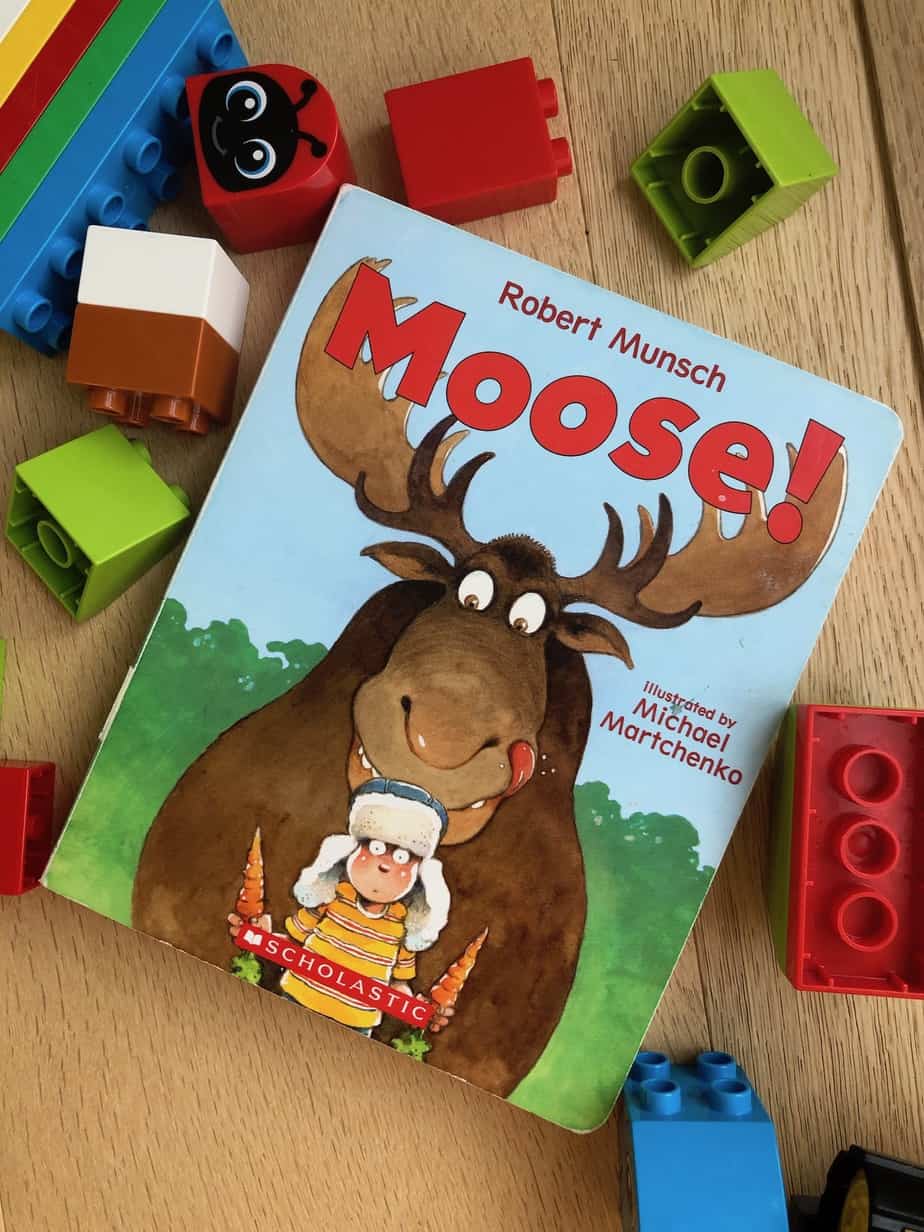
A board book is a children’s book made with thick, cardboard-style pages. The pages are so sturdy they feel like actual boards, which is exactly where the name comes from. These books are built for babies and toddlers who are still learning how to handle objects gently. They have fewer pages than a standard book, usually under ten, and the pages themselves can be nearly an inch thick.
Board books typically feature simple text, bold fonts, and bright illustrations. The content is designed to hold a very young child’s attention. The construction is designed to survive it.
What age are board books for?
Board books work well for children from around four months old up to about age four. That said, age ranges are a guideline, not a rule. You can absolutely read a board book to a newborn. Babies absorb language and rhythm from the very beginning, even before they can interact with the book itself.
On the other end, plenty of four and five year olds still enjoy reading board books they loved as babies. There is no need to take them away before a child is ready. Once your child shows they can handle regular paper pages without tearing or chewing them, you can start introducing standard picture books. Until then, board books are the right tool for the job.
A regular paper book is simply not safe in the hands of a ten-month-old. Paper pages tear easily, and small torn pieces are a choking hazard. The durability of a board book is not just about protecting the book. It is about protecting the child using it.
How board books are made
Board books are constructed differently from standard children’s books. A regular book is printed directly onto paper and then bound. A board book starts with a thick cardboard base. The printed image or text is applied to a thinner layer of paper or board, and that layer is bonded to the cardboard base. All the pages are then stacked and assembled to form the spine.
Most board books receive a coat of sealant or glue over the finished pages. This adds a layer of protection against daily use. Kids handle books in ways that adults do not. Books get chewed, dropped, sat on, and dragged across floors. The sealant helps the book hold up through all of it.
The glossy finish you see on most board books serves two purposes. First, it protects the surface from moisture, which matters when sticky fingers and wet mouths are involved. Second, it makes cleaning easier. A board book can survive a smear of peanut butter or a marker streak in a way that a paperback simply cannot. A damp cloth handles most messes. A paperback does not get that second chance.
Board books and motor skill development
One of the quiet benefits of board books is how they support physical development. Thick pages are much easier for small hands to grip and turn. A baby or toddler who is still developing fine motor skills can actually participate in reading with a board book. Turning a thin paper page requires a level of coordination that takes time to build. Turning a board book page does not.
As children practice moving through the book, they begin to understand that pages turn in a specific direction. They learn that something new appears on each page. This process builds hand-eye coordination and attention. It also teaches the concept that a book has a beginning and an end, which is an early literacy foundation.
The bright colors and clear images in board books help develop visual focus. A young child learns to look at a specific image and connect it to a spoken word. That matching process, hearing a word while seeing what it represents, is a significant early step in early literacy.
What board books teach
Board books are often a child’s first experience with books as objects and with stories as a concept. Even a very simple board book with one word per page is doing important work. It is teaching a child that printed marks on a page have meaning. That meaning is connected to the world around them.
Early board books tend to focus on matching. A picture of a dog appears next to the word “dog.” A child learns to connect the image and the sound. This kind of practice builds the foundation for letter recognition later on. When letters become familiar shapes, learning to read becomes a smoother process. You can read more about how this develops in our guide to early literacy tips for parents.
Reading aloud to a child from a board book also supports speech development. Hearing words repeated in context helps children build vocabulary before they can speak. The more a child hears language, the more comfortable they become with it. First words often come faster in children who are read to regularly. If you want to know more about how to read to kids effectively, it is worth a look.
Board books can also help parents and caregivers notice early signs of vision challenges or learning differences. If a child consistently struggles to focus on images or seems unresponsive to language in books during early childhood, that is worth noting and discussing with a pediatrician. Catching those things early makes a real difference.
Board books in a home with screens
Screens are everywhere now, and that includes in homes with very young children. Tablets, phones, and educational apps offer a lot of content for kids. Board books offer something different. Reading a board book with a child is a shared, physical experience. You sit together. You point at things. You make sounds and faces. A screen does not replicate that interaction in the same way.
Many parents find that board book time becomes a meaningful part of the daily routine, especially around naps and bedtime. The calm, predictable rhythm of reading together is genuinely settling for young children. It is also a screen-free way to spend time together that does not require planning or equipment.
If you are building a home library for a young child, board books are a practical and worthwhile investment. They last for years. Many families pass them from one child to the next without any real wear. If you are looking for other ways to document your child’s early years, pairing that habit with regular reading creates a rich early childhood environment.
Choosing and caring for board books
When choosing board books, look for ones with clear, simple illustrations and limited text per page for very young babies. As children move toward the toddler years, books with slightly more text and a simple storyline work well. Repetition, rhyme, and rhythm are all features that hold young children’s attention and support language learning.
Caring for board books is straightforward. A damp cloth removes most food, crayon, and general grime from the glossy surface. Let the pages dry fully before closing the book to avoid any warping. Store board books where children can reach them. A low shelf or a basket at floor level lets a toddler choose their own book and builds independence around reading from an early age. For more ideas on setting up your home to support your child’s development, our Montessori playroom guide has useful practical suggestions.
Board books that are no longer needed make excellent donations. Libraries, daycares, family shelters, and community centers often welcome them. A well-made board book has a long life, and there is no reason for a good one to sit unused when another child could be reading it.
Board books are simple objects with a clear purpose. They put books in the hands of the youngest readers and make reading a shared, physical habit from the very beginning. That is a good foundation for everything that comes after.





Leave a Reply to Lynn83 Cancel reply