
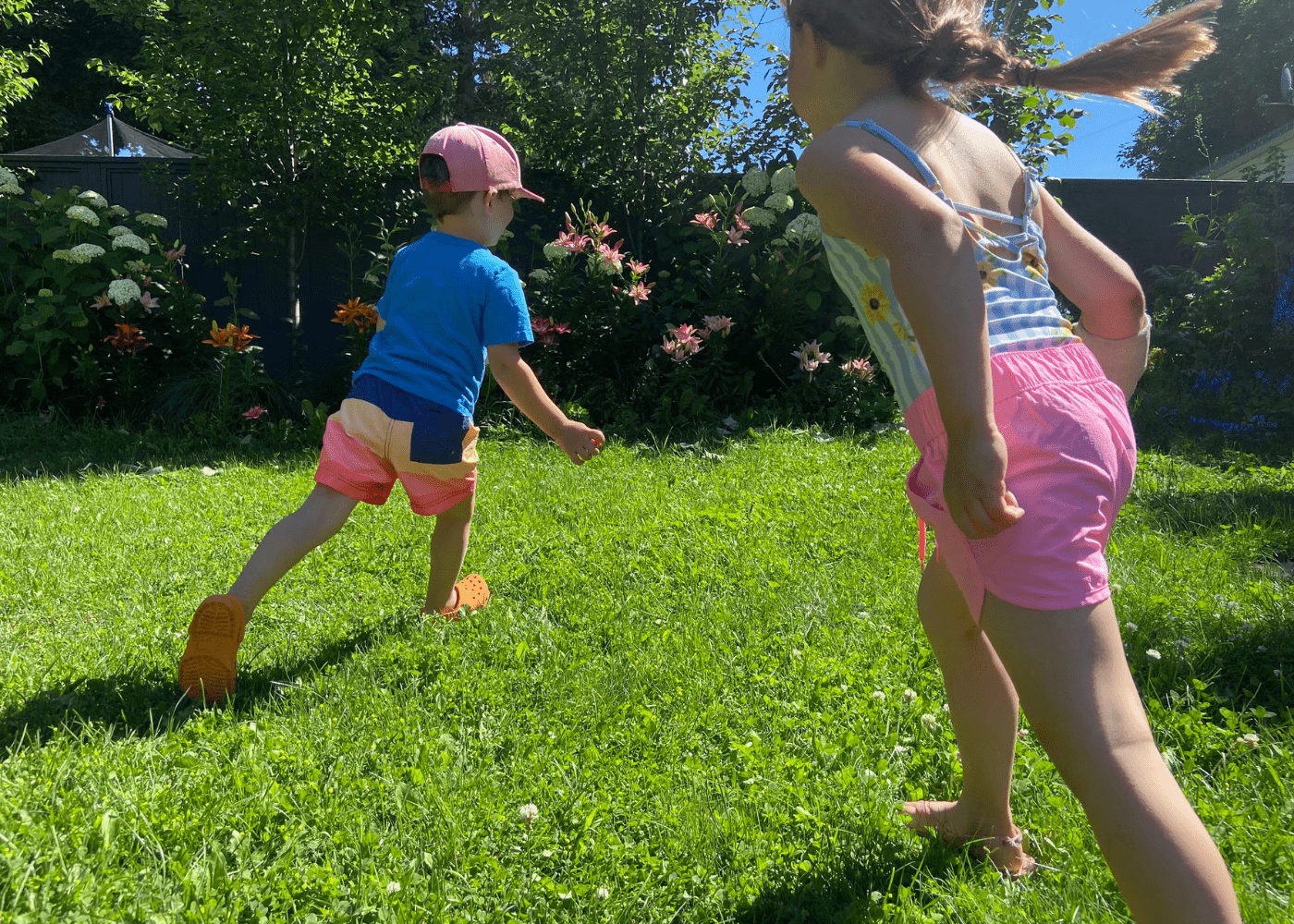
Getting kids outside and moving is one of the most straightforward things you can do for their development. Fresh air, open space, and physical play build real skills that carry children through their whole lives. This post covers what physical literacy actually means, why outdoor play matters, and practical activity ideas for every age from babies to school-age kids.
What is physical literacy?
The International Physical Literacy Association defines physical literacy as “the motivation, confidence, physical competence, knowledge, and understanding to value and take responsibility for engagement in physical activities for life.” That is a formal definition, but the idea behind it is simple. A physically literate child feels capable and willing to move their body. They try new activities without fear, and they build habits that support a healthy life.
Physical literacy is not just about sport. It covers everything from balance and coordination to the confidence to try something new. When you give children chances to run, jump, climb, and play from an early age, you are building that foundation one activity at a time.
Why outdoor play matters
The outdoors offers something that indoor spaces simply cannot. There is more room to move, more sensory input, and fewer limits on what a child can do. Below are some of the clearest reasons to take physical learning outside.
Kids can practice a wide range of skills at once
Outside, children move between physical, creative, and cognitive learning without even noticing. A nature walk becomes a counting exercise. A game of tag builds cardiovascular fitness and social skills at the same time. This kind of layered, hands-on experience sticks in a way that sitting at a desk often does not. It also gives children a chance to connect what they learn in school to the physical world around them.
It requires very little planning
For parents who are already stretched thin, outdoor play is a practical choice. A trip to the park, a ball in the backyard, or a simple game like Animal Crawl, where children line up and race to the finish line while mimicking an animal’s movement, costs nothing and needs no prep. Children who are busy laughing and competing are not thinking about whether they are learning. They just are.
Social skills develop naturally outside
Outdoor play almost always involves other people. Whether it is a sibling, a neighbour, or a child at the park, kids who play outside regularly get consistent practice with taking turns, following shared rules, and working through disagreements. These are the same skills they will need in a classroom, on a sports team, and throughout their lives. Starting early makes a real difference.
Children build confidence by taking safe risks
Climbing a tree, jumping from a low wall, or learning to ride a bike all carry a small element of risk. That is part of what makes them valuable. When children push their physical boundaries in a safe setting and succeed, their confidence grows. A scraped knee is a small price for the kind of self-assurance that comes from figuring out how to do something hard.
Nature builds curiosity
Books and videos about the natural world are useful. Seeing it up close is better. When children spend time outside, they observe things they cannot learn from a screen. They notice how insects move, how plants change with the seasons, and how the weather feels on their skin. Asking simple questions during outdoor time, like “what do you see?” or “what do you hear?”, builds observation skills and a genuine interest in the world around them. Our 5 senses nature walk worksheet is a great tool to bring along on these walks.
It burns energy and supports better sleep
This one is practical and real. Children who spend time moving outside during the day are more tired at bedtime. That is good for everyone. Summer break in particular can create a lot of restless energy with no obvious outlet. Daily outdoor play gives that energy somewhere to go.
Outdoor physical education ideas by age
Every age group can benefit from outdoor physical activity. The key is matching the activity to what children are developmentally ready for. Here are ideas that actually work, organized from the youngest children to school-age kids.
Babies
Babies are not yet mobile in the way older children are, but they are already absorbing everything around them. Taking babies outside exposes them to new textures, sounds, smells, and sights that support early sensory development.
Tummy time on a blanket in the grass is a simple and effective option. You can also carry your baby close to trees, flowers, or garden plants so they can reach out and touch different surfaces. If your baby is beginning to crawl, letting them move on grass or soft outdoor surfaces gives them a whole new set of textures to experience. Even a slow walk through a garden or neighbourhood, with your baby facing outward, counts as meaningful outdoor time at this age.
Toddlers
Toddlers are in a period of rapid physical growth. They are learning to run, throw, balance, and coordinate their bodies in new ways. Outdoor play at this age supports all of those skills without requiring formal instruction.
Throwing and catching a ball, kicking it toward a target, or tossing objects into a bucket all build the foundational movement skills that support later sports and physical activity. Balance practice can be as simple as setting up an informal obstacle course using sticks, stones, and garden objects. Bubbles are a perennial favourite because chasing and popping them involves running, reaching, and jumping without any structure at all. Sand, water, and mud play also give toddlers rich sensory experiences, though water play always needs close supervision. For more structured ideas, check out our full list of activities for toddlers.
Preschoolers
Children in the preschool years are ready for simple games with easy rules. They are also developing imaginative play in a big way, which makes outdoor time particularly rich at this stage.
Encouraging children to make mudpies, build with sticks, or dig in the dirt taps into their natural creativity while keeping them active. Simple movement games like Simon Says or Hide and Seek build listening skills and physical literacy at the same time. Nature walks with an I Spy game, or a simple scavenger hunt looking for different shapes or insects, add structure without limiting imagination. A gentle stretching exercise where children pretend to be a seed growing into a tall flower and swaying in the wind is surprisingly effective for body awareness and flexibility. You can also try our 10 preschool nature crafts to extend outdoor learning into a creative project.
School-age children
Older children benefit from a mix of free play and structured activity. They spend a lot of their day following rules and routines at school, so outdoor time works best when it leaves room for some self-direction alongside guided games.
Tag in all its variations is perfect for this age because it feels like free play even though it involves real physical effort. Challenging children to invent their own game and write out the rules builds both creativity and cooperation. If you have the space, let them build an outdoor fort or playhouse from natural materials. This kind of open-ended project keeps children engaged for long stretches while developing physical and problem-solving skills. It is also a good age to introduce slightly more challenging physical activities like biking further distances, swimming, or hiking on easier trails. Letting children choose an activity they want to get better at gives them ownership over their own physical development.
A note on keeping it simple
None of this has to be complicated. You do not need special equipment, a large yard, or a full afternoon to support outdoor physical education. A short trip to the park, a game in the driveway, or even just time to wander and observe in a green space counts. The goal is consistent, positive exposure to movement outdoors, not a structured curriculum.
Children who grow up moving their bodies outside regularly tend to carry that habit with them. That is the real outcome worth aiming for. If you are looking for more ideas to keep kids active and engaged through the seasons, browse our full range of outdoor activities for inspiration.




Leave a Reply