
A baby book is one of those things that seems simple until you sit down with a pen in hand and realize you have no idea where to start. What do you include? How much detail is too much? And how do you actually keep up with it past the first few weeks?
The good news is that there is no perfect way to fill a baby book. But having a loose plan makes it much easier to stay consistent. Here is a practical guide to what is worth writing down, section by section, so you end up with something you will actually want to read in twenty years.
The first page
Many baby books open with a blank page or an inscription area. This is your space to write something meaningful directly to your child. It does not need to be poetic or elaborate. A simple, honest message about how you felt the day they were born, or what you hoped for them, will mean more with time than anything that sounds forced.
If writing from scratch feels like too much pressure, consider using a line from a poem, a children’s book, or a passage that holds meaning for your family. Some parents with a religious faith choose a verse or blessing here. Others write a short, warm note in their own words. Even a few sincere sentences are enough.
If you are more visual than verbal, a small drawing or watercolor on the first page works beautifully. The goal is simply to make the opening feel personal.
Pregnancy memories
The story starts before your baby arrives. Including some pregnancy memories gives your child a sense of how things looked and felt before they were even born.
Photos from pregnancy
Include at least one photo of yourself with a pregnant belly. You might also tuck in a photo of a positive pregnancy test if you took one. Alongside the photos, write a few sentences about when you found out, whether it was a surprise or something you had been working toward, how you told your partner, and how your family reacted.
Ultrasound scans
Save your ultrasound prints and slip them into the book. Most scans include the date, but add a note about what you were thinking or feeling at that appointment. These images are often the first record of your child’s existence, and that is worth acknowledging.
Cravings and physical memories
Write down what you craved, what you could not stand, and any other physical memories from the pregnancy. These small details add personality to the story and tend to get a laugh when you read them later.
Baby shower mementos
If you had a sip and see party, a diaper party, or a traditional baby shower, save a few things from the event. Photos, cards with handwritten messages from friends and family, and notes from a guest book all fit nicely into a baby book. If guests wrote messages at a virtual baby shower, you can print those out and include them too. These are words your child will genuinely enjoy reading someday.
The birth story
This is the section most parents care about most, and also the one most likely to go unwritten because it feels like too much to capture. Write it anyway, even imperfectly. You will not regret having the details down.
How labor began
Write about how you knew labor had started. If it was a planned delivery, write about when and how you found that out. Include what time you headed to the hospital, how you got there, and what those first hours looked like. The details that seem obvious now will feel fuzzy in a few years.
Birth stats
Most baby books already have a dedicated spot for stats, but write them in with care. Note the time of birth, weight, length, and anything else that stood out in those first moments. If you remember your first thought when you saw your baby, write that down too.
Hospital mementos
The hospital bracelet, footprint card, and birth announcement all belong in this section. So do the first photos, even the ones where you think you look exhausted. You had just had a baby. Those photos are honest, and honesty is what makes a baby book worth keeping.
The first weeks at home
The newborn stage moves fast, even when the nights feel endless. Write down what you remember about those early weeks, even if it is just a paragraph. Note how your baby liked to be held, whether they settled on a feeding rhythm, and what the days felt like. Post-it notes are a practical trick here. Jot things down when they happen and transfer them into the book when you have a quiet moment.
You might also find our post on what to write in a baby book helpful if you want to revisit these ideas as you go.
Monthly photos and updates
Monthly photos through the first year are one of the most satisfying things to look back on. The visual record of how much a baby changes in twelve months is genuinely striking. Use a consistent background, blanket, or stuffed animal so the size difference is easy to see from month to month.
Alongside each photo, note your baby’s current height and weight, what they are doing that month, and anything they seem to love or dislike. These short notes turn a set of photos into a real record of development.
Milestone memories
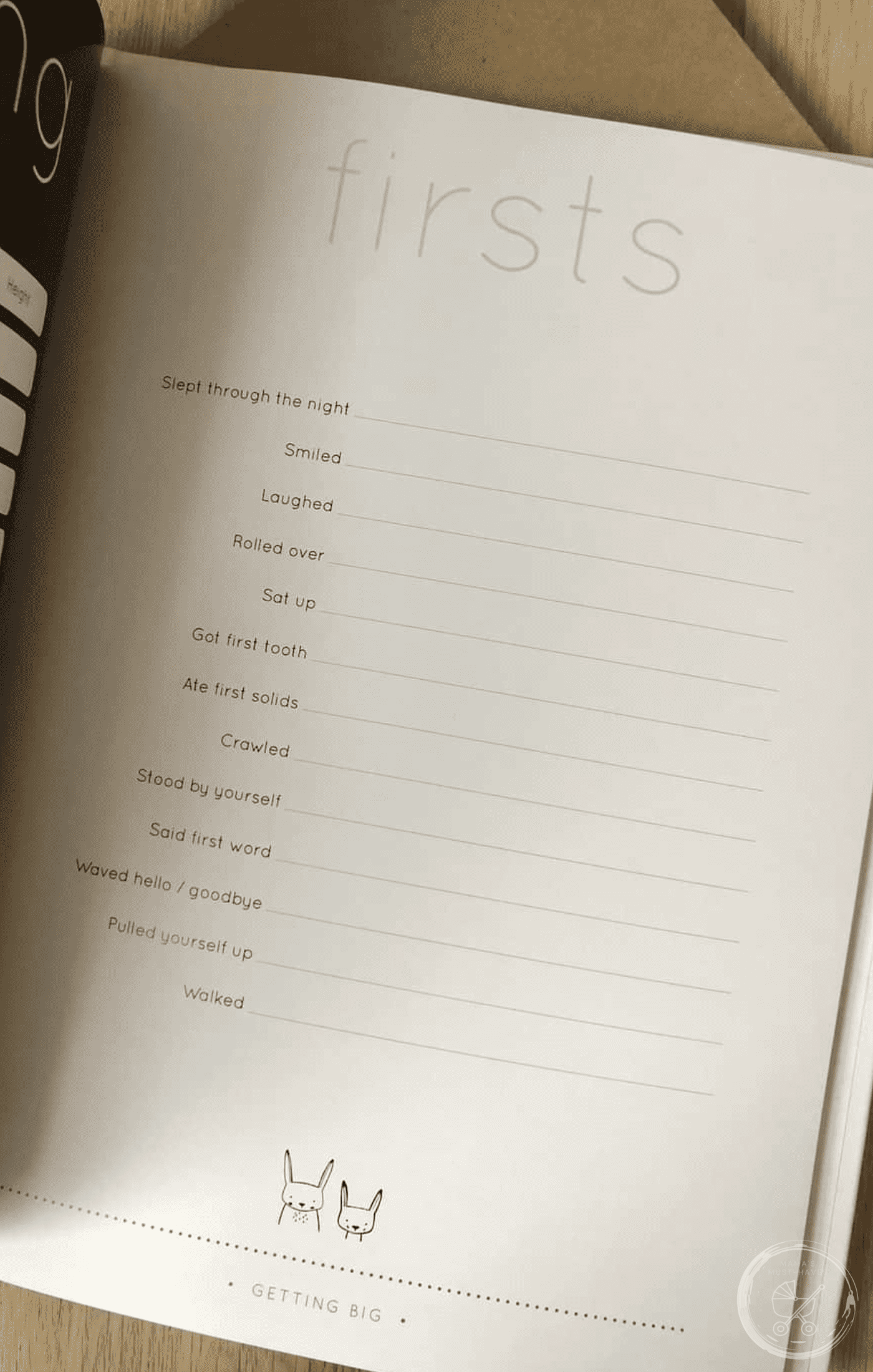
The first year is full of milestones worth recording. The first smile, first laugh, rolling over, sitting up, the first tooth, first foods, crawling, waving, pulling to stand, walking, and the first word are all worth noting. So are smaller things that feel significant to you personally.
When you write down a milestone, try to include the context around it, not just the date. Who was there? What were you doing? Did your baby seem proud of themselves? Those surrounding details are what make the memory feel real later on.
It is also worth saying plainly: every baby develops at their own pace. Milestone ranges exist because there is genuine variation in healthy development. Recording milestones is about your baby’s story, not a comparison to anyone else.
Baby’s personality and preferences
Beyond milestones, leave room to write about who your baby is. What sounds do they respond to? What makes them laugh? What calms them down? What do they seem to dislike? Even in the first weeks, babies show real personality. Capturing those early traits is one of the most personal things a baby book can hold.
If you enjoy journaling, you might add a few longer entries throughout the year. A note about what life feels like at three months, or what a regular Tuesday looks like at six months, gives your child something richer than a list of dates and stats. These written snapshots are the kind of thing people treasure.
Quotes and wishes for your child
Some parents also like to include a few quotes or written wishes scattered through the book. These might be hopes you have for your child, things you want them to know, or simply words that feel right at a given moment. There is no formula for this part. Write what is true for you.
A few practical tips
The biggest reason baby books go unfinished is that people wait for the right moment to sit down and write something meaningful. A better approach is to write things down quickly and imperfectly, and refine them later if you want to. A rough sentence written the week after a milestone happened is worth far more than a polished paragraph you never got around to writing.
Keep the baby book somewhere accessible, not packed away in a drawer. If it is visible, you are more likely to add to it. Some parents keep a small notebook nearby for quick notes that get transferred into the book during naptime or at the end of the week.
The goal is not a perfect document. It is a honest record of a specific time in your family’s life. Future you, and future your child, will be glad you made the effort.



Leave a Reply