
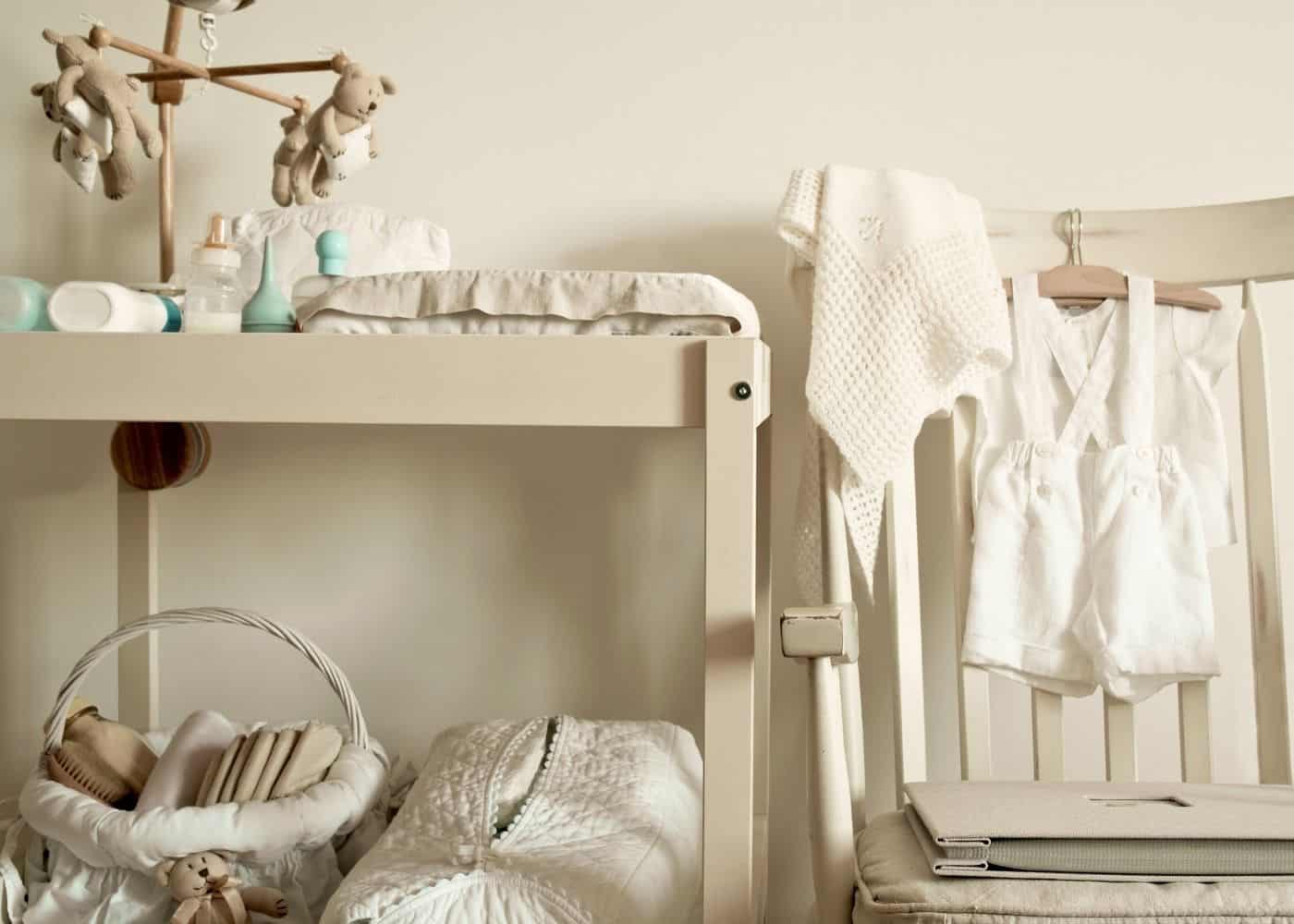
A new baby comes with a lot of stuff. Diapers, clothing, blankets, burp cloths, nursing gear, and more all need a home. When everything has its place, the room is easier to keep tidy and easier to work in at 2 a.m. Good nursery organization is less about being perfectly neat and more about making your daily routine feel manageable.
The goal is simple. You want to find what you need quickly, clean up without much effort, and keep the room functional as your baby grows. Setting up a few key zones and choosing the right storage tools will get you most of the way there.
Nursery storage basics
Before you start buying bins and baskets, think about how you actually use the room. Where do you change diapers? Where do you nurse? Where do you dress the baby? Once you know your routines, you can set up storage around them. The best storage puts things exactly where you need them, not just where they look nice.
There are a few storage tools that work especially well in a nursery. Each one solves a slightly different problem.
Cubbies
Cubbies are grid-style shelving units that add a lot of storage without taking up much floor space. They work well along a wall or inside a closet. You can place baskets directly inside the cubbies to keep things grouped and out of sight. Label the baskets if you want to be able to find things fast, especially once you have a helper grabbing supplies for you.
Cubbies are also easy to adapt as your baby grows. What holds swaddles now can hold small toys and books later. They come in a range of colors and finishes, so they can blend into almost any nursery style.
Utility cart
A rolling utility cart is one of the most practical things you can keep in a nursery. The wheels mean you can move it wherever you need it, whether that is across the room during a middle-of-the-night change or to another room entirely. Stock it with the things you reach for constantly: diapers, wipes, a spare onesie or two, pacifiers, burp cloths, and a sleep sack.
A cart with a flat top surface doubles as a side table next to your nursing chair. If you have items that do not have a clear home yet, the cart is a good temporary spot for them while you figure out your routine.
Baskets
Open baskets are great for things you grab and replace quickly. Place one near the changing table for extra diapers, one near the rocking chair for blankets and swaddles, and one near the crib for burp cloths. Wire and wicker baskets both work well and tend to complement most nursery decor. The key is keeping them stocked so you are never searching for a clean cloth in a hurry.
Diaper changing station
A dedicated changing station keeps diaper supplies contained and makes the process faster. A dresser works well for this. Place a changing pad on top, making sure it sits far enough from the edge to be safe and has a non-slip base. The top drawer becomes your main supply drawer, holding diapers, wipes, diaper cream, and a small pack of antibacterial wipes for wiping down surfaces.
Keep a thermometer in the drawer too. It is a small item that is very easy to misplace, and having it right there means you do not have to dig for it when you actually need it.
A lidded diaper pail next to the changing station keeps odors contained. Make sure the lid seals well. As your baby gets older and the diaper contents change, you may want to upgrade to a Diaper Genie or a similar sealed system.
Diaper storage
Keep diapers in more than one spot. A basket or small bin near the changing pad is the main supply. The top drawer of the dresser holds a backup stock. The closet or a storage unit holds the bulk supply for restocking. I also keep a few near the front door. Seeing them on the way out is a good reminder to grab some before heading out.
Having diaper cream in a couple of spots alongside the diapers saves time when you are moving fast. You do not want to be searching for it mid-change.
Nursing station
You will spend a lot of time in your nursing station, so it is worth setting it up well. Start with a comfortable rocking chair and an ottoman. If the ottoman has interior storage, even better. Use it to hold extra blankets or nursing supplies.
Put a small table or shelf within easy reach for things like a water bottle, burp cloths, your breast pump, and a phone charger. A soft night light nearby is more useful than a lamp with a switch. A dim light that is always on means you can see what you are doing during a midnight feed without turning on an overhead light and fully waking yourself or the baby up.
The rolling utility cart mentioned earlier fits well next to the nursing station. Use the top surface as a side table and the shelves for nursing and pumping supplies.
Nursery closet
Baby clothes pile up fast. Babies grow quickly and often move through multiple sizes within the first year, which means you can end up with several sizes in the closet at once. Keeping this area organized saves a lot of frustration.
Sort clothing by size and group similar sizes together. Store the current size where it is easiest to reach. Keep onesies in their own drawer so you are not sorting through everything every morning. Match and store socks in pairs so you are not hunting for a match when you are already running late.
Clear acrylic bins work well in a closet because you can see what is inside at a glance. Use them to separate sizes or to organize seasonal items. When the season changes, swap the bins rather than reorganizing the whole closet.
For the drawers, fold clothing so it stands upright rather than flat. This way you can see every item at once instead of digging through a pile. Drawer dividers keep categories separated. You can buy organizers, or use a clean shoebox or small gift box as a simple divider.
If you have hanging space, small baby hangers let you keep outfits together, especially for special occasion clothes or things you want to keep wrinkle-free.
Keeping it manageable over time
The most important habit is a quick tidy at the end of each day. Returning items to their zones before bed means the room is ready for the next morning. It takes only a few minutes when everything already has a home.
Revisit your setup every few weeks in the early months. Your routine will change as your baby grows, and your storage should change with it. What works for a newborn may not work once your baby is mobile. A flexible system, one built around zones rather than rigid categories, adapts much more easily.
If you are working with a small room, prioritize vertical space. Cubbies, wall shelves, and over-the-door organizers all add storage without using floor space. For more ideas on keeping a whole home organized, the household organization section of the blog has plenty of practical suggestions.
For more help with specific storage challenges, you might also find these posts useful: kids craft storage, changing table organization ideas, and playroom storage ideas. And if you are still in the planning stage, the home organization ideas page is a good place to start.




Leave a Reply