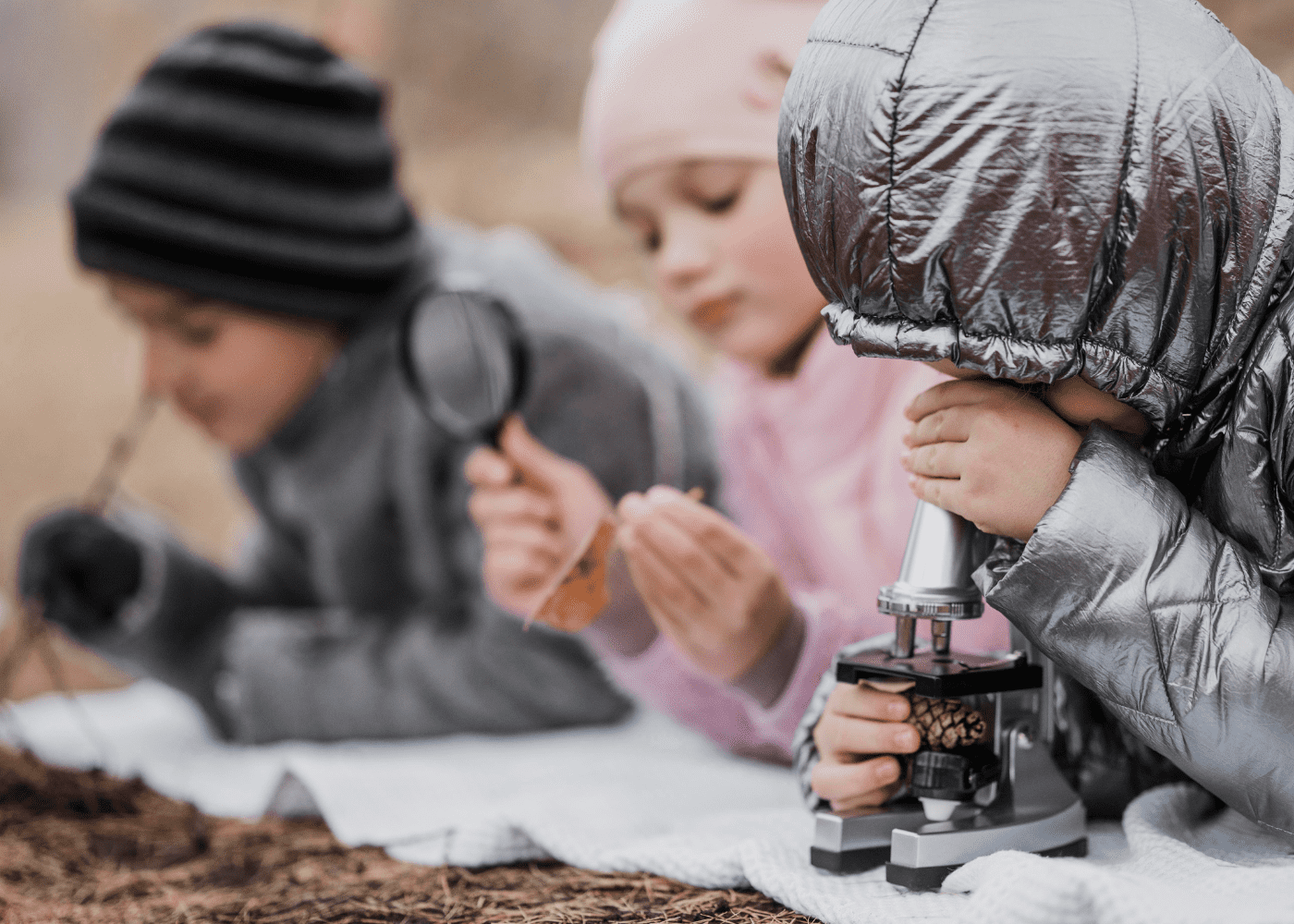
Outdoor learning is one of the simplest ways to make education feel real. When children step outside, they use their whole bodies and all their senses. They ask questions. They notice things. And they remember what they learned because they experienced it firsthand.
This post covers why outdoor learning matters, how to get started, and what to keep in mind to make it work well for your family or classroom.
Why outdoor learning matters
Learning outside gives children something a classroom often cannot. They see how weather changes, how plants grow, and how animals behave. These are not abstract ideas. They are things children can touch, smell, and watch happen in real time.
Research backs this up. A study by Harvey et al. looked at a hands-on outdoor learning program in elementary schools. They found that just one hour per week outside, sustained over a full school year, improved children’s mood, general wellbeing, and connection to nature. What stood out to me was that the program did not require a fancy outdoor classroom or expensive gear. It worked in urban school settings with very little equipment.
Beyond wellbeing, outdoor learning has been linked to stronger social skills, better attendance, more creative thinking, and reduced conflict between children. It also builds intrinsic motivation, meaning children want to keep learning because they enjoy it.
For the youngest children, outdoor time matters too. Babies and toddlers benefit from natural stimulation like sunlight, wind, running water, and uneven ground. These experiences build sensory awareness and physical confidence from a very early age.
What children learn outside
Almost any school subject can be taught outdoors. Math shows up in nature through patterns, counting, measuring, and sorting. Science is everywhere, from puddles and shadows to seeds and bugs. Art comes naturally when children have access to leaves, rocks, sticks, and mud.
Beyond academic subjects, outdoor learning builds skills that are harder to teach inside. Problem-solving, resilience, risk assessment, and teamwork all develop when children face real challenges in unpredictable environments. A gust of wind, a muddy patch, or a bird landing nearby requires a child to adapt and respond. That kind of thinking matters.
Outdoor physical education also plays a role. Moving through natural spaces builds coordination and body awareness in ways that structured gym activities simply do not replicate.
How to get started with outdoor learning
You do not need a forest or a farm. A backyard, a school garden, a local park, or even a sidewalk can work as a learning space. The key is to have a clear intention for what you want children to explore or practice.
Start by looking at your local environment. Notice what plants, birds, or natural features are nearby. Think about the age group you are working with and how long they can reasonably stay focused outside. From there, choose one simple activity and try it. You can build from there once you know what works.
Some easy starting points include nature scavenger hunts, nature counting activities, shadow drawing, bird watching, or collecting natural materials for an art project. These activities are low-cost and easy to adjust for different ages.
If you want to explore what is already happening in your area, check with your child’s school or local community organizations. Many communities have outdoor education programs or green spaces set up specifically for this kind of learning. Connecting with other families or educators can save a lot of planning time.
Tips for making outdoor learning work
Planning ahead makes a real difference. Think through everything you will need before you head outside. This includes materials, snacks, any safety gear, and a plan for managing the unexpected.
Set clear expectations with children before you leave. This means deciding on boundaries, practicing a signal or call to get everyone’s attention, and talking through any safety rules. Children do better outside when they understand what is expected of them.
Keep your materials simple. The more you bring, the more you have to track. Focus on one clear goal for each session and let curiosity fill in the rest. Outdoor learning works best when it has structure but also leaves room for children to follow their own questions.
Be ready to be flexible. Weather changes. A child spots something interesting and the whole group wants to follow. These moments are not interruptions. They are often the best learning of the day.
For preschool-age children, keep sessions short and sensory-focused. Younger children do not need a lesson plan. They need time to dig, pour, observe, and move. The learning happens naturally when they have access to interesting materials and space to explore.
Keeping outdoor learning safe
Safety is not optional. Before any outdoor session, do a quick risk assessment of the space. Look for uneven ground, water hazards, plants that might irritate skin, or any areas that should be off-limits.
Dress children for the conditions. Layers are better than guessing. It is much easier to remove a jacket than to wish you had one. For outdoor activities like hiking, appropriate footwear matters a great deal.
Depending on the activity, you may need additional safety gear. Water activities require life jackets. Bike or climbing activities require helmets. Always match the gear to the task.
Practice your attention signal before you go outside. Children need to know exactly what to do when they hear it. Run through it a few times indoors first so it becomes automatic.
Always have a first aid kit nearby, know where the nearest washroom is, and make sure someone knows your location if you are heading to an off-site space.
Finding resources for outdoor learning
Good resources for outdoor learning do not need to cost much. Stewardship organizations, government environmental agencies, and public libraries often provide free guides, activity kits, and curriculum-aligned materials. Many parks and conservation areas also offer free programming for school groups or families.
Local experts are another underused resource. A gardener, a naturalist, a beekeeper, or a farmer can bring a level of practical knowledge that no book can fully replace. Children respond to people who are genuinely excited about what they know.
Online, you can find a wide range of lesson plans, printable activity sheets, and videos that walk through specific outdoor activities step by step. The Mama’s Must Haves blog has a growing collection of outdoor and nature-based activities you can try with children at home or in a classroom setting.
Outdoor learning through the seasons
One of the best things about outdoor learning is that it works year-round. Each season offers something different. Spring brings sprouting plants and returning birds. Summer opens up water play, shadow science, and garden growing. Fall offers leaves, seeds, and changes in animal behavior. Winter brings ice, frost, and a whole set of physical science questions children can investigate firsthand.
Try the snow volcano experiment in winter, or the shadow drawing activity on a sunny day. These kinds of hands-on activities connect naturally to what children already see and wonder about in the world outside their door.
Dressing for the weather is the main thing that makes year-round outdoor learning possible. When children are warm and dry, they are happy and focused. When they are wet and cold, learning stops. Invest in a good set of rain gear and waterproof boots and the season stops being a barrier.
Frequently asked questions
What does outdoor learning mean?
Outdoor learning means any intentional learning that takes place outside. It can include almost any subject, including math, science, art, literacy, and physical education. It happens in school yards, parks, forests, beaches, and backyards.
Why is learning outside important?
Learning outside helps children build a connection with the natural world. It also supports physical health, emotional wellbeing, creativity, and social development. Research shows it can improve mood and motivation, even when done for just one hour a week.
How do you make outdoor learning go smoothly?
Preparation is the most important factor. Know your space, plan your activity, set clear expectations with children, and bring everything you need. Build in flexibility so that unexpected moments become part of the learning rather than a problem to manage.
More outdoor learning ideas
If you want to keep going, here are some related posts worth checking out. The 10 nature counting activities post is a great place to start with younger children. For crafts that take learning outside, the preschool nature crafts post has ten simple ideas that use natural materials. The 5 senses nature walk with worksheet is a structured activity that works well for both home and classroom settings. And if you have a one-year-old just starting to explore outside, the outdoor toys for 1 year olds post covers practical gear and activity ideas.
Outdoor learning does not have to be complicated. Start small, stay curious, and let the outside world do a lot of the heavy lifting.