Planning a party takes real effort. There are dates to set, budgets to manage, vendors to contact, and a hundred small details that can slip through the cracks if you’re not organized. This guide walks you through the whole process, from the first decision to the final cleanup, so you can host with confidence and actually enjoy the day.
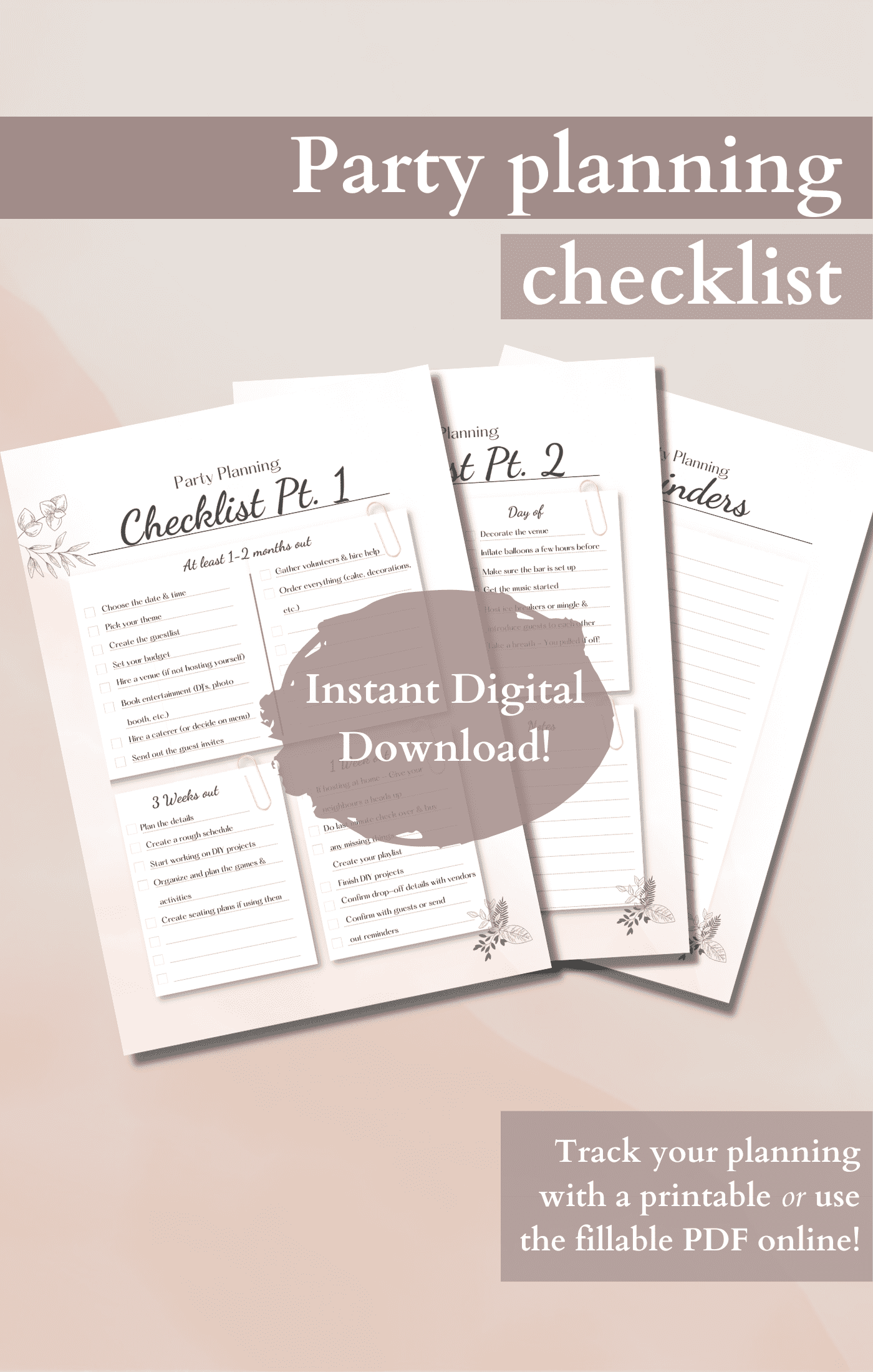
We also have a free printable party planning checklist you can download at the top of this post. Print it out or use it as an editable PDF to keep everything in one place.
Where to start with party planning
The first thing to know is that more time always helps. A month might be enough for a casual birthday gathering, but two to three months gives you room to coordinate vendors, send invites early, and handle surprises. Weddings and large events need even more lead time. Start as early as you can, and work through the steps below in order.
At least one to two months before the event
Step 1: Set the date
Start by thinking about what kind of event you’re hosting and how long it will run. Then look at the calendar with your guests in mind. Check for holidays, long weekends, or local events that might conflict. Give people enough notice to plan around the date. The more time you give, the better your turnout will be.
Step 2: Choose a theme
A theme gives your party a clear direction. It doesn’t have to be complicated. Sometimes a simple color palette like black and gold is all you need to create a cohesive look. If you go with a specific theme, carry it through the decorations, food, and activities so everything feels intentional. The theme should reflect the guest of honor or the occasion you’re celebrating.
Step 3: Build your guest list
Think carefully about who to invite. Consider the size of your space, your budget, and the kind of atmosphere you want to create. For smaller gatherings, it’s worth thinking about the group dynamic and what activities or food would suit everyone. For a party you’re throwing in someone else’s honor, like a birthday or bachelorette, keep the focus on what they would love.
Take note of any accessibility needs or dietary restrictions early. It’s much easier to plan around these things from the start than to adjust last minute.
Step 4: Set a budget
A budget keeps your spending grounded. Write down every expected cost, including decorations, food, drinks, entertainment, and the venue. Then rank those expenses by priority so you know where to spend and where to save. Compare prices before committing to vendors, and don’t overlook smaller costs like taxes, gratuity, and delivery fees. Those add up quickly.
DIY projects are a great way to stretch your budget without sacrificing style. A DIY photo string display makes a lovely party decoration and costs very little to make.
Step 5: Choose your venue
For a large event, renting a venue often makes sense. You get access to seating, audio equipment, and staff, which removes a lot of logistics from your plate. For a smaller gathering, hosting at home gives you more flexibility and keeps costs down.
If you host at home, think through the music, lighting, food setup, and activities in advance. Make sure you have enough space for everyone to feel comfortable, and secure anything breakable or hazardous before guests arrive.
If you rent a venue, look for one that fits your guest count, matches the atmosphere you want, and sits within your budget. Location matters too. Choose somewhere easy for guests to get to, and ask what’s included in the rental before you commit.
Step 6: Plan your entertainment
For a casual gathering, a good playlist and a speaker are often all you need. For a larger event, consider hiring a DJ or live musician. Ask friends for recommendations, and make sure whoever you hire fits the vibe of your party. Book entertainment early, especially for weekend dates in busy seasons.
Step 7: Plan the food
Decide early whether you’re cooking, hiring a caterer, or doing a potluck-style setup. A buffet works well for large groups. A potluck adds a personal touch and takes pressure off the host. If you hire a caterer, book them as far in advance as possible and confirm your order the week before the event. Ask about dietary accommodations when you set up the menu.
Step 8: Send invitations
Send invites at least three to four weeks before the event, or earlier for a large gathering. Digital options like Paperless Post or Evite are quick and easy to track. You can also use a group text, a social media event, or traditional mailed invitations if the occasion calls for it. Whatever format you choose, include the date, time, location, dress code if relevant, and any RSVP instructions.
Step 9: Line up help
Hosting alone is stressful. Ask friends or family to help set up, manage food, or keep things running smoothly during the event. For larger parties with catering, entertainment, and a full guest list, you may need to hire bartenders, a venue manager, or additional staff. Be clear about expectations and assign roles in advance so there’s no confusion on the day.
Step 10: Place your orders
Order décor, party supplies, and anything for DIY projects as soon as you can. Shipping delays happen, and having a buffer is worth it. Keep a note of each order’s expected delivery date, pickup location, and any special instructions. The party planning checklist at the top of this post includes a notes section for tracking exactly this kind of detail.
About three weeks before the event
Step 11: Work out the smaller details
This is the time to assign specific jobs to your helpers, write down anything you need to remember on the day, and do a mental run-through of the whole event. Think about timing, transitions between activities, and anything that needs to happen in a specific order.
Step 12: Draft a schedule
You don’t need a minute-by-minute plan, but a general schedule helps. Note start and end times, when food will be served, when activities begin, and any vendor arrival windows. You’ll revisit this closer to the date, but having a rough draft now makes adjustments easier later.
Step 13: Work on DIY projects
Start any handmade decorations, baked goods, or party favors now. Homemade touches like custom banners, infused drinks, or small favors make an event feel personal. Getting a head start means you won’t be scrambling in the final days. If you’re short on time, prioritize the projects that matter most and ask a helper to take on the rest.
If you’re looking for craft inspiration, the arts and crafts section of the blog has plenty of ideas that work well for parties.
Step 14: Plan games and activities
Think about who is attending and what would actually be fun for that group. Choose activities that suit the age range and energy of your guests. Have enough supplies on hand for everyone who might want to participate. Offering a few different options means guests can pick what appeals to them and switch things up as the event goes on.
Step 15: Make a seating plan if needed
If your event has a sit-down element, work out a seating arrangement now. Print it somewhere visible so guests can find their spots without confusion. Getting this done early saves a surprising amount of stress in the final days.
One week before the event
Step 16: Let your neighbors know
If your event will be loud or involve parking in a shared area, give your neighbors a heads-up. Let them know the date, the expected end time, and how to reach you if they have concerns. A quick note or a brief conversation goes a long way toward keeping the day drama-free.
Step 17: Do a final check
Go through your checklist and make sure nothing has been missed. Test any equipment you plan to use. Confirm that everything you ordered has arrived and is in good condition. Review your schedule and tighten up any loose details.
Step 18: Build your playlist
Put together a playlist that fits the tone of the event. A dinner party calls for something low-key and easy to talk over. A birthday celebration or reception might need something more upbeat. Mix in a range of genres and eras so the music works for different guests. Having a ready-made playlist means you won’t be fussing with your phone once the party starts.
Step 19: Finish your DIY projects
Wrap up any handmade items this week. If you’re still short on time, buy what you can’t finish and move on. The goal is to enjoy the event, not to exhaust yourself in the lead-up to it.
Step 20: Confirm with vendors
Send a quick email or message to confirm delivery times, pickup arrangements, and any last details with your vendors. Having things in writing makes it easy to refer back if something goes wrong.
Step 21: Send a reminder to guests
An optional but thoughtful step. A quick text or event update reminds guests of the details and builds a little anticipation. It also gives people the chance to flag any last-minute changes.
The day before the event
Try to have as much done as possible before the actual day of the party. Pick up any fresh flowers or perishable food items, run your final errands, charge all devices, and set up the space if you can. Check your to-do list one more time and set reminders for anything that needs to happen on the day itself. The more you complete today, the more relaxed you’ll feel tomorrow.
Party-specific planning tips
Some events come with their own set of considerations. Here are a few types of parties that have their own planning guides on the blog.
Baby shower
A baby shower is a meaningful way to celebrate the parents-to-be before their new arrival. If you’re looking for theme inspiration, the Winnie the Pooh baby shower guide walks through everything from decorations to food. You can also browse ideas for what to write on a baby shower cake if you’re ordering or making one.
Sip and see party
A sip and see party is a relaxed way to introduce a new baby to friends and family. It usually takes place a month or two after the birth, once the family has had time to settle in. The vibe is casual and warm, with light food and drinks and plenty of time for guests to meet the baby.
Diaper party
A diaper party is a practical and fun way to stock up on diapers before a baby arrives. Guests bring diapers instead of traditional gifts. You can read more about how these work in the what is a diaper party post, and find specific planning tips in the diaper party ideas guide.
Other types of parties
Not every party fits into one of the categories above. Bridal showers, engagement parties, graduation celebrations, housewarming gatherings, retirement parties, bon voyage events, and casual dinner parties all benefit from the same basic planning framework. The steps in this guide apply to any of them. Adjust the timeline, budget, and theme details to fit your specific event.
Party planning apps
If you prefer to manage things digitally, there are several party planning apps worth looking into. They let you track guest lists, budgets, and to-dos from your phone, which is useful when you’re coordinating on the go. A quick search for “best party planning apps” will turn up current options with reviews to help you choose.
A few final thoughts
The best parties aren’t the most elaborate ones. They’re the ones where the host was prepared enough to actually be present. Use the checklist, start early, ask for help when you need it, and give yourself permission to let small things go. The goal is for everyone, including you, to have a good time.
For more ideas on celebrations, gifts, and events, browse the full party planning ideas section of the blog.